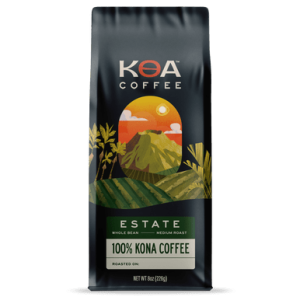
Koa Coffee Estate Kona Medium Roast
Honey at the open, citrus brightness through the mid-palate, and nothing bitter on the finish: this is what 100% estate Kona washed and roasted to medium delivers.
Profile
Tasting Notes
- Honey sweetness is the lead and it is structural: present at the first sip, holding through the mid-palate, still there as the cup cools.
- Acidity at 4/5 reads as citrus lift. It separates the honey from the nut note without competing with either.
- A pale, mild nut character sits underneath. At 3/5 roast intensity, it stays gentle and closer to macadamia than to roasted almond.
- The 1/5 bitterness score is accurate. The finish exits with no dry edge and no lingering astringency.
Who It’s For
Drinkers escaping over-roasted coffees that bury sweetness under bitterness. This is also the right cup for pour over enthusiasts who want a sweet, bright profile without having to lock in a precise extraction window.
The per-ounce price for 100% Kona reflects the cost of Hawaiian cultivation more than it reflects flavor complexity. Washed mediums with comparable acidity and sweetness profiles exist from Central American origins at meaningfully lower prices. The 3/5 body is also a genuine constraint: drinkers who want weight and substance in the cup won't find it here.
Full review
The first thing the cup communicates is the absence of bitterness. At 1/5, there is nothing to fight through. The honey sweetness and the citrus brightness arrive without competition from the back of the throat. This is the result of washed processing working within Kona's terroir: removing the fruit pulp before fermentation suppresses the heavier sweetness a natural lot would carry and pushes acidity and clarity forward. At medium roast, the cup tastes more transparent than the roast level might lead you to expect.
Kona coffee grows on the western slopes of Mauna Loa and Hualalai on Hawaii's Big Island, typically between 1,500 and 2,500 feet. Lower elevation than most high-grown specialty origins, but the volcanic soil, afternoon cloud cover, and the region's stable temperature swings produce a growing environment with a recognizable flavor signature: mild, honeyed, and distinctly Hawaiian. The 100% Kona designation here matters because most Kona-labeled products on the market are blends legally requiring only 10% Kona content, which produces a different cup. This estate lot carries no such dilution. What you taste comes from the soil.
In drip, the cup rounds slightly and the body fills in; pour over keeps the acidity sharper and the nut definition more pronounced. At 3/5 body, neither method produces a heavy cup, but neither is thin either. What matters more is that the low bitterness gives this bean wider latitude than most washed light-to-medium roasts. Extraction errors that would tip a higher-bitterness coffee into acrid territory don't land the same way here. If you run the water hotter or grind slightly finer than intended, the cup adjusts more gracefully than you'd expect from a 4/5 acidity profile.
Volcanica Kona Coffee occupies the same origin, and within that shared terroir the most direct comparison is processing choice and lot selection. Washed, as used here, orients the cup toward acidity and clarity; natural or honey-processed Kona lots sit sweeter and heavier. The performance lens shifts when you measure this against Volcanica's Ethiopian Yirgacheffe. That cup is shaped by high-grown East African elevation and delivers floral-and-citrus brightness that is sharper, more layered, and arrives in a different price tier. Kona is warmer and softer. The honey and nut character that volcanic Hawaiian soil produces doesn't chase the high-grown African flavor register. They are distinct profiles operating on different terms.
The per-ounce price for 100% Kona reflects what it costs to farm in Hawaii: land values, labor rates, and the small-scale estate structure most Kona farms operate on. Part of that premium shows up in the cup as genuine terroir specificity. The honey sweetness and citrus lift here are not interchangeable with a washed Colombian or Guatemalan medium at the same roast; those origins produce their own acidity-sweetness profiles and they don't taste like this. But the price gap over comparable washed mediums from Central America is real, and the 3/5 body doesn't provide the additional weight that might close the value argument. The terroir distinction is specific and it is earned. Whether it accounts for the full price differential is a harder case.
The 4/5 sweetness reads clearly black and hot, without milk or sugar doing anything to reveal it. That consistency as the cup cools is part of what Kona's volcanic soil profile reliably produces at medium roast. The florals in a high-grown Ethiopian lot can collapse as the cup sits; the honey here holds.
Keep pulling the thread: Medium roast guide, Kona, Hawaii (single origin, 100% Kona) origin guide, and more from Koa Coffee.
Price & History
100% estate Kona bags of this size sit at the premium end of the specialty market, a price tier driven by Hawaiian cultivation costs and not by flavor complexity alone.
► Show price history (37 days)
| Date | Price | Per oz |
|---|---|---|
| Jul 26, 2026 | $46.00 | $2.875 |
| Jul 25, 2026 | $46.00 | $2.875 |
| Jul 24, 2026 | $46.00 | $2.875 |
| Jul 23, 2026 | $46.00 | $2.875 |
| Jul 22, 2026 | $46.00 | $2.875 |
| Jul 21, 2026 | $46.00 | $2.875 |
| Jul 20, 2026 | $46.00 | $2.875 |
| Jul 19, 2026 | $46.00 | $2.875 |
| Jul 18, 2026 | $46.00 | $2.875 |
| Jul 17, 2026 | $46.00 | $2.875 |
| Jul 16, 2026 | $46.00 | $2.875 |
| Jul 15, 2026 | $46.00 | $2.875 |
| Jul 14, 2026 | $46.00 | $2.875 |
| Jul 13, 2026 | $46.00 | $2.875 |
| Jul 12, 2026 | $46.00 | $2.875 |
| Jul 11, 2026 | $46.00 | $2.875 |
| Jul 10, 2026 | $46.00 | $2.875 |
| Jul 9, 2026 | $46.00 | $2.875 |
| Jul 8, 2026 | $46.00 | $2.875 |
| Jul 7, 2026 | $46.00 | $2.875 |
| Jul 6, 2026 | $46.00 | $2.875 |
| Jul 5, 2026 | $46.00 | $2.875 |
| Jul 4, 2026 | $46.00 | $2.875 |
| Jul 3, 2026 | $46.00 | $2.875 |
| Jul 2, 2026 | $46.00 | $2.875 |
| Jul 1, 2026 | $46.00 | $2.875 |
| Jun 30, 2026 | $46.00 | $2.875 |
| Jun 29, 2026 | $46.00 | $2.875 |
| Jun 28, 2026 | $46.00 | $2.875 |
| Jun 27, 2026 | $46.00 | $2.875 |
| Jun 26, 2026 | $46.00 | $2.875 |
| Jun 25, 2026 | $46.00 | $2.875 |
| Jun 24, 2026 | $46.00 | $2.875 |
| Jun 23, 2026 | $46.00 | $2.875 |
| Jun 22, 2026 | $46.00 | $2.875 |
| Jun 21, 2026 | $46.00 | $2.875 |
| Jun 14, 2026 | $46.00 | $2.875 |
Rating
FAQ
What does Koa Coffee Estate Kona Medium Roast taste like?
Honey sweetness is the lead and it is structural: present at the first sip, holding through the mid-palate, still there as the cup cools. Acidity at 4/5 reads as citrus lift. It separates the honey from the nut note without competing with either. A pale, mild nut character sits underneath. At 3/5 roast intensity, it stays gentle and closer to macadamia than to roasted almond.
Who is Koa Coffee Estate Kona Medium Roast best for?
Drinkers escaping over-roasted coffees that bury sweetness under bitterness. This is also the right cup for pour over enthusiasts who want a sweet, bright profile without having to lock in a precise extraction window.
Who should skip Koa Coffee Estate Kona Medium Roast?
The per-ounce price for 100% Kona reflects the cost of Hawaiian cultivation more than it reflects flavor complexity. Washed mediums with comparable acidity and sweetness profiles exist from Central American origins at meaningfully lower prices. The 3/5 body is also a genuine constraint: drinkers who want weight and substance in the cup won't find it here.