stumptown-coffee-roasters
Stumptown Coffee Roasters Founder’s Blend
The price buys real body and lasting sweetness despite maximum roast intensity, though nothing in the cup traces back to any of the three origins.
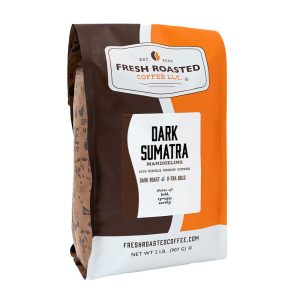
Sumatra is the earthiest coffee you will find at any scale. The flavor runs dark chocolate, cedar, and wet forest floor, sometimes with a herbal or mushroom edge. The acidity is close to zero. The body is full and syrupy, heavy on the palate, and the finish is long and earthy rather than clean. It is a cup with weight and shadow, and it stays with you.
If you want bright and clean, this is the wrong origin and Ethiopia or Colombia is the right one. Sumatra is built for the drinker who wants darkness, density, and a coffee that fills the mouth. It does not sparkle. It broods, and for the right person that is exactly the appeal.
Everything distinctive about Sumatran coffee traces back to the wet-hull process, Giling Basah in Indonesian. After pulping, the beans are dried only partway, then hulled while still soft and high in moisture, then dried again in the humid lowland air. That early hulling exposes the bare bean to the Sumatran climate during its second drying, and the partial fermentation that follows builds the earthy, low-acid character no other process creates.
The beans come out swollen and irregular, tinted blue-green before roasting. A washed Sumatra exists, but it tastes nothing like the tradition the island is known for. The earth is not an accident or a flaw. It is the process, deliberate and centuries deep.
French press is the best match by a wide margin. Full immersion suits the heavy body, and the metal filter lets the oils and texture through where paper would strip them; coarse grind, four to five minutes, and the sediment only deepens the earthy weight. Cold brew is a revelation here, an exceptionally heavy concentrate with the earth and chocolate amplified over an 18 to 24 hour steep at a 1 to 8 ratio. Drip works. Pour over preserves the earthy notes but thins the body that gives them context. Espresso is workable if you pull it short, since the earth can overwhelm a long extraction.
Dark-roast drinkers who want more than bitterness, and anyone who reaches for weight and texture over brightness. The earthy complexity of a good Sumatran reads as sophisticated rather than cheap-burnt, which is why it has a devoted following among people who otherwise find dark coffee one-note. It is also a natural choice for the acid-sensitive, since the wet-hull process leaves so little acidity behind.
It is not for the pour-over drinker chasing clarity and clean acidity. The same earthy notes that make Sumatra distinctive will read as muddy through a slow, bright brew. This is a cup to lean into, not to lighten.
The price buys real body and lasting sweetness despite maximum roast intensity, though nothing in the cup traces back to any of the three origins.
Dark chocolate and loamy earth from the first sip, syrupy through the finish, with the roast at maximum and the origin compressed to its most durable character.
The roast decision here runs Sumatra's Giling Basah earthiness to maximum intensity, delivering serious body and dark-chocolate weight while compressing the cedar origin character into a secondary note.
Cedar follows the chocolate, the earth doesn't lift, and the body carrying both is the reason to buy it.
The decision to roast this at maximum intensity sacrifices a four-origin blend's potential for a single, predictable register: heavy body and cocoa-powder bitterness that holds under milk but flattens black.