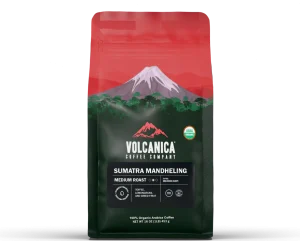
Volcanica Coffee Colombia La Divisa Coffee
Lemon acidity arrives sharp and defined, and the honey sweetness that follows holds it from ever going dry.
Profile
Tasting Notes
- Roast character sits at the edge of perception. Origin and process carry this cup; the drum has stepped aside.
- Lemon acidity hits first: high-elevation citrus, defined and sustained, bright without sharpening into something abrasive.
- Honey sweetness builds through the mid-palate. The process has seeded it structurally into the bean, and it holds through the finish.
- Cocoa at the back end: powder-sweet, soft. At 2/5 bitterness, this is the gentle end of the cocoa register.
- Body sits at mid-weight, enough presence that nothing reads as watery.
Who It’s For
Pour-over and aeropress in the morning where you want citric brightness without anything aggressive. The maximum sweetness holds the maximum acidity in check, so this works for people who typically find light roasts too sharp on the palate.
The flavor profile tops out at three notes: lemon, honey, cocoa. There is no ferment depth, no aromatic complexity on the cooling cup, no fourth layer. Drinkers who buy specialty single-origins specifically for cup evolution or unusual character will find this profile complete but narrow.
Full review
Quindío sits at the center of Colombia's coffee-growing axis, elevated and equatorial, where the thermal swing between day and night concentrates sugars in the cherry before harvest. That altitude effect is the foundation. The honey process builds on top of it: mucilage left on the bean during drying transfers residual sugar directly into the seed, adding sweetness without the ferment character that a full natural process introduces. The result is a cup with more mid-palate depth than a washed Colombian at the same roast would develop, and none of the weight that heavier fruit-forward processing carries.
At 2/5 roast intensity, the drum has stepped aside. There is no toast character here, no caramelization marker. What makes this drinkable is thermal transformation, not roast flavor. That decision is deliberate and correct: a honey-process Quindío pushed into medium territory would flatten the citric acidity that defines high-elevation Colombian character. Leaving the roast light preserves it at 5/5 and lets the process sweetness develop without competition from roast-derived compounds.
The lemon note leads the cup and holds through the finish without shifting registers or becoming aggressive as the extraction continues. The honey sweetness follows and fills in where the lemon might otherwise leave the cup lean. Cocoa arrives last, powder-forward and soft, closer to warm milk stirred with cocoa than to bittersweet chocolate. These three notes are present and consistent from the first sip to the last third of the cup. Pour-over gives the cleanest read on all three, with each note arriving in sequence as the temperature drops through the extraction. Aeropress concentrates the sweetness and lemon without pulling bitterness up, which stays low regardless of contact time or pressure applied.
The Starbucks Veranda Blend sets the performance benchmark for accessible light roasts in wide distribution. Veranda is engineered for consistency across commodity lots; the cup is stable and undifferentiated. La Divisa has a specific identity tied to a Quindío farm and a process decision. The lemon and honey are not blended toward a neutral middle position: they are what the cup is. That kind of specificity does not appear in commodity-channel sourcing, and it is exactly what this tier of coffee is supposed to deliver.
Coffee Central's Colombia El Eden anchors the flavor-profile comparison. A washed process on a similar Colombian origin delivers floral clarity with citric brightness and a drier finish. La Divisa's honey process trades some floral lift for a heavier mid-palate and a finish that holds sweetness longer. El Eden reads cleaner; this reads more rounded and sustained. Both are valid versions of a Colombian light roast at the specialty tier. The choice between them is whether you want the cup to read open and dry or sweet and settled.
Where the La Divisa shows its ceiling is on the cooling cup. Lemon holds. Honey holds. Cocoa softens further. What the cup does not do is reveal a new layer as the temperature drops: no stone fruit emergence, no aromatic shift, nothing that rewards patience with a different experience than the hot cup already delivered. The arc from hot to warm is consistent. Most drinkers will count that as reliability, a cup that tastes like itself throughout and is easy to repeat. Drinkers who buy specialty light roasts looking for ferment complexity or cup evolution will find the profile complete but not particularly surprising.
Volcanica positions the La Divisa in the specialty single-origin tier for Colombian lots. The 12-ounce format is standard at this price bracket. The honey-process Quindío sourcing justifies pricing above commodity-channel Colombians: the altitude-driven acidity and the process sweetness are real, and they are absent from grocery-aisle alternatives. What is harder to assess without live price data is whether the Volcanica price point beats comparable honey-process Colombians from other specialty roasters targeting the same buyer. The cup earns its place at the specialty tier. Whether it earns it at a specific price requires knowing that price.
Keep pulling the thread: Light roast guide, Colombia, Quindío origin guide, and more from Volcanica Coffee.
Price & History
The La Divisa ships in a 12-ounce bag, which is standard format for specialty single-origin Colombian lots sourced at this processing tier.
Price history coming soon — check back after the next daily update.
Rating
FAQ
What does Volcanica Coffee Colombia La Divisa Coffee taste like?
Roast character sits at the edge of perception. Origin and process carry this cup; the drum has stepped aside. Lemon acidity hits first: high-elevation citrus, defined and sustained, bright without sharpening into something abrasive. Honey sweetness builds through the mid-palate. The process has seeded it structurally into the bean, and it holds through the finish.
Who is Volcanica Coffee Colombia La Divisa Coffee best for?
Pour-over and aeropress in the morning where you want citric brightness without anything aggressive. The maximum sweetness holds the maximum acidity in check, so this works for people who typically find light roasts too sharp on the palate.
Who should skip Volcanica Coffee Colombia La Divisa Coffee?
The flavor profile tops out at three notes: lemon, honey, cocoa. There is no ferment depth, no aromatic complexity on the cooling cup, no fourth layer. Drinkers who buy specialty single-origins specifically for cup evolution or unusual character will find this profile complete but narrow.