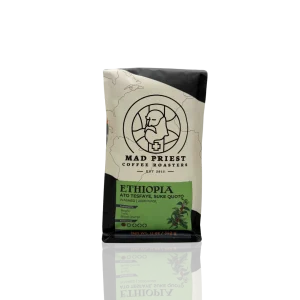
Mad Priest Coffee Roasters Ethiopia Suke Quto Washed
The cup opens on citric brightness and delicate florals, then shifts into something quieter and more tea-like as it drops below serving temperature.
Affiliate link. We earn a commission at no extra cost to you.
Profile
Tasting Notes
- Hot to cool, this cup changes: the citric-floral opening settles into a softer poppy register and a brief candy-apple sweetness around 120°F that is invisible at full serving temperature
- At the first sip, the acidity is forward and directional, landing closer to bergamot tea than anything sharp or aggressive; there is no roughness behind it
- The body is tea-weight throughout. The flavor sits clear and unanchored, with no physical substance beneath it
- Bitterness is effectively absent and the finish dries fast, leaving nothing in the aftertaste
Who It’s For
Someone who brews with a gooseneck and a scale and drinks slowly enough to catch how the cup changes as it cools. The temperature shift here is a feature, not a flaw, and the citric-floral transparency at 5/5 acidity is what that drinker came for.
The 1/5 body is a hard limit. Milk drinks fall apart on this cup, and anyone who needs physical presence in the coffee (for a moka pot, for anything added to the cup) will find nothing to anchor the flavor. Brewing more carefully or adjusting grind does not fix it.
Full review
Guji zone sits in the high-elevation bands of southern Ethiopia, and the Suke Quto washing station is among the more documented lots coming out of it. The washed process removes the fruit cherry before any significant fermentation influence reaches the bean: what the roaster works with is the seed's own character, unmediated by the surrounding fruit. At the elevation Guji coffee grows at, that means tight organic acid structure, restrained sweetness, and florals that surface without any fruit overlay competing with them.
The acidity is the organizing fact of the cup. At 5/5, it arrives on the first sip and holds through the middle of the drinking window. What distinguishes it from a generic bright coffee is the quality of the acid rather than its intensity: it reads as directional and contained, landing in a bergamot-and-light-tea register rather than anything puckering or aggressive. That is the washed Guji character at altitude. The tea-like descriptor Mad Priest leads with is accurate in a way that is not usually true of coffee marketing copy. This cup shares a register with a well-made, lightly oxidized white tea. The 1/5 body makes that analogy almost literal: there is no substrate beneath the flavor, no weight, just the profile itself in a thin, transparent medium.
R&b Cafe Roasters' Etiopija Okoluu Guji Natural comes from the same region, and the contrast is instructive. The Okoluu natural carries fruit fermentation character on top of the origin structure: sweetness and body increase, but some of the acid definition is covered by the fruit. The Suke Quto strips that back. The poppy and citric notes here are delicate precisely because no fermentation is competing with them, and the body is correspondingly thin and fragile.
As the cup cools past 120°F, the florals shift from the opening brightness into something softer, and the candy apple sweetness described in the producer notes makes a brief appearance. At 3/5, sweetness is present but subordinate to the acidity throughout most of the drinking window. You have to slow down to catch it. The bitterness at 2/5 and roast intensity at 2/5 mean there is no competing edge: the finish resolves cleanly and quickly.
Against Groundwork's Ethiopia Heirloom Blend Light Roast on the performance side, this coffee is more exacting. The Groundwork blend adds body through its lot composition, which makes it more consistent across drip machines and more forgiving when extraction variables drift. The Suke Quto is a single lot from a specific washing station. Single lots at this elevation reward deliberate preparation. The ceiling for what the cup can deliver is higher. So is the gap between a careful pour over and an inattentive drip result.
$12.99 for 12 oz at $1.08 per ounce is fair for a traceable Suke Quto lot. Comparable washed Ethiopians with equivalent provenance at boutique specialty roasters typically run $1.25-1.75 per ounce. Mad Priest is not charging a house margin on top of the origin here: the price reflects the coffee without a significant brand premium attached. One qualification: the 30-day data here is a single observation. The $12.99 may be promotional or may be the stable retail price. The number looks right either way, but keep an eye on the price over the next few weeks before treating it as a confirmed floor.
The 1/5 body is not a roasting fault. It is what this origin, this process, and this roast level produce. Some buyers read the transparency as thinness and find the tradeoff poorly balanced. That signal is not wrong: the citric-floral clarity is genuine, but it arrives in a cup that has no weight beneath it.
Keep pulling the thread: Light roast guide, Guji, Ethiopia origin guide, and more from Mad Priest Coffee Roasters.
Price & History
Current price is $12.99 ($1.08/oz), and the available 30-day data shows a single observation at that number. One check is not a pattern. Based on what comparable washed Ethiopian lots cost from specialty roasters with similar provenance, $12.99 looks fair and not inflated. Buy now if this profile fits your setup. Check back in four to six weeks if you want a pricing pattern before committing.
► Show price history (26 days)
| Date | Price | Per oz |
|---|---|---|
| Jul 26, 2026 | $12.99 | $1.083 |
| Jul 25, 2026 | $12.99 | $1.083 |
| Jul 24, 2026 | $12.99 | $1.083 |
| Jul 23, 2026 | $12.99 | $1.083 |
| Jul 22, 2026 | $12.99 | $1.083 |
| Jul 21, 2026 | $12.99 | $1.083 |
| Jul 20, 2026 | $12.99 | $1.083 |
| Jul 19, 2026 | $12.99 | $1.083 |
| Jul 18, 2026 | $12.99 | $1.083 |
| Jul 17, 2026 | $12.99 | $1.083 |
| Jul 15, 2026 | $12.99 | $1.083 |
| Jul 14, 2026 | $12.99 | $1.083 |
| Jul 13, 2026 | $12.99 | $1.083 |
| Jul 12, 2026 | $12.99 | $1.083 |
| Jul 11, 2026 | $12.99 | $1.083 |
| Jul 10, 2026 | $12.99 | $1.083 |
| Jul 9, 2026 | $12.99 | $1.083 |
| Jul 7, 2026 | $12.99 | $1.083 |
| Jul 5, 2026 | $12.99 | $1.083 |
| Jul 4, 2026 | $12.99 | $1.083 |
| Jul 1, 2026 | $12.99 | $1.083 |
| Jun 27, 2026 | $12.99 | $1.083 |
| Jun 25, 2026 | $12.99 | $1.083 |
| Jun 24, 2026 | $12.99 | $1.083 |
| Jun 22, 2026 | $12.99 | $1.083 |
| Jun 21, 2026 | $12.99 | $1.083 |
Rating
FAQ
What does Mad Priest Coffee Roasters Ethiopia Suke Quto Washed taste like?
Hot to cool, this cup changes: the citric-floral opening settles into a softer poppy register and a brief candy-apple sweetness around 120°F that is invisible at full serving temperature At the first sip, the acidity is forward and directional, landing closer to bergamot tea than anything sharp or aggressive; there is no roughness behind it The body is tea-weight throughout. The flavor sits clear and unanchored, with no physical substance beneath it
Who is Mad Priest Coffee Roasters Ethiopia Suke Quto Washed best for?
Someone who brews with a gooseneck and a scale and drinks slowly enough to catch how the cup changes as it cools. The temperature shift here is a feature, not a flaw, and the citric-floral transparency at 5/5 acidity is what that drinker came for.
Who should skip Mad Priest Coffee Roasters Ethiopia Suke Quto Washed?
The 1/5 body is a hard limit. Milk drinks fall apart on this cup, and anyone who needs physical presence in the coffee (for a moka pot, for anything added to the cup) will find nothing to anchor the flavor. Brewing more carefully or adjusting grind does not fix it.