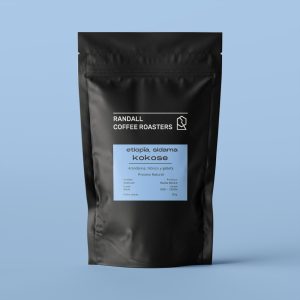
Randall Coffee Roasters Kenya Gichuka
Thin body limits what brew formats this cup can handle, but the lime-peach acidity and honey sweetness from SL-28 and SL-34 in Nyeri are the real thing.
Affiliate link. We earn a commission at no extra cost to you.
Profile
Tasting Notes
- Body registers near-zero. The cup sits with no textural weight, which is the first thing the palate notices.
- Bitterness and roast character both stay low, giving the origin room to read on its own terms.
- Lime acidity arrives early and holds through the cup. Defined and consistent, it sits at the front of every sip without tipping into tartness.
- Honey sweetness fills in behind it, present but light, rounding the citric edge.
- Peach runs through the mid-palate. The finish dries toward black tea and drops quickly.
Who It’s For
Morning pour-over drinkers who want something fruit-forward alongside breakfast, brewed black and consumed while it is still hot, before the thin body becomes the dominant impression.
French press is listed as a recommended format, but the 1/5 body makes it the wrong choice. The extraction window is also tight enough that inconsistent equipment, a grinder that drifts, or an imprecise kettle will produce something flat or sharp instead of the clean fruit this origin delivers.
Full review
Pour over is the right format for this coffee. The thin body, which reads as a liability in immersion brewing, reads as clarity in a V60 or a Chemex. The fruit comes through intact. The lime acidity stays defined. The cup does not try to carry weight it cannot deliver, and in a filter format, it does not need to.
Drip produces a slightly different result. Longer contact time at a consistent temperature fills in the honey and peach more than a short manual pour does, and the cup settles into itself. The trade-off is extraction control: a drip machine with uneven showers or temperature inconsistency will push the bright acids past the point where they read as fruit and into territory that reads as sharp without anything behind it. This cup has no built-in forgiveness. Equipment precision is not optional here.
French press is listed in the spec recommendation, and the listing is optimistic. Immersion brewing extracts lipids that ordinarily contribute to body, but when the body starts at 1/5, those lipids are not present in sufficient quantity to change the cup's character. The fruit flavors survive, but they float in a structurally weak base. Pour over and drip are the practical options.
The origin explains the flavor profile. Nyeri sits at high elevation on the Aberdare slopes in Kenya's Central Province, where slow cherry development concentrates fruit-acid compounds in the seed. SL-28 and SL-34, the Scott Laboratories varietals developed in the 1930s, convert those compounds into citric and tartaric acids at rates other Arabica cultivars do not match. The lime brightness in this cup comes from the varietal and the altitude. Batian and Ruiru-11 also appear in the lot. Both carry disease resistance as their primary purpose, and their acid profile is different: they moderate what would otherwise be a more aggressive 5/5 acidity and contribute to the cup's consistency across the extraction.
The washed process removes the cherry's skin and mucilage before drying, leaving the seed to develop with minimal processing influence. The fruit flavors in this cup come from the bean's own structure. The process does not add them; it removes interference. In a washed Nyeri lot with quality sourcing, what you taste is the varietal and the terroir, delivered directly.
Against R&b Cafe Roasters' Etiopija Okoluu Guji Natural, the flavor comparison is instructive. The Guji natural delivers stone fruit through fermentation and dried-cherry processing: sweetness arrives dense, with fruit-skin texture behind it. The Kenya Gichuka's fruit comes from a different source. Lime and peach in this cup read crisp and direct, arriving without a fermentation backdrop and without the jammy depth the natural brings. Neither is superior. They come from different mechanisms and answer different preferences.
Against Caribou Coffee's Caribou Blend, the performance contrast is sharp. A blend built for broad accessibility performs reliably across equipment variation and grind tolerance. This Kenya requires precision: water temperature in a controlled range, a grind calibrated to the format, consistent extraction. The Caribou Blend absorbs small errors. This cup does not. What it delivers in exchange for that precision requirement is flavor specificity that a blend cannot reach.
At $14.30 for 12 oz, the per-ounce cost lands at $1.19. What the price buys with no cheaper substitute: the varietal and origin combination. Washed Nyeri with SL-28 and SL-34 commands a premium across the specialty market, and $14.30 is below the category average for this origin designation. What the price does not cover: versatility across brew formats. The single data point in the price history means there is no trend to analyze. $14.30 is the current price and the only reference point available.
Keep pulling the thread: Light-Medium roast guide, Kenya, Nyeri origin guide, and more from Randall Coffee Roasters.
Price & History
The 30-day data contains a single check: current price, average, high, and low are all $14.30. There is no price movement to analyze and no basis to wait for a dip. For washed Kenya Nyeri with SL-28 and SL-34 in the lot, $14.30 for 12 oz sits below the specialty market standard for this origin. If the profile fits your pour-over setup, buy it now.
Price history coming soon — check back after the next daily update.
Rating
FAQ
What does Randall Coffee Roasters Kenya Gichuka taste like?
Body registers near-zero. The cup sits with no textural weight, which is the first thing the palate notices. Bitterness and roast character both stay low, giving the origin room to read on its own terms. Lime acidity arrives early and holds through the cup. Defined and consistent, it sits at the front of every sip without tipping into tartness.
Who is Randall Coffee Roasters Kenya Gichuka best for?
Morning pour-over drinkers who want something fruit-forward alongside breakfast, brewed black and consumed while it is still hot, before the thin body becomes the dominant impression.
Who should skip Randall Coffee Roasters Kenya Gichuka?
French press is listed as a recommended format, but the 1/5 body makes it the wrong choice. The extraction window is also tight enough that inconsistent equipment, a grinder that drifts, or an imprecise kettle will produce something flat or sharp instead of the clean fruit this origin delivers.