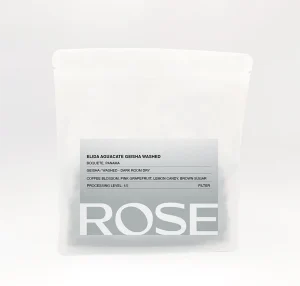
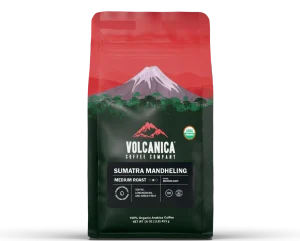
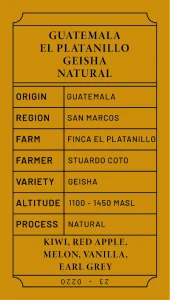
A specialty coffee bag carries more information than most people read. The roast date, origin details, process method, and variety all tell you something real about what is inside. Understanding those labels takes about five minutes to learn and changes how you buy coffee permanently.
Roast date vs best-by date
The roast date is the most important label on the bag. It tells you how old the coffee is and how much of its peak window remains. Specialty roasters print the roast date. Mass-market brands usually print only a best-by date.
Coffee is best within 5 to 21 days of the roast date. Before 5 days the beans are still venting CO2 and extract unevenly. After 3 to 4 weeks the aromatics start to fade. The best-by date is a food safety date. Coffee is safe to drink long after it stops tasting good. Track the roast date.
If a bag has no roast date, the coffee was not roasted recently enough for the roaster to want you to know when it happened.
Single origin vs blend
Single origin means all the coffee in the bag comes from one place: one country, one region, one farm, or one lot. Single-origin coffees are bought for the specific character of that source.
Blend means the roaster combined coffees from two or more sources to hit a target flavor profile. Blends prioritize consistency and balance. The best espresso blends stay consistent across seasonal crop variation by adjusting ratios as individual components change.
Neither is better. Single origin is more interesting for filter brewing where origin character is the point. Blends are often better for espresso and milk drinks where consistency matters more than brightness.
Origin information
Origin labels get more specific the higher the quality:
- Country: the minimum. “Colombia” alone tells you little.
- Region: more useful. “Colombia Huila” or “Ethiopia Sidama” narrows the flavor profile significantly.
- Farm or cooperative: the highest level. A named farm or coop means the roaster bought from a specific traceable source.
- Altitude: higher means denser beans. Denser beans hold more flavor compounds and take the roast more evenly. Look for 1,500 meters and above for specialty-grade Arabica.
Process method
Process method describes how the coffee cherry was prepared after harvest. It has a direct effect on the flavor in the cup.
| Process | What happens | Flavor effect |
|---|---|---|
| Washed (wet) | Fruit removed before drying | Clean, bright, clear origin character |
| Natural (dry) | Dried whole in the fruit | Fruity, heavy, wine-like, less clarity |
| Honey | Partial fruit removed before drying | Between washed and natural: sweet, mild fruit |
| Anaerobic | Fermented in sealed, oxygen-free tanks | Intense fruit, fermented notes, distinctive |
Washed coffees taste like the origin. Natural coffees taste like the fermentation. To understand what Ethiopia actually tastes like, start with a washed Ethiopian. For more on how process changes flavor, see the process method hub.
Variety
Variety (or cultivar) is the specific plant genetics. It is the coffee equivalent of grape variety in wine. Common varieties on specialty bags:
- Bourbon: a classic Arabica variety with balanced sweetness. Grown widely in Latin America and East Africa.
- Typica: one of the oldest Arabica varieties. Clean and delicate.
- Geisha (Gesha): the most celebrated specialty variety. Floral, jasmine, bergamot notes. Expensive and distinctive.
- Caturra: a mutation of Bourbon. Compact plants, high productivity, used widely in Colombia.
- SL28 and SL34: Kenyan varieties bred for drought resistance. Produce the bright, blackcurrant acidity Kenya is known for.
Most commercial coffee does not list variety. A bag that does is a signal the roaster paid attention to sourcing at the farm level.
Flavor notes
Flavor notes on a specialty bag are not added ingredients. They describe what the roaster detected during cupping under controlled conditions. “Dark chocolate and hazelnut” means the roaster tasted those notes.
Treat them as direction, not a guarantee. What you get in your French press or espresso machine depends on your grind, water temperature, and brew method. A coffee described as “stone fruit and hibiscus” expresses those notes in a pour-over at 200°F far more than it does in a dark espresso blend.
Certifications
| Label | What it means | What it does not mean |
|---|---|---|
| Organic | No synthetic pesticides or fertilizers | High quality or recently roasted |
| Fair Trade | Minimum price paid to farmers | The highest prices or direct relationships |
| Rainforest Alliance | Environmental and social standards met | Organic, fair trade, or specialty grade |
| Direct Trade | Roaster bought directly from the farm | Anything specific (not a regulated label) |
Certifications add context but do not substitute for a roast date and specific origin information. A certified organic bag with no roast date is still an unknown.
The one-way valve
The small button or disc on the back of the bag is a degassing valve. Fresh coffee releases CO2 rapidly after roasting. Without a valve, a sealed bag would swell and burst. The valve lets CO2 out without letting oxygen in. If you press the bag toward the valve, you smell the fresh coffee gas escaping. No valve means the coffee was allowed to degas for days before packaging, then sealed, which points to age.