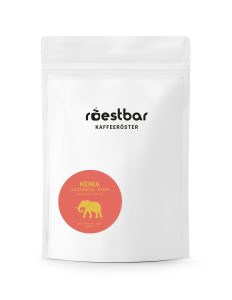
Roestbar Guatemala Las Brisas
At $1.21 an ounce, this Jalapa washed Guatemala delivers genuine sweetness and bright acidity, though the thin body and a chocolate-nutmeg arc that lands exactly where the region always lands keep it in well-made territory.
Affiliate link. We earn a commission at no extra cost to you.
Profile
Tasting Notes
- Hot from the brewer, the acidity leads: citric and open without hardening into tartness. As it drops to drinking temperature, the sweetness catches up and the profile settles into caramelized brown sugar with a hazelnut undercurrent.
- The chocolate reads as cocoa-powder dry, arriving mid-sip and carrying through the swallow without bitterness (2/5) pulling it astringent.
- Nutmeg warmth shows more prominently in drip than in pour over, where shorter contact time keeps the profile brighter and the caramel note more forward.
- The body stays thin (2/5) from first sip to last. The cup reads open and light, and no brew method changes that.
Who It’s For
Mid-morning pour over drinkers who want sweetness and brightness without an aggressive edge. The low bitterness and high sweetness make this a natural alongside a pastry or light fruit without competing.
French press drinkers who pick immersion brewing specifically for cup weight and texture will find the thin body (2/5) unsatisfying. At $1.21 an ounce, the flavor profile does not offer anything a comparable washed Central American cannot match, so the buyer chasing genuine distinctiveness won't find it here.
Full review
The light-medium roast is a deliberate trade. Push this into full medium territory and the caramelized sweetness fattens, but the Jalapa brightness starts to close off. Stay lighter and the acidity sharpens past what the cup can hold without fruit character to anchor it. The light-medium lands at the hinge, which is why both the acidity and sweetness score at maximum (5/5) while the roast intensity stays at 2/5 and removes itself from the equation. Origin does the work here. The roast creates space for it.
Guatemala's Jalapa department sits on high-altitude volcanic terrain, and the altitude drives the acidity you taste here. The Catuai and Pache varietals are planted throughout Central America for productivity in the field, not for flavor distinction in the cup. The flavor profile reflects that. Chocolate, hazelnut, nutmeg, caramelized brown sugar: the textbook arc for Jalapa coffee, warm and dessert-adjacent. The washed process keeps the cup dry at the finish and removes any fermented fruit complexity, letting that warm arc come through without interference. The low bitterness (2/5) means the aftertaste is brief. Published customer review data broadly confirms that character: consistent sweetness, an accessible cup without polarizing edge. The edge cases in that data point toward the brightness reading thin in low-attention brewing, which the 2/5 body makes plausible. The cup does not surprise you. It also does not fail you.
The clearest flavor-profile comparison is Holy Bean Coffee Brazil Sul De Minas, which trades in the same dessert-adjacent palette (chocolate, hazelnut, nutmeg) but arrives with a fuller body and softer acidity. This Jalapa opens those same notes in a brighter, leaner frame. The acidity is more active, the finish more open, and the cup never gets heavy. If you want that flavor range with body, a Sul de Minas delivers it. If you want it with lift and brightness, this Guatemala does.
Against a commodity baseline, the Dunkin' Original Blend is the relevant performance reference. Against that benchmark, the difference is readable in the cup: the sweetness here is specific and traceable, not background sugar calibrated to a broad mean. The acidity has an origin-character edge that a high-volume blend doesn't reach. The buyer moving up from a commodity roast looking for a clearer expression of where their coffee comes from will find it here. What this doesn't have is the consistency ceiling a large-scale blend achieves by drawing across crop seasons and multiple origins. The cup is more particular, and that particularity makes brewing decisions matter more than they would in a forgiving blended roast.
Brew method shapes the experience noticeably. Pour over gives the clearest expression of the acidity and brightness, and a shorter brew time keeps the caramel and sweetness forward without thinning the cup further. Drip integrates the profile and brings the nutmeg and brown sugar more to the front, softening the acidity into the background. French press works technically, but the thin body (2/5) means you don't get the textural payoff immersion usually delivers. The cup stays open and bright regardless of method. There is no heavier gear available in any of the three.
At $14.50 for 12 ounces ($1.21 per ounce), this sits at the fair mid-range for single-origin specialty. The Catuai/Pache varietal combination does not support a premium argument, and the flavor profile, however well-executed, is standard territory for the origin. What the price buys is solid processing, a quality growing region, and a cup that delivers on what Jalapa coffees are known to deliver. That is a fair-value case, not a standout one.
Price data is limited to a single check, with no movement from $14.50. There is no trend to reference.
Keep pulling the thread: Light-Medium roast guide, Guatemala, Jalapa origin guide, and more from Roestbar.
Price & History
At $14.50 with $1.21 per ounce and only one recorded price point, there is no 30-day trend to analyze. The price has not moved. At $1.21 per ounce, it is mid-range for single-origin specialty and priced in line with what the cup delivers. No data-backed case exists for waiting on a drop. Buy if the profile suits you now.
Price history coming soon — check back after the next daily update.
Rating
FAQ
What does Roestbar Guatemala Las Brisas taste like?
Hot from the brewer, the acidity leads: citric and open without hardening into tartness. As it drops to drinking temperature, the sweetness catches up and the profile settles into caramelized brown sugar with a hazelnut undercurrent. The chocolate reads as cocoa-powder dry, arriving mid-sip and carrying through the swallow without bitterness (2/5) pulling it astringent. Nutmeg warmth shows more prominently in drip than in pour over, where shorter contact time keeps the profile brighter and the caramel note more forward.
Who is Roestbar Guatemala Las Brisas best for?
Mid-morning pour over drinkers who want sweetness and brightness without an aggressive edge. The low bitterness and high sweetness make this a natural alongside a pastry or light fruit without competing.
Who should skip Roestbar Guatemala Las Brisas?
French press drinkers who pick immersion brewing specifically for cup weight and texture will find the thin body (2/5) unsatisfying. At $1.21 an ounce, the flavor profile does not offer anything a comparable washed Central American cannot match, so the buyer chasing genuine distinctiveness won't find it here.