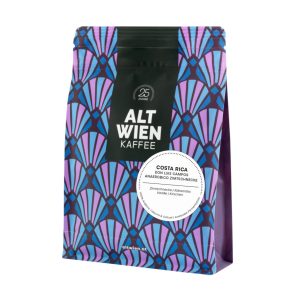
Alt Wien Kaffee Kenia Gicherori AA
Thin body is the primary trade-off; the SL-28 and SL-34 acidity from Embu is the payoff.
Affiliate link. We earn a commission at no extra cost to you.
Profile
Tasting Notes
- Body is the first absence: the mouthfeel runs thin, closer to a light-roast filter cup than what most people expect from a medium
- Grapefruit leads the palate, citric and precise, with SL-28 and SL-34 varietal character showing through the roast intact
- A dried-tomato savory note surfaces in the midpalate, the umami-adjacent depth that washed Embu lots produce from clean fermentation at altitude
- Ginger and herb-like brightness through the midpalate keep the sweetness from going syrupy
- Sweetness is high (4/5) and caramelized; low bitterness means the finish clears fast without leaving residue
Who It’s For
Drip and pour-over drinkers who have been let down by mediums that bury origin character under roast weight. If you want to taste where the coffee grew, this is built for that conversation.
The 2/5 body reads as watery in french press at standard ratios, which is a direct problem given it's listed as a recommended method. Anyone paying Kenyan-AA prices and expecting the syrupy mouthfeel that high-elevation washed lots sometimes deliver will find the cup falls short on that dimension regardless of the flavor.
Full review
Gicherori is a wet mill in Embu County, on the eastern slopes below Mount Kenya. The elevation and rainfall patterns here push coffee plants hard, and the SL-28 and SL-34 varietals grown at this altitude have a specific flavor output: grapefruit-citric acidity, savory terroir depth, and sweetness that reads high-toned and citric. Alt Wien Kaffee has sourced a Gicherori lot that shows all of this clearly, and the medium roast preserves the varietal character rather than smoothing it into generic coffee.
The sensory numbers clarify the cup before the first sip: 5/5 acidity, 2/5 body, 4/5 sweetness, 2/5 bitterness. The grapefruit is the cup's backbone. The dried-tomato note in the midpalate is what clean fermentation from these varietals at altitude yields, and it separates this lot from mediums built on blended or anonymous origins. Batian and Ruiru-11 fill out the varietal mix alongside the SL-28 and SL-34, adding mild body and disease-resistance genetics without shifting the cup's fundamental flavor direction.
Against Coffeein's Kenya Kirinyaga Kii at the flavor-profile level, the Gicherori reads more savory and herb-forward. Kirinyaga lots tend to push redcurrant and black tea, with a more delicate floral register. The Gicherori pushes grapefruit and dried herb harder. Both are valid Kenyan expressions from different regional growing conditions. Which one lands depends on how you read that dried-tomato, savory midpalate: some drinkers find it compelling; others register it as vegetal. That's a preference question, not an extraction problem.
Performance against Kicking Horse Three Sisters Medium Roast puts a different kind of gap in focus. Three Sisters is engineered for consistency: even body, broad grind tolerance, low variance cup to cup. The Gicherori does not compete on those terms. The 5/5 acidity responds to extraction variables, and the thin body amplifies any misstep. Three Sisters can tolerate imprecise water temperature or a loose grind and still produce a satisfying cup. The Gicherori at the same conditions will drift toward watery or sharp. This is the trade you make when you choose origin-specific over blended reliability.
At $1.91 per ounce, the pricing is calibrated to the sourcing cost on a real Kenyan AA lot, not a brand markup. Alt Wien Kaffee doesn't carry the marketing footprint of a major specialty roaster, and the price reflects that. The varietal composition (SL-28, SL-34, Batian, Ruiru-11) and the documented Gicherori mill justify the tier. What the price does not guarantee is the weight some buyers expect from premium Kenyan coffee. A comparable lot roasted light would give the SL-28 and SL-34 more room to develop their peak flavor expression; the medium roast here softens the ceiling. The floor is still high.
The cup's strengths are the acidity, the flavor specificity, and the clean finish. For pour-over and drip, where the method doesn't demand body to feel complete, those strengths carry the cup. For anything requiring weight to register as satisfying, they don't bridge the gap.
Keep pulling the thread: Medium roast guide, Kenya, Embu origin guide, and more from Alt Wien Kaffee.
Price & History
Current price is $22.90 for 12 oz, flat across the past 30 days with a single pricing check in that window. There's no trend to analyze and no historical cycle to time a purchase against. At $1.91/oz, the rate is fair for what's in the bag: a specific Kenyan AA lot from a documented mill with verified varietal sourcing. If the profile fits what you're looking for, the price is honest. The data doesn't show a lower window to wait for.
Price history coming soon — check back after the next daily update.
Rating
FAQ
What does Alt Wien Kaffee Kenia Gicherori AA taste like?
Body is the first absence: the mouthfeel runs thin, closer to a light-roast filter cup than what most people expect from a medium Grapefruit leads the palate, citric and precise, with SL-28 and SL-34 varietal character showing through the roast intact A dried-tomato savory note surfaces in the midpalate, the umami-adjacent depth that washed Embu lots produce from clean fermentation at altitude
Who is Alt Wien Kaffee Kenia Gicherori AA best for?
Drip and pour-over drinkers who have been let down by mediums that bury origin character under roast weight. If you want to taste where the coffee grew, this is built for that conversation.
Who should skip Alt Wien Kaffee Kenia Gicherori AA?
The 2/5 body reads as watery in french press at standard ratios, which is a direct problem given it's listed as a recommended method. Anyone paying Kenyan-AA prices and expecting the syrupy mouthfeel that high-elevation washed lots sometimes deliver will find the cup falls short on that dimension regardless of the flavor.