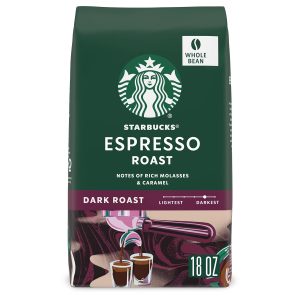
Starbucks Espresso Roast
This blend was pushed into the dark until origin stopped being the story: what's left is heavy body, caramel sweetness, and a roast structure built to hold up under milk.
Profile
Tasting Notes
- Acidity at 2/5: the dark roast erased any brightness the blend carried, and the cup opens on density.
- Molasses sweetness leads up front, followed by a caramel fade on the back palate. At 3/5, the sweetness is present and grounding.
- Body at 4/5 coats the cup and gives the shot structure for milk drinks.
- Bitterness at 3/5. The finish closes bittersweet, settling on caramel.
Who It’s For
Milk-forward cups are where this earns its keep: body (4/5) holds through a latte or cortado without thinning, and the bittersweet finish works inside steamed milk. Pull this for espresso drinks you're building. The milk is part of the design.
Straight black espresso drinkers will find this one-dimensional: the dark roast consumed the blend's origin, and without milk, the cup lands as bittersweet caramel and stops there. The Starbucks shelf premium is real; the cup's flavor depth doesn't justify it over comparable dark roast alternatives.
Full review
In an espresso machine, the body is what this cup is built around. At 4/5, it's dense enough to hold its presence through steamed milk without disappearing into the texture: pull a double for a latte or cortado, and the coffee still registers as the primary flavor rather than a faint brown note underneath the foam. Bitterness at 3/5 stays at background presence, which keeps this approachable without the drinker needing to compensate in extraction. The crema holds to a decent density on an entry-level machine, and for a name-brand dark roast, that consistency is a genuine asset.
On a moka pot, the dynamics shift. Moka pressure amplifies concentration relative to espresso, and at this roast intensity, the caramel sweetness and the bitterness come into closer competition than they do in the shot. The molasses base stays present, but the cup registers thicker and more saturated. Pulled black, this reads bittersweet; topped with steamed milk, the body and sweetness come together better. Keep the grind coarser for moka pot than for the espresso machine, or the bitterness tips past the sweetness.
The blend is constructed around a specific outcome. Latin American coffees contribute caramel structure and mild body; the Asia-Pacific component (Indonesian and Sumatran origins are standard in blends of this type) adds the low, earthy note that keeps the cup floor from thinning under intense roast heat. These origins are in the blend for structural function. The washed processing removes fermented fruit character that would muddy the cup at this roast intensity, and what remains is a profile that stays on caramel and grain. At 4/5 roast intensity, the blend's origins provide body. Their flavor signatures do not survive the roast. This is the trade that defines the commercial dark espresso blend category: origin is the raw material for body and consistency, not for flavor.
Against Starbucks Caffe Verona, the performance difference shows on the machine. Caffe Verona runs a slightly more accessible dark profile with better sweetness visibility in milk drinks, and its roast backs off enough to let some chocolate character come through. Espresso Roast leans harder into body and roast structure: more density, more muted sweetness solo, and a shot that holds its ground under milk. For milk-forward espresso drinks, Espresso Roast is the stronger performer. Caffe Verona rewards the mug drinker; Espresso Roast belongs on a machine.
The Lavazza Espresso Barista Gran Crema shares the same flavor philosophy: caramel base, suppressed acidity, heavy body, built for espresso. Both occupy the same molasses-and-caramel lane, and for a drinker choosing on flavor profile alone, the cup character is close. The practical difference is shot texture. Gran Crema's blend incorporates Robusta, which increases crema volume and adds a structured bitterness on the machine. Espresso Roast's 100% Arabica construction gives a softer, more mouth-filling body rather than a crema-forward shot. For moka pot and milk drinks, the two cups are close to interchangeable on flavor. On the machine, they feel different.
The 18-ounce bag puts per-serving cost in a reasonable range for a name-brand dark roast. Starbucks commands a shelf premium over grocery-tier dark blends, and part of that premium is brand positioning. Part of it is genuine consistency: the profile lands in the same place bag after bag, which matters for a daily-use espresso blend. Specialty roasters vary more between harvests. For drinkers who care about origin character or cup complexity, the per-ounce price is hard to justify on flavor. The 18-ounce format serves regular espresso use well; the blend is optimized for consistency over session, and the larger bag is where that consistency pays off.
Keep pulling the thread: Dark roast guide, Latin America, Asia-Pacific blend origin guide, and more from Starbucks.
Price & History
At 18 ounces, this is among the larger shelf formats in its roast category, which improves per-serving cost relative to smaller-format alternatives in the same price tier.
Price history coming soon — check back after the next daily update.
Rating
FAQ
What does Starbucks Espresso Roast taste like?
Acidity at 2/5: the dark roast erased any brightness the blend carried, and the cup opens on density. Molasses sweetness leads up front, followed by a caramel fade on the back palate. At 3/5, the sweetness is present and grounding. Body at 4/5 coats the cup and gives the shot structure for milk drinks.
Who is Starbucks Espresso Roast best for?
Milk-forward cups are where this earns its keep: body (4/5) holds through a latte or cortado without thinning, and the bittersweet finish works inside steamed milk. Pull this for espresso drinks you're building. The milk is part of the design.
Who should skip Starbucks Espresso Roast?
Straight black espresso drinkers will find this one-dimensional: the dark roast consumed the blend's origin, and without milk, the cup lands as bittersweet caramel and stops there. The Starbucks shelf premium is real; the cup's flavor depth doesn't justify it over comparable dark roast alternatives.