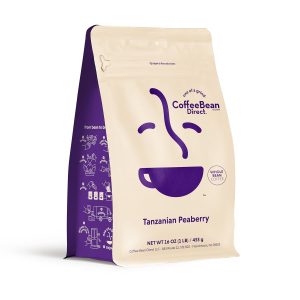
Coffee Bean Direct Tanzanian Peaberry
Commodity light roasting holds it back, but the peaberry body is genuine: denser and more textural than most light roasts manage at this price tier.
Profile
Tasting Notes
- Hot from the brewer, oat-grain sits at the front: mild and slightly sweet, built on texture more than clarity. As the cup drops to drinking temperature, the winey, fruit-forward character comes forward.
- At drinking temperature, a dark-fruit quality moves to the foreground: grape-adjacent, subdued, different in register from washed East African coffees that push citrus and high acidity.
- The body lands heavier than the roast level implies. At 4/5, it is fuller than most light roasts on the market, and the extraction feels substantive where lighter-bodied alternatives feel skeletal.
- Chocolate comes in dry: cocoa-powder character, low in the profile, supporting the fruit without competing with it.
- Bitterness at 2/5 leaves the palate open at the finish. The fruit note has room to settle without a sharp edge cutting it short.
Who It’s For
The drinker who prefers light roasts but finds most of them thin in a French press or auto-drip carafe. The peaberry body carries through temperature drop and dilution where most coffees at this roast level go flat and watery.
Drinkers sourcing light roasts specifically for the floral, citric definition that high-precision small-batch roasters produce. Coffee Bean Direct's production scale means the profile lacks the resolution that specialty-sourced Tanzanian peaberry can deliver, and the price gap to better-roasted options is often smaller than the cup quality gap suggests it should be.
Full review
Tanzanian peaberry is one of the more misunderstood designations in the commodity coffee market. The label refers to a physical characteristic: instead of two flat-sided beans developing inside the cherry, a single oval seed fills the whole cavity. Denser and more uniform, it absorbs heat more evenly during roasting. At a light roast, that density converts to body. The 4/5 body score here is a direct product of the bean's structure.
Tanzania's coffee-growing regions sit at elevation, with volcanic soil across the Kilimanjaro slopes and the Mbeya highlands giving the crop a fruit character that reads darker than Ethiopian origins: wine and dried fruit rather than citrus and floral. Washed processing strips the cherry pulp before fermentation can layer additional complexity, leaving the origin character to come through undistorted. What arrives in the cup is the grape-like quality inherent to the variety. The oat-grain note, a secondary quality common to Tanzanian washed coffees, shows up early in the extraction and sets the tone.
In a pour over, the profile opens in two stages. The early extraction runs on the oat-grain side: muted, slightly sweet, with the body already present. As the cup temperature drops, the fruit note steps forward and the whole profile shifts. Rush it or drink immediately off the dripper and you catch only the first stage. Water in the 200-205°F range draws the acidity forward; pulling lower keeps the cup compressed at the oat phase without the fruit ever developing. Grind finer than you would for a medium roast and give the bloom more time.
Drip rewards the body. Light roasts at 2-3/5 body often thin and go flat after thirty minutes in a carafe. This one holds structure through that window. For a drinker who makes one pot in the morning and returns to it over the next hour, that is a concrete advantage most light roasts cannot offer.
French press amplifies the weight further. A full four-minute steep and the cup reads heavier than the roast level suggests. The oat character is more prominent here; the fruit runs darker, closer to plum than a brightened berry.
Compared to Fresh Roasted Coffee's Organic Ethiopian Sidamo Guji on origin terms, the distinction is directional. Sidamo Guji pushes high-acidity citrus and floral brightness. This Tanzanian sits back: quieter acidity, darker fruit, body as the leading quality. A drinker expecting Guji-style lift will read this as flat. The acidity just sits lower, and the body does more of the work.
Against the Coffee Bean Direct Italian Roast on performance terms, the comparison makes the production reality legible. A dark roast covers sourcing variability with heat; inconsistency in the green lot becomes less readable once the roast caramelizes the sugars. A light roast exposes whatever the green brought. Coffee Bean Direct is not sourcing micro-lots or roasting at small-batch volumes with the temperature control that precision light roasts require. The oat character reads a little muted early; the fruit suggestion at cooler temperatures does not arrive with the clarity a carefully roasted lot from the same origin would produce.
The value case splits on expectations. At Coffee Bean Direct's price tier, a body-forward light roast with low bitterness and genuine fruit character is an honest offer. A specialty-sourced Tanzanian peaberry from a precision roaster costs more and delivers sharper flavor definition. The price gap between those two options is usually smaller than the quality gap.
Keep pulling the thread: Light roast guide, Tanzania (single origin, peaberry) origin guide, and more from Coffee Bean Direct.
Price & History
At 16 oz, this sits at a standard bag size for commodity light roasts, which makes per-ounce comparison to specialty-sourced Tanzanian alternatives straightforward once current pricing is available.
► Show price history (26 days)
| Date | Price | Per oz |
|---|---|---|
| Jul 26, 2026 | $20.95 | $1.309 |
| Jul 25, 2026 | $20.95 | $1.309 |
| Jul 24, 2026 | $20.95 | $1.309 |
| Jul 23, 2026 | $20.95 | $1.309 |
| Jul 22, 2026 | $20.95 | $1.309 |
| Jul 21, 2026 | $20.95 | $1.309 |
| Jul 20, 2026 | $20.95 | $1.309 |
| Jul 19, 2026 | $20.95 | $1.309 |
| Jul 18, 2026 | $20.95 | $1.309 |
| Jul 17, 2026 | $20.95 | $1.309 |
| Jul 15, 2026 | $20.95 | $1.309 |
| Jul 14, 2026 | $20.95 | $1.309 |
| Jul 13, 2026 | $20.95 | $1.309 |
| Jul 12, 2026 | $20.95 | $1.309 |
| Jul 11, 2026 | $20.95 | $1.309 |
| Jul 10, 2026 | $20.95 | $1.309 |
| Jul 9, 2026 | $20.95 | $1.309 |
| Jul 7, 2026 | $20.95 | $1.309 |
| Jul 5, 2026 | $20.95 | $1.309 |
| Jul 4, 2026 | $20.95 | $1.309 |
| Jul 1, 2026 | $20.95 | $1.309 |
| Jun 27, 2026 | $20.95 | $1.309 |
| Jun 25, 2026 | $20.95 | $1.309 |
| Jun 24, 2026 | $20.95 | $1.309 |
| Jun 22, 2026 | $20.95 | $1.309 |
| Jun 21, 2026 | $20.95 | $1.309 |
Rating
FAQ
What does Coffee Bean Direct Tanzanian Peaberry taste like?
Hot from the brewer, oat-grain sits at the front: mild and slightly sweet, built on texture more than clarity. As the cup drops to drinking temperature, the winey, fruit-forward character comes forward. At drinking temperature, a dark-fruit quality moves to the foreground: grape-adjacent, subdued, different in register from washed East African coffees that push citrus and high acidity. The body lands heavier than the roast level implies. At 4/5, it is fuller than most light roasts on the market, and the extraction feels substantive where lighter-bodied alternatives feel skeletal.
Who is Coffee Bean Direct Tanzanian Peaberry best for?
The drinker who prefers light roasts but finds most of them thin in a French press or auto-drip carafe. The peaberry body carries through temperature drop and dilution where most coffees at this roast level go flat and watery.
Who should skip Coffee Bean Direct Tanzanian Peaberry?
Drinkers sourcing light roasts specifically for the floral, citric definition that high-precision small-batch roasters produce. Coffee Bean Direct's production scale means the profile lacks the resolution that specialty-sourced Tanzanian peaberry can deliver, and the price gap to better-roasted options is often smaller than the cup quality gap suggests it should be.