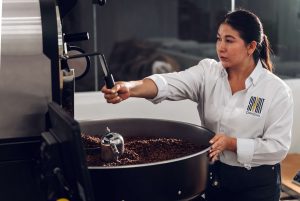
Spirit Animal Honduras Single Origin
Pay single-origin prices and you get a Honduras microlot that leads with peach and honey and keeps the bitterness near zero through the finish.
Profile
Tasting Notes
- The brightness opens as soft orange-peel citrus, present but never tart, and it resolves into peach rather than holding as sharpness through the mid-palate
- Peach is the dominant note and the cup's clearest quality: ripe and sustained, lasting well past the swallow
- A honey sweetness runs underneath and persists through the finish; the near-absent bitterness lets it read as clean rather than sugary
- Floral character registers most strongly in pour over at the right water temperature and diffuses considerably in drip, disappearing almost entirely in espresso
Who It’s For
Pour over drinkers for whom sweetness is the point, not an accent. Reach for this over a brighter Central American if you want a cup that opens gently and stays that way from first sip to the last.
Espresso drinkers expecting body and drive from the shot. The 1/5 bitterness and moderate body produce a sweet extraction that reads as flat at concentrated ratios, and milk drinks lose the peach note before they gain anything structural in return. Specialty coffee drinkers who buy single origins for depth and origin distinction will find the cup's character is focused and shallow: sweetness carries the whole thing, and once it resolves, there is no secondary layer to carry the cup forward.
Full review
Pour over is where this bean is most itself. The acidity sits at the moderate midpoint of its range and functions as brightness, opening the cup then retreating to make room for the peach note that is this Honduras's most genuine quality. The sweetness at 4 out of 5 is not the product of light roasting or a processing shortcut; it reflects what high-altitude Honduran microlots produce when they are well-sourced and well-handled, which is a fruit-forward cup with low bitterness and real clarity in the fruit expression. Florals appear in the early portion of the extraction and fade as the cup cools, which is typical behavior for this flavor class at a medium roast.
In drip, the top-end detail softens. The peach remains readable and the honey sweetness holds, but the floral register diffuses in the longer extraction and the citrus opening compresses into background texture. What remains is a straightforward sweet medium roast with no rough edge. The profile's forgiving nature means that minor grind inconsistencies or temperature drift do less damage here than they would to a higher-acidity single origin. A home drip machine without precise temperature control handles this bean without much penalty.
Honduras as a coffee origin occupies a specific niche: respected enough to populate independent roasters' menus, but less structurally assertive than Ethiopian or Kenyan coffees at comparable price points. High-altitude washed lots from the country characteristically produce fruit-forward cups with low bitterness and moderate acidity. This one sits squarely in that profile. The washed process removes fermentation influence before drying, which keeps the cup's fruit notes legible rather than layered over a fermented base. For a lot whose best quality is sweetness clarity, that is the right process decision.
Espresso is where the specs reveal a concrete limitation. Volcanica Costa Rica Tarrazu, as a flavor-profile comparison, brings more structural brightness and body to concentrated extraction. The Tarrazu's higher acidity provides a backbone the shot can build around, and the body translates into something that carries through a milk drink. This Honduras pulls sweet and avoids astringency, but the 3 out of 5 body does not build density at espresso ratios. The shot is gentle. For drinkers who want a sweet, low-friction espresso, it works. It does not have the structural weight that most espresso setups depend on.
Against Mt. Comfort Organic Peru Medium Roast on performance across brew methods, the Honduras holds comparable levels of consistency and accessibility. The Peru tends to show cocoa in the base and runs with less sweetness but more body; across methods, the Peru holds its character more evenly. The Honduras exceeds the Peru in pour over expression, where the peach note is at its clearest, but it gives ground at espresso ratios. Two competent medium roasts with different strengths: the Honduras delivers in the brewer; the Peru spans a broader range of uses.
Spirit Animal's 12 oz single-origin format places this in a market where the provenance claim and roaster margin are built into the price as much as the cup is. High-altitude Honduras microlots deserve the single-origin label when they deliver on it, and this one does on sweetness and approachability. The question is whether sweetness alone justifies the specialty-tier price against a well-sourced washed Colombian or Peruvian in the same range. Comparable lots in those origins often bring more body and structural variation. If you need this cup's specific softness and peach character, the premium is earned. If you are buying a single origin because you want a cup that reveals different facets as it opens, you will find a ceiling here quickly.
The peach-honey character is repeatable, and that consistency is what a morning pour over drinker relies on from a single origin. The limitation is depth: once the sweetness resolves, there is no secondary character to carry the cup forward.
Keep pulling the thread: Medium roast guide, Honduras (single origin, high-altitude microlots) origin guide, and more from Spirit Animal.
Price & History
At 12 oz, this sits in the standard specialty single-origin format, where the sourcing claim and roaster margin are part of what the price reflects alongside the cup character.
► Show price history (26 days)
| Date | Price | Per oz |
|---|---|---|
| Jul 26, 2026 | $29.00 | $2.417 |
| Jul 25, 2026 | $29.00 | $2.417 |
| Jul 24, 2026 | $29.00 | $2.417 |
| Jul 23, 2026 | $29.00 | $2.417 |
| Jul 22, 2026 | $29.00 | $2.417 |
| Jul 21, 2026 | $29.00 | $2.417 |
| Jul 20, 2026 | $29.00 | $2.417 |
| Jul 19, 2026 | $29.00 | $2.417 |
| Jul 18, 2026 | $29.00 | $2.417 |
| Jul 17, 2026 | $29.00 | $2.417 |
| Jul 15, 2026 | $29.00 | $2.417 |
| Jul 14, 2026 | $29.00 | $2.417 |
| Jul 13, 2026 | $29.00 | $2.417 |
| Jul 12, 2026 | $29.00 | $2.417 |
| Jul 11, 2026 | $29.00 | $2.417 |
| Jul 10, 2026 | $29.00 | $2.417 |
| Jul 9, 2026 | $29.00 | $2.417 |
| Jul 7, 2026 | $29.00 | $2.417 |
| Jul 5, 2026 | $29.00 | $2.417 |
| Jul 4, 2026 | $29.00 | $2.417 |
| Jul 1, 2026 | $29.00 | $2.417 |
| Jun 27, 2026 | $29.00 | $2.417 |
| Jun 25, 2026 | $29.00 | $2.417 |
| Jun 24, 2026 | $29.00 | $2.417 |
| Jun 22, 2026 | $29.00 | $2.417 |
| Jun 21, 2026 | $29.00 | $2.417 |
Rating
FAQ
What does Spirit Animal Honduras Single Origin taste like?
The brightness opens as soft orange-peel citrus, present but never tart, and it resolves into peach rather than holding as sharpness through the mid-palate Peach is the dominant note and the cup's clearest quality: ripe and sustained, lasting well past the swallow A honey sweetness runs underneath and persists through the finish; the near-absent bitterness lets it read as clean rather than sugary
Who is Spirit Animal Honduras Single Origin best for?
Pour over drinkers for whom sweetness is the point, not an accent. Reach for this over a brighter Central American if you want a cup that opens gently and stays that way from first sip to the last.
Who should skip Spirit Animal Honduras Single Origin?
Espresso drinkers expecting body and drive from the shot. The 1/5 bitterness and moderate body produce a sweet extraction that reads as flat at concentrated ratios, and milk drinks lose the peach note before they gain anything structural in return. Specialty coffee drinkers who buy single origins for depth and origin distinction will find the cup's character is focused and shallow: sweetness carries the whole thing, and once it resolves, there is no secondary layer to carry the cup forward.