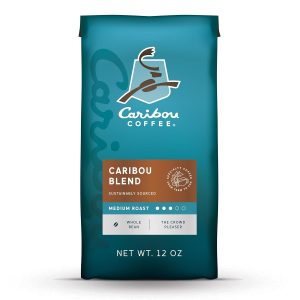
Caribou Coffee Caribou Blend
You pay a national-brand price for a sweet, low-bitterness medium that works across any brewer in your kitchen, but the cup character does not close the gap over less expensive alternatives.
Profile
Tasting Notes
- As the cup cools toward 150F and below, the caramel sweetness moves forward while the faint cocoa dryness on the back of the palate settles. The opening sip is roast-forward; the second half of the cup is where the blend's sweetness becomes the center.
- Roasted hazelnut on the mid-palate, more pronounced in drip than in pour over, where lighter extraction keeps the mid-palate quieter.
- Body sits in the middle: substantial enough to carry through a French press, not heavy enough to coat the mouth or accumulate past the swallow.
- Bitterness stays low throughout. The finish dries from the light cocoa quality but releases quickly without a tannin pull.
Who It’s For
Anyone running auto-drip every morning who wants the machine to produce a good cup without adjustments. The high sweetness and low bitterness also make this a reasonable base for lattes and milk drinks when espresso equipment is not in the picture.
The blend erases origin character by design, so the five-country origin list is marketing copy, not a flavor promise. At the 12-ounce price point, options with clearer origin expression or better per-ounce value exist at the same retail tier.
Full review
The decision to blend five origins at medium roast is a bet on consistency over character. Caribou has built this blend around predictability: it works across drip, pour over, and French press without requiring the brewer to adjust much. The cup bears that out. Nothing here surprises you. That is both the product's strength and its limit.
The cup runs sweet from start to finish. The 4/5 sweetness reflects the caramel quality from the Brazilian and Colombian components surviving the roast intact, and it leads the profile from first sip. Caramel sweetness at medium roast is a function of the Maillard reaction stopping before the sugars tip to bitter: the Caribou Blend lands consistently in that window. Bitterness at 2/5 means the finish does not drag: the dry cocoa note that closes the cup fades quickly and the palate resets. Acidity is low at 2/5, so no brightness or tang cuts through the sweetness, and the cup stays in caramel territory from first sip to last. Body sits at 3/5, enough presence in a French press for the cup to feel full, short of the heaviness that Sumatra-dominant blends often carry. You get a coffee with low friction and a clear flavor direction.
The brew method changes the cup more than the roast or origin implies. In drip, the caramel sweetness is the center of gravity throughout the brew cycle: the machine's consistent water temperature and dwell time extract the sugars evenly, and the result is predictable cup to cup. Pour over at medium-coarse grind runs lighter and more varied. The Sumatran earthiness is less prominent because faster flow rate keeps contact time shorter, but the tradeoff is that the mid-palate hazelnut note steps back as well. The cup is cleaner in pour over, less full. French press is where the Sumatra component surfaces most clearly: a steep past four minutes pulls an earthy, slightly funky quality from the natural-process component. That earthy quality reads as extraction error. The blend is behaving as designed at high extraction: stop the steep before it gets there.
Origin character is the first casualty of blending five countries at medium roast, and the price does not compensate for its absence. Kirkland Signature Colombian Supremo delivers comparable auto-drip performance with cleaner single-origin character for less per ounce. Café Don Pablo Gourmet Coffee Signature Blend targets the same approachable, sweet, low-bitterness profile at a lower per-ounce cost as well. What the Caribou Blend offers in return is brand recognition and reliable retail availability. Those are distribution advantages, not cup advantages.
The origin list reveals more about the blend's intentions than its flavor. Brazil anchors the caramel sweetness and provides the body baseline. Costa Rica and Colombia contribute acidity potential that the medium roast suppresses: the cup has structure and coherence because of them, and the acidity sits low. Guatemala adds body support. The Sumatra is the one variable that does not fully disappear at this roast level and blend ratio; it registers as an earthy undercurrent in the texture rather than a flavor the drinker can isolate. The mixed process (washed and natural components in the same blend) preserves some sweetness from the natural-process beans while the washed origins contribute cleaner structure. In a short drip extraction, the Sumatra earthiness is barely present. In a long press extraction, it comes forward.
The 12-ounce bag is a practical constraint. For a household brewing two or more cups a day, this disappears in under a week. The per-ounce cost at 12 ounces is the most expensive entry point for this blend. Caribou offers larger formats, and the price per ounce shifts meaningfully at higher weights. The 12-ounce size works for a first trial; it is not the efficient long-term purchase.
Keep pulling the thread: Medium roast guide, Brazil, Costa Rica, Colombia, Guatemala, Sumatra blend origin guide, and more from Caribou Coffee.
Price & History
A 12-ounce bag is the smallest format available for this blend, making it a higher per-ounce entry point than the larger sizes Caribou offers.
► Show price history (26 days)
| Date | Price | Per oz |
|---|---|---|
| Jul 26, 2026 | $7.99 | $0.666 |
| Jul 18, 2026 | $7.99 | $0.666 |
| Jul 14, 2026 | $7.99 | $0.666 |
| Jul 13, 2026 | $7.99 | $0.666 |
| Jul 12, 2026 | $7.99 | $0.666 |
| Jul 11, 2026 | $7.99 | $0.666 |
| Jul 10, 2026 | $7.99 | $0.666 |
| Jul 9, 2026 | $7.99 | $0.666 |
| Jul 8, 2026 | $7.99 | $0.666 |
| Jul 7, 2026 | $7.99 | $0.666 |
| Jul 6, 2026 | $7.99 | $0.666 |
| Jul 5, 2026 | $7.99 | $0.666 |
| Jul 4, 2026 | $7.99 | $0.666 |
| Jul 3, 2026 | $7.99 | $0.666 |
| Jul 2, 2026 | $7.99 | $0.666 |
| Jul 1, 2026 | $7.99 | $0.666 |
| Jun 30, 2026 | $7.99 | $0.666 |
| Jun 29, 2026 | $7.99 | $0.666 |
| Jun 28, 2026 | $7.99 | $0.666 |
| Jun 27, 2026 | $7.99 | $0.666 |
| Jun 26, 2026 | $7.99 | $0.666 |
| Jun 25, 2026 | $7.99 | $0.666 |
| Jun 24, 2026 | $7.99 | $0.666 |
| Jun 23, 2026 | $7.99 | $0.666 |
| Jun 22, 2026 | $7.99 | $0.666 |
| Jun 14, 2026 | $7.99 | $0.666 |
Rating
FAQ
What does Caribou Coffee Caribou Blend taste like?
As the cup cools toward 150F and below, the caramel sweetness moves forward while the faint cocoa dryness on the back of the palate settles. The opening sip is roast-forward; the second half of the cup is where the blend's sweetness becomes the center. Roasted hazelnut on the mid-palate, more pronounced in drip than in pour over, where lighter extraction keeps the mid-palate quieter. Body sits in the middle: substantial enough to carry through a French press, not heavy enough to coat the mouth or accumulate past the swallow.
Who is Caribou Coffee Caribou Blend best for?
Anyone running auto-drip every morning who wants the machine to produce a good cup without adjustments. The high sweetness and low bitterness also make this a reasonable base for lattes and milk drinks when espresso equipment is not in the picture.
Who should skip Caribou Coffee Caribou Blend?
The blend erases origin character by design, so the five-country origin list is marketing copy, not a flavor promise. At the 12-ounce price point, options with clearer origin expression or better per-ounce value exist at the same retail tier.