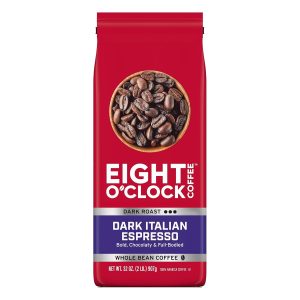
Eight O’Clock Dark Italian Espresso
The body holds through every brew method on the list, but maximum roast intensity has flattened the East Africa component entirely, and the low sweetness leaves little to work with once the bitterness arrives.
Profile
Tasting Notes
- Acidity is absent. Both origins have been roasted past anything they could contribute in that direction.
- Cocoa-powder bitterness up front, dry and immediate. The 2/5 sweetness is not there to soften the landing.
- Body is the concrete asset: 4/5 means the shot pulls dense and the french press cup holds structure without going watery.
- Caramel sits far back, accessible at the right temperature, but the bitterness arrives first and holds center.
- Milk opens the cup. Black, the bitterness dominates from first sip to the last swallow.
Who It’s For
The morning auto-drip drinker who adds milk and wants a dark, substantial cup without paying specialty prices. If you pull espresso on a basic home machine without precise temperature control, the 4/5 body gives you something to work with even when the extraction is imperfect.
With sweetness at 2/5, there is nothing to push back on the 4/5 bitterness when drinking black, and the cup finishes dry and astringent. Anyone drawn to the East Africa component expecting citrus or florals will find nothing there: at 5/5 roast intensity, that origin character is gone before it starts.
Full review
Eight O'Clock's Original Whole Bean Coffee is the useful performance baseline here. Both are grocery-tier, accessible, and built without pretension about what they are. The Original spans a broader roast range, which gives the cup more latitude. The Dark Italian Espresso narrows everything toward maximum intensity and heavy body, designed to hold up through milk. Going darker to this degree gains robustness and sacrifices the origin clarity that lighter roasts preserve.
The Starbucks Espresso Roast shares the same general flavor architecture: dark, Italian-style, built for milk, low acidity. The Eight O'Clock's roast intensity is higher, and body scores are comparable in practice. The distinguishing factor is sourcing transparency. Eight O'Clock names Latin America and East Africa explicitly, which sounds like more cup character than the roast level delivers. At maximum roast intensity, East Africa origin character is gone. The florals and citrus brightness that washed East African coffees carry at lighter roasts don't survive 5/5 intensity. The Latin American base drives everything.
What the cup delivers is the Latin American backbone: cocoa-powder bitterness and muted caramel at the tail. Body holds across every brew method on the list. Drip, press, and espresso all produce a dense result. French press in particular rewards the 4/5 body score: the cup holds structure through a full steep and does not thin as it cools. For espresso, the body means the shot has presence even on a basic machine. For a grocery-tier dark roast at bulk size, that cross-method consistency is the practical value.
The bitterness at this cup level is structural. The roast mechanism drives melanoidin production high while burning most of the sugars before they register as sweetness. At 4/5 bitterness and 2/5 sweetness, the cup has no counterweight when served black. This is not a quality-control problem; it is what maximum-intensity washed roasting produces at this level. Add milk and the bitterness softens, the caramel gets more room, and the body gives lattes and cappuccinos something to work against. The cup performs in milk drinks, and that is the context the roast level was chosen for.
The purchase case is a consistent, heavy cup that handles milk, pulls a serviceable shot on a standard machine, and does not require careful dialing. At 32oz, this is a bulk grocery buy priced accordingly. You are not getting origin distinction or process transparency. Black espresso is dry and astringent, the honest result of these sensory numbers at full concentration. For milk-based drinks, those same numbers produce something functional and predictable.
Maximum roast intensity makes a cup that is consistent bag to bag. The East Africa addition probably stabilizes the supply chain and contributes body variety at the green stage. By the time the coffee reaches the cup, that origin contribution is indistinguishable. The Latin American base produces the flavor profile; the East Africa component has been absorbed entirely by the roast level.
The one context where this cup competes well is milk-based espresso at home. Standard machines produce enough pressure to extract the body, and the high bitterness stays controlled under milk. Pull a short, dense shot and add steamed milk at a reasonable ratio. The caramel registers briefly, the bitterness drops back, and the body holds the drink together. The 32oz format makes sense for a household that uses this method every morning.
Keep pulling the thread: Dark roast guide, Latin America and East Africa blend origin guide, and more from Eight O’Clock Coffee.
Price & History
At 32 oz, this sits in the value tier for grocery dark roasts, where comparable blends typically sell in 12 or 24 oz formats at a higher per-ounce cost.
► Show price history (26 days)
| Date | Price | Per oz |
|---|---|---|
| Jul 26, 2026 | $31.99 | $1.000 |
| Jul 25, 2026 | $31.99 | $1.000 |
| Jul 24, 2026 | $31.99 | $1.000 |
| Jul 23, 2026 | $31.99 | $1.000 |
| Jul 22, 2026 | $13.79 | $0.431 |
| Jul 21, 2026 | $13.79 | $0.431 |
| Jul 20, 2026 | $13.79 | $0.431 |
| Jul 19, 2026 | $13.79 | $0.431 |
| Jul 18, 2026 | $13.79 | $0.431 |
| Jul 17, 2026 | $13.79 | $0.431 |
| Jul 15, 2026 | $13.79 | $0.431 |
| Jul 14, 2026 | $31.99 | $1.000 |
| Jul 13, 2026 | $31.99 | $1.000 |
| Jul 12, 2026 | $31.99 | $1.000 |
| Jul 11, 2026 | $13.79 | $0.431 |
| Jul 10, 2026 | $13.79 | $0.431 |
| Jul 9, 2026 | $13.79 | $0.431 |
| Jul 7, 2026 | $13.79 | $0.431 |
| Jul 5, 2026 | $31.99 | $1.000 |
| Jul 4, 2026 | $31.99 | $1.000 |
| Jul 1, 2026 | $31.99 | $1.000 |
| Jun 27, 2026 | $31.99 | $1.000 |
| Jun 25, 2026 | $31.99 | $1.000 |
| Jun 24, 2026 | $31.99 | $1.000 |
| Jun 22, 2026 | $31.99 | $1.000 |
| Jun 21, 2026 | $31.99 | $1.000 |
Rating
FAQ
What does Eight O’Clock Dark Italian Espresso taste like?
Acidity is absent. Both origins have been roasted past anything they could contribute in that direction. Cocoa-powder bitterness up front, dry and immediate. The 2/5 sweetness is not there to soften the landing. Body is the concrete asset: 4/5 means the shot pulls dense and the french press cup holds structure without going watery.
Who is Eight O’Clock Dark Italian Espresso best for?
The morning auto-drip drinker who adds milk and wants a dark, substantial cup without paying specialty prices. If you pull espresso on a basic home machine without precise temperature control, the 4/5 body gives you something to work with even when the extraction is imperfect.
Who should skip Eight O’Clock Dark Italian Espresso?
With sweetness at 2/5, there is nothing to push back on the 4/5 bitterness when drinking black, and the cup finishes dry and astringent. Anyone drawn to the East Africa component expecting citrus or florals will find nothing there: at 5/5 roast intensity, that origin character is gone before it starts.