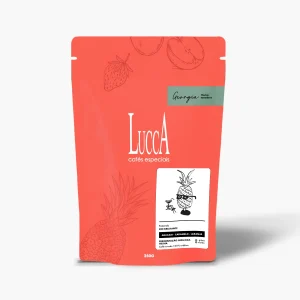
Lucca Cafés Especiais Sítio Maristela
Dried apricot opens heavy, the body stays through to the end, and nothing bitter chases it.
Profile
Tasting Notes
- Acidity is the absentee: at 3/5, the cup never brightens or sharpens, and the fruit operates without a structural edge beneath it.
- What fills that absence is body: 5/5, coating from first sip, heavy enough to carry the dried fruit through the full drink without it fading early.
- Dried apricot leads, concentrated and candied while the cup is hot, then dries out and quiets as it cools toward vanilla warmth.
- The floral element runs as background texture, dried chamomile rather than jasmine, woven beneath the fruit rather than announcing itself upfront.
- Bitterness at 2/5 stays out of the frame; sweetness at 5/5 means the body never tips into the austere territory that can trap natural-process coffees when the fruit fades.
Who It’s For
Someone who has outgrown commodity Brazilian mediums and wants natural-process dried fruit character in a heavy cup without the extraction precision that high-acidity naturals demand. The 5/5 body and low bitterness hold well in an automatic drip setup, and the apricot character comes through cleanly in a careful pour over.
Anyone brewing french press on a long steep or letting the cup sit will find the sweetness tips from concentrated to heavy and the dried apricot loses its shape. The 3/5 acidity provides no rescue for an extraction that runs long: there is nothing to cut through the weight when it starts accumulating.
Full review
A medium roast on a natural-process Catuai Amarelo 62 is the decision that shapes everything in this cup. Natural processing dries the whole cherry, concentrating sugars and building fruit character into the bean before the roaster touches it. Medium development preserves that without pushing into roast-dominated territory, which means the fruit survives. The tradeoff is brightness. Norte Pioneiro in Paraná sits at modest altitude for Brazilian coffee, and the roasting decisions here did not push the acidity upward. At 3/5, the cup sacrifices the structural edge that some high-grown Brazilian origins or washed processes can deliver. Sweetness and body move into the space where that edge would normally sit.
The body at 5/5 is the defining quality, and it earns that designation by doing something beyond adding weight: it carries the natural-process fruit through the full drink rather than letting the apricot bloom early and fall away by mid-cup. Dried apricot reads as candied at brewing temperature and dries out as it cools, transitioning gradually into the background vanilla warmth that Catuai Amarelo 62's yellow cherry concentration contributes. Bitterness at 2/5 stays absent from the frame entirely, which is how this cup manages to be both heavy and sweet without the weight becoming cloying. The floral note the producer identifies is present: dried chamomile texture beneath the fruit, real but subordinate.
Across the recommended brew methods, the results differ. Drip handles this well, keeping the extraction speed from amplifying the sweetness into something overwhelming and letting the fruit read distinctly. Pour over rewards attention to pour rate and total time; slow the brew and the apricot stays defined versus blending into background warmth. French press is where the body argument is strongest, but it is also where the natural process becomes a liability if the steep runs long. Extended immersion amplifies the sweetness past the point where the fruit remains distinct. The cup that performs well in a french press when brewed attentively becomes cloying when neglected.
The Mikava Coffee Gesha Espresso Blend represents a different direction for what natural processing can produce: high-register florals, bright stone fruit clarity, the body as a secondary element. The Sítio Maristela goes the other way, with body as the lead and the fruit working inside it. Both are naturals with real fruit character, but they are not substitutes for each other, and the comparison illuminates what this cup is: heavier, darker fruit, the floral quality as texture. Against Kicking Horse Three Sisters Medium Roast on the question of performance, Three Sisters is a blend designed for reliability across a wide range of setups. This single-farm lot has more character when the extraction is right and more sensitivity when it is not. Three Sisters forgives; this one rewards attention.
The 12-oz farm-specific format and the Catuai Amarelo 62 varietal designation put this well above commodity Brazilian mediums in sourcing terms, and that specificity shows up in the cup. The dried apricot and vanilla warmth at 5/5 sweetness are not generic Brazilian medium flavors; they are what the natural process does to a named varietal from a named farm. Whether the price reflects the cup fairly depends on what alternative you are holding it against. A grocery-aisle Brazilian medium does not deliver this; a mid-tier specialty natural from Ethiopia or Central America at a similar price might deliver more acidity and distinct origin character at the cost of body. The value case here rests on body and sweetness, not on brightness.
The cup has two temperature phases and the sequence matters. Hot, the dried apricot is concentrated and the body is at its heaviest. As it cools, the fruit quiets and the vanilla comes forward, rounding out what was sharper earlier. A drinker who works through the cup while it is hot gets the apricot; one who lets it sit gets vanilla weight without the fruit distinction.
Keep pulling the thread: Medium roast guide, Brazil, Paraná, Norte Pioneiro origin guide, and more from Lucca Cafés Especiais.
Price & History
The 12-oz farm-specific format from a named single-estate lot in Norte Pioneiro places this well above supermarket-tier Brazilian mediums on price.
Price history coming soon — check back after the next daily update.
Rating
FAQ
What does Lucca Cafés Especiais Sítio Maristela taste like?
Acidity is the absentee: at 3/5, the cup never brightens or sharpens, and the fruit operates without a structural edge beneath it. What fills that absence is body: 5/5, coating from first sip, heavy enough to carry the dried fruit through the full drink without it fading early. Dried apricot leads, concentrated and candied while the cup is hot, then dries out and quiets as it cools toward vanilla warmth.
Who is Lucca Cafés Especiais Sítio Maristela best for?
Someone who has outgrown commodity Brazilian mediums and wants natural-process dried fruit character in a heavy cup without the extraction precision that high-acidity naturals demand. The 5/5 body and low bitterness hold well in an automatic drip setup, and the apricot character comes through cleanly in a careful pour over.
Who should skip Lucca Cafés Especiais Sítio Maristela?
Anyone brewing french press on a long steep or letting the cup sit will find the sweetness tips from concentrated to heavy and the dried apricot loses its shape. The 3/5 acidity provides no rescue for an extraction that runs long: there is nothing to cut through the weight when it starts accumulating.