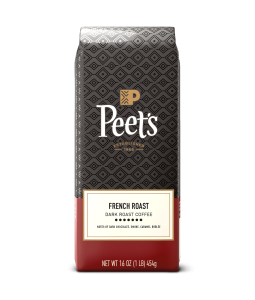
Peet’s Coffee French Roast
Smoke and char from first contact, a heavy body that holds through the cup, and a finish that sits dry rather than fading.
Profile
Tasting Notes
- Hot, the cup opens on dry smoke and char; as it cools, the smoke pulls back and the bitterness takes over, sitting dry through the finish
- Body holds at 4/5: substantial weight that prevents the cup from reading hollow even as the flavors flatten with temperature drop
- Sweetness at 2/5 exists only at peak temperature; once the cup drops below comfortable sipping range, it disappears entirely
- Bitterness at 4/5 is the dominant note through the second half of every cup; with acidity at 1/5, nothing cuts through or lifts it
- The char is dry and coating, specific to beans held at maximum roast temperature: it sits on the palate after swallowing
Who It’s For
Whoever orders French roast at the grocery store because they want something dark, heavy, and familiar without further thought. The body at 4/5 is a genuine asset in a full French press or a large drip carafe, which is the context this coffee was built to serve.
The Peet's name carries a price premium over commodity French roasts pulling the same sensory profile from the same roast level, and the cup does nothing to justify it. If you are evaluating what is in the glass, you are paying for brand recognition, not a cup that distinguishes itself from the field.
Full review
The French roast category is not asking to be discovered. It announces itself. Peet's built its early reputation on dark roasts in an era when most American coffee leaned toward the pale and weak, and the French Roast is their most extreme expression of that position: 5/5 roast intensity, the darkest band on their lineup, pushed to the outer edge of second crack. The smoke and char in the cup are the product, and the cup delivers them on schedule.
Hot, the opening sip is dense and smoky, with the particular dry char that comes from beans held at maximum roast temperature. The body at 4/5 gives it real mass: this is a heavy cup, not a thin or sharp one. A French press bloom yields a dense, almost inky brew. A drip cycle produces something with enough body that it holds up across a full carafe, which is the format where a lot of this coffee ends up consumed. The weight is the one thing that separates it from lesser dark roasts that read thin and acrid once they cool.
Compare this to Starbucks French Roast, which targets the same flavor address: maximum roast, smoke, char, minimal origin character. Both were built for the same drinker. The Starbucks version runs slightly thinner in the cup, and the smoke character reads sharper and higher on the palate. The Peet's French Roast carries more body weight and a heavier roast character that sits lower, which is what gives it more utility in immersion brewing. The difference is not dramatic, but it is consistent, and it matters more in a French press than in drip.
Extraction behavior is where Groundwork Organic French Roast diverges. The Groundwork version is measurably more forgiving when water temperature runs high, likely owing to some attention paid to the green coffee before roasting. The Peet's Latin America blend reads more brittle at the same extraction temperature: push water much above 200°F and the bitterness sharpens past the point of usefulness. That brittleness is the practical performance gap between the two, and it is worth knowing before you set your drip machine on a standard dark-roast program without adjusting the temperature.
The washed process used on the Latin America base would, in a lighter roast, contribute a clean, mild acidity and stone-fruit sweetness typical of washed processing from that region. At 5/5 roast intensity, none of that survives. The blend sourcing is a cost and consistency decision: Latin America commodity lots produce predictable washed processing with a stable green profile, which means the roasted output lands in the same place bag after bag. That is the value proposition of this format, and the cup delivers it reliably.
On price: a 12 oz bag puts this in the standard grocery-tier dark roast format, but the Peet's brand carries a premium over private-label French roasts pulling the same sensory profile from the same roast level. The cup in the glass does not show that premium. For a drinker buying on brand trust and wanting consistency in the style, the premium is a reasonable cost. For a drinker comparing what the cup does, the premium is harder to defend against cheaper competitors in the same category.
This coffee asks nothing difficult of the person brewing it, and it offers nothing that requires discovery. The use case is a large drip carafe or a French press for a household that wants French roast coffee without further consideration. The cup is predictable, the roast is dominant, the origin is invisible, and the execution is consistent. That is the full extent of the offer.
Keep pulling the thread: Dark roast guide, Latin America blend origin guide, and more from Peet’s Coffee.
Price & History
This ships as a 12 oz bag, placing it in the standard grocery-tier dark roast format alongside most of its direct shelf competitors.
► Show price history (38 days)
| Date | Price | Per oz |
|---|---|---|
| Jul 26, 2026 | $21.95 | $1.829 |
| Jul 25, 2026 | $21.95 | $1.829 |
| Jul 24, 2026 | $21.95 | $1.829 |
| Jul 23, 2026 | $21.95 | $1.829 |
| Jul 22, 2026 | $21.95 | $1.829 |
| Jul 21, 2026 | $21.95 | $1.829 |
| Jul 20, 2026 | $21.95 | $1.829 |
| Jul 19, 2026 | $21.95 | $1.829 |
| Jul 18, 2026 | $21.95 | $1.829 |
| Jul 17, 2026 | $21.95 | $1.829 |
| Jul 16, 2026 | $21.95 | $1.829 |
| Jul 15, 2026 | $21.95 | $1.829 |
| Jul 14, 2026 | $21.95 | $1.829 |
| Jul 13, 2026 | $21.95 | $1.829 |
| Jul 12, 2026 | $21.95 | $1.829 |
| Jul 11, 2026 | $21.95 | $1.829 |
| Jul 10, 2026 | $21.95 | $1.829 |
| Jul 9, 2026 | $21.95 | $1.829 |
| Jul 8, 2026 | $21.95 | $1.829 |
| Jul 7, 2026 | $21.95 | $1.829 |
| Jul 6, 2026 | $21.95 | $1.829 |
| Jul 5, 2026 | $21.95 | $1.829 |
| Jul 4, 2026 | $21.95 | $1.829 |
| Jul 3, 2026 | $21.95 | $1.829 |
| Jul 2, 2026 | $21.95 | $1.829 |
| Jul 1, 2026 | $21.95 | $1.829 |
| Jun 30, 2026 | $21.95 | $1.829 |
| Jun 29, 2026 | $21.95 | $1.829 |
| Jun 28, 2026 | $21.95 | $1.829 |
| Jun 27, 2026 | $21.95 | $1.829 |
| Jun 26, 2026 | $21.95 | $1.829 |
| Jun 25, 2026 | $21.95 | $1.829 |
| Jun 24, 2026 | $21.95 | $1.829 |
| Jun 23, 2026 | $21.95 | $1.829 |
| Jun 22, 2026 | $21.95 | $1.829 |
| Jun 21, 2026 | $21.95 | $1.829 |
| Jun 14, 2026 | $21.95 | $1.829 |
| Jun 13, 2026 | $21.95 | $1.829 |
Rating
FAQ
What does Peet’s Coffee French Roast taste like?
Hot, the cup opens on dry smoke and char; as it cools, the smoke pulls back and the bitterness takes over, sitting dry through the finish Body holds at 4/5: substantial weight that prevents the cup from reading hollow even as the flavors flatten with temperature drop Sweetness at 2/5 exists only at peak temperature; once the cup drops below comfortable sipping range, it disappears entirely
Who is Peet’s Coffee French Roast best for?
Whoever orders French roast at the grocery store because they want something dark, heavy, and familiar without further thought. The body at 4/5 is a genuine asset in a full French press or a large drip carafe, which is the context this coffee was built to serve.
Who should skip Peet’s Coffee French Roast?
The Peet's name carries a price premium over commodity French roasts pulling the same sensory profile from the same roast level, and the cup does nothing to justify it. If you are evaluating what is in the glass, you are paying for brand recognition, not a cup that distinguishes itself from the field.