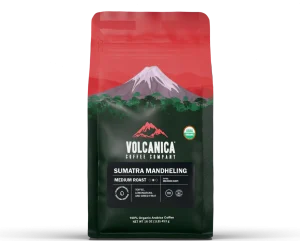
Volcanica Coffee Ethiopian Yirgacheffe Coffee
For pour-over and drip drinkers who want Gedeo Zone brightness without roast weight diluting it, this washed Yirgacheffe puts lemon at the front, blueberry through the middle, and exits fast.
Profile
Tasting Notes
- Acidity arrives first and defines the cup (5/5): a sharp lemon note specific enough to register as an actual flavor, not as a generalized citrus brightness
- Blueberry follows at mid-palate, looser and softer than the citrus, with a blackberry thread underneath that deepens the sweetness without pulling focus
- Sweetness is high (4/5) and runs through the fruit; the cup reads as fruit-forward, not as sweet in the dessert sense
- Bitterness is low (2/5) and the finish exits quickly, leaving no dryness or residue
Who It’s For
Filter brewers escaping medium roasts that bury origin character under caramel and toast. The 5/5 acidity and fruit-forward profile reward anyone who wants to taste where the coffee came from, without heat or roast intensity getting in the way.
The 1/5 body is not a roasting mistake; it is the cost of preserving the brightness, and it is a real limitation. French press drinkers who drink for weight and texture will find this thin regardless of how they brew it, and the cup does not respond to method adjustments that typically add body.
Full review
Volcanica keeps the roast at the restrained end of light-medium for this Gedeo Zone lot. The logic is straightforward: push the development further and the lemon-to-blueberry brightness the Yirgacheffe terroir is built on begins folding into caramel and roast-forward toast. At this roast level, the fruit stays intact. What you give up is body. A 1/5 body reading is not a defect for a washed Ethiopian from this elevation; it is what happens when a roaster chooses expressiveness over weight. This bag made that trade, and the cup reflects it precisely.
In the cup, lemon is the first thing that lands. At 5/5 acidity, there is nothing subtle about it: the citrus is sharp and specific, not the vague brightness that lighter-roasted grocery-shelf Ethiopians flatten into indistinction. Blueberry arrives next, carrying the 4/5 sweetness, and a blackberry thread runs underneath, softer than either, adding some depth to the fruit. The bitterness at 2/5 is low enough that nothing clings at the finish. The cup clears without heat, without dryness, without roast residue.
Gedeo Zone coffee carries one of the more reliable flavor identities in Ethiopia. Lots from this zone typically grow above 1,800 meters, which compresses the cherry's development and concentrates sugars while preserving the organic acids that altitude promotes. Washed processing removes the fruit pulp before the bean dries, eliminating the fermentation variables a natural process introduces. What reaches the roaster is a clean signal, and what reaches the cup is as direct an expression of the origin as the category allows. The lemon-blueberry arc on a washed Gedeo lot is the consensus outcome across sources precisely because the terroir and the process are both pointing the same direction.
Pour-over is the format that flatters this most. Water in the 200-202F range extracts the lemon and blueberry without sharpening the acidity past the point where the fruit reads as fruit. Drip works at machines that hold in that range; the blueberry note compresses slightly in some rigs that run toward the cooler end of the spectrum, but the lemon holds. French press extracts the cup cleanly but the method asks for weight this coffee does not carry. A french press built on a 1/5 body is a thin cup, and no grind adjustment changes that.
The Volcanica Coffee Ethiopian Yirgacheffe Decaf shares this profile on the flavor dimension. The lemon-blueberry arc is the same terroir signal with the same Gedeo Zone washed character, so if you already know that version, you know the flavor shape this lot occupies. What this version carries intact that the decaf does not is the full 5/5 acidity; decaffeination tends to affect cellular structure in ways that soften the brightness slightly. On the performance axis, the Ruta Maya Organic Medium Roast sits at a completely different brief: it prioritizes roast-forward consistency, body, and structural reliability over origin expressiveness. Ruta Maya gives you a forgiving, medium-weight cup with predictable behavior across grind and water variables. This Yirgacheffe gives you the fruit and the brightness. The two coffees are built for different outcomes.
What the price of this 12 oz format buys that a grocery-shelf Ethiopian cannot match is zone-specific sourcing maintained at a roast level that lets the origin speak. Generic Yirgacheffe SKUs commonly blend sub-zones or roast through origin character to achieve shelf-stable consistency. A Gedeo Zone lot held at restrained light-medium development requires a sourcing relationship and processing chain that commodity lots do not support. Whether the per-ounce cost is justified depends on current retail pricing, which is not available here, but the specificity of the result is real. The lemon-blackberry fruit profile this bag delivers is not the default outcome of a blended Yirgacheffe pushed through a medium development.
The body constraint is the honest ceiling. The acidity-sweetness combination at 5/5 and 4/5 is strong, and washed Gedeo Zone sourcing gives that combination a reliable flavor outcome. But a 1/5 body means the cup has one register: light, fast, and fruit-forward. You cannot adjust toward richness through method or grind. That is the product's nature.
Keep pulling the thread: Light-Medium roast guide, Ethiopia, Gedeo Zone origin guide, and more from Volcanica Coffee.
Price & History
The 12 oz format positions this among single-origin filter coffees where Gedeo Zone specificity and restrained roast development account for the premium over commodity Yirgacheffe blends.
Price history coming soon — check back after the next daily update.
Rating
FAQ
What does Volcanica Coffee Ethiopian Yirgacheffe Coffee taste like?
Acidity arrives first and defines the cup (5/5): a sharp lemon note specific enough to register as an actual flavor, not as a generalized citrus brightness Blueberry follows at mid-palate, looser and softer than the citrus, with a blackberry thread underneath that deepens the sweetness without pulling focus Sweetness is high (4/5) and runs through the fruit; the cup reads as fruit-forward, not as sweet in the dessert sense
Who is Volcanica Coffee Ethiopian Yirgacheffe Coffee best for?
Filter brewers escaping medium roasts that bury origin character under caramel and toast. The 5/5 acidity and fruit-forward profile reward anyone who wants to taste where the coffee came from, without heat or roast intensity getting in the way.
Who should skip Volcanica Coffee Ethiopian Yirgacheffe Coffee?
The 1/5 body is not a roasting mistake; it is the cost of preserving the brightness, and it is a real limitation. French press drinkers who drink for weight and texture will find this thin regardless of how they brew it, and the cup does not respond to method adjustments that typically add body.