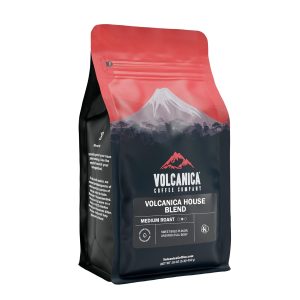
Volcanica House Blend
Medium roast and washed processing give up origin distinction for a cup built around low bitterness and accessible sweetness, designed to be predictable before anything else.
Profile
Tasting Notes
- The opening is warm cocoa. As the cup cools below about 150°F, that impression softens toward brown sugar, which is where the sweetness is clearest.
- Extraction stays even across the full pull. The finish settles flat; no bitterness at the back end.
- Body sits at a genuine medium, which works in drip and pour over but runs thin in a french press.
- Acidity reads low throughout. For a drinker who wants the cup to ask nothing of them at 6am, that is the point.
Who It’s For
Drinkers who work from the same bag every morning and want the cup to hold without adjustments. Low bitterness and low acidity mean it stays drinkable across a range of grind and temperature without demanding corrections.
Volcanica's single-origin washed coffees, including the Costa Rica Tarrazu, deliver defined origin character at a comparable price. A drinker who wants the bag to taste like somewhere specific will find the blend format too quiet.
Full review
Blending is a roaster's way of smoothing edges. When you combine coffees from Central and South America and run them through a washed process at medium roast, the individual lot characters cancel each other out. What you get is controlled sweetness and controlled bitterness. What you give up is the flavor that makes a specific origin identifiable. That trade-off is not an accident. The Volcanica House Blend was built for consistency, and the cup executes that.
The washed process does particular work in a blend. Washing strips the mucilage before drying, removing the ferment-driven fruitiness that unwashed coffees carry. What remains is the bean's core sugar structure: at medium roast, that expresses as cocoa and mild sweetness. Nothing gets caramelized or pushed into darker registers. Central and South American origins contribute to this profile predictably. Colombian and Costa Rican beans at medium roast favor chocolate and caramel, and the blend format reinforces that tendency by selecting for the common note over the individual one. Acidity at 2/5 and bitterness at 2/5 means neither axis is making demands. The sweetness, at 3/5, is real but mild.
Across brew methods, the cup performs consistently, though not equally. Drip is the best fit. The moderate body carries without thinning, and the low bitterness means water temperature variance won't push the cup sharp. Pour over lets the sweetness read more clearly, particularly at a 1:16 ratio, where the profile opens slightly and the cocoa note sharpens. French press is the weakest option. The body at 3/5 falls short of what immersion brewing demands, and the "full body" language in the product description does not match what the press delivers. If french press is your primary method, there are heavier-bodied options in this category at comparable prices.
Against the Caribou Coffee Caribou Blend on performance, the gap is narrower than the price difference would suggest. Both coffees are medium-roast blends tuned for broad appeal and consistent extraction, and both forgive a range of grind and temperature without noticeably degrading. The Volcanica runs slightly cleaner at the finish with the sweetness a bit more defined, but across a standard drip setup the practical difference is small. Caribou carries strong retail presence in grocery and café channels; Volcanica operates in the specialty online tier. That distribution difference accounts for more of the price gap than the cup does.
The Volcanica Costa Rica Tarrazu is a more instructive comparison for flavor profile. The Tarrazu is a washed single-origin coffee that delivers citrus lift and altitude-driven clarity, communicating its provenance directly. The House Blend's washed process keeps the cup clean in a technical sense, but "clean" in a blend means neutral, not defined. A drinker who has tried the Tarrazu will understand this bag as a deliberately softer product, one that trades character for range. The origin signals that make washed Costa Rican coffee interesting are exactly what the blend format absorbs.
Pricing sits in the specialty online tier for a 16 oz bag, and washed medium-roast blends from Central and South American origins are among the most competitive products in that segment. Several smaller roasters produce cups in the same sensory range for less, without the distribution overhead that comes with an established brand. Whether the Volcanica name closes that gap depends on the current street price. The cup is competent, and several comparable washed mediums land at lower prices.
Keep pulling the thread: Medium roast guide, Central and South America blend origin guide, and more from Volcanica Coffee.
Price & History
This comes in a standard 16 oz bag for the specialty online market, though without recent price data, a specific per-ounce comparison to comparable washed medium-roast blends is not possible here.
► Show price history (26 days)
| Date | Price | Per oz |
|---|---|---|
| Jul 26, 2026 | $19.99 | $1.249 |
| Jul 25, 2026 | $19.99 | $1.249 |
| Jul 24, 2026 | $19.99 | $1.249 |
| Jul 23, 2026 | $19.99 | $1.249 |
| Jul 22, 2026 | $19.99 | $1.249 |
| Jul 21, 2026 | $19.99 | $1.249 |
| Jul 20, 2026 | $19.99 | $1.249 |
| Jul 19, 2026 | $19.99 | $1.249 |
| Jul 18, 2026 | $19.99 | $1.249 |
| Jul 17, 2026 | $19.99 | $1.249 |
| Jul 15, 2026 | $19.99 | $1.249 |
| Jul 14, 2026 | $19.99 | $1.249 |
| Jul 13, 2026 | $19.99 | $1.249 |
| Jul 12, 2026 | $19.99 | $1.249 |
| Jul 11, 2026 | $19.99 | $1.249 |
| Jul 10, 2026 | $19.99 | $1.249 |
| Jul 9, 2026 | $19.99 | $1.249 |
| Jul 7, 2026 | $19.99 | $1.249 |
| Jul 5, 2026 | $19.99 | $1.249 |
| Jul 4, 2026 | $19.99 | $1.249 |
| Jul 1, 2026 | $19.99 | $1.249 |
| Jun 27, 2026 | $19.99 | $1.249 |
| Jun 25, 2026 | $19.99 | $1.249 |
| Jun 24, 2026 | $19.99 | $1.249 |
| Jun 22, 2026 | $19.99 | $1.249 |
| Jun 21, 2026 | $19.99 | $1.249 |
Rating
FAQ
What does Volcanica House Blend taste like?
The opening is warm cocoa. As the cup cools below about 150°F, that impression softens toward brown sugar, which is where the sweetness is clearest. Extraction stays even across the full pull. The finish settles flat; no bitterness at the back end. Body sits at a genuine medium, which works in drip and pour over but runs thin in a french press.
Who is Volcanica House Blend best for?
Drinkers who work from the same bag every morning and want the cup to hold without adjustments. Low bitterness and low acidity mean it stays drinkable across a range of grind and temperature without demanding corrections.
Who should skip Volcanica House Blend?
Volcanica's single-origin washed coffees, including the Costa Rica Tarrazu, deliver defined origin character at a comparable price. A drinker who wants the bag to taste like somewhere specific will find the blend format too quiet.