Mikava Coffee Gesha Espresso Blend
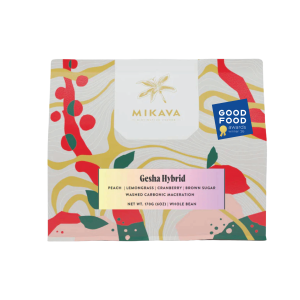
Espresso drinkers seeking floral complexity and citric brightness get a washed Red Gesha from Marsella, Risaralda pulling maximum acidity and sweetness into a cup that earns its specialty-tier positioning.
A dual-boiler machine with independent PID control of both boilers that eliminates the shoot-and-steam wait of every machine below its price.
Purchase links coming soon.
Home baristas with at least one year on a single-boiler who understand espresso variables and want a machine that removes thermal compromise from the equation.
First-time espresso buyers or anyone who wants a machine that automates the workflow. The Silvia Pro X rewards knowledge, not automation.
The Rancilio Silvia Pro X is where the home espresso market stops making compromises. It has two boilers, two PIDs, a commercial E61 group head with thermosyphon circulation, and a rotary vane pump. Each of those specifications solves a specific problem that the machines below it cannot. The result is a home machine that behaves like a commercial unit in every metric that matters for shot quality.
A single-boiler machine switches between brew temperature and steam temperature. That switch takes time, and during that time the machine sits idle. The Pro X has two separate boilers: a 0.3-liter brew boiler locked to a precise brew temperature by one PID, and a 0.5-liter steam boiler locked to a separate steam temperature by a second PID. Both are available at the same time. The moment a shot finishes, steaming starts. There is no wait.
For a household pulling one drink at a time the dual-boiler benefit is modest. For two people with different drink orders, it is the difference between a 3-minute morning routine and an 8-minute one. The 0.5-liter steam boiler is also large enough for multiple drinks: the steam pressure stays consistent through a full pitcher without the boiler recovering between rounds.
The E61 group head design dates to the 1960s and has not been improved on for thermal stability. The thermosyphon system circulates hot water through the group continuously, keeping the group head at a stable temperature that matches the brew boiler. Cold-group channeling, a common fault in cheaper machines after warmup, does not occur here. The 58mm commercial portafilter that ships with the machine is the standard professional size, so every quality basket, tamper, and bottomless portafilter in the market fits.
Most home espresso machines use a vibration pump: loud, adequate, and cheap. The Silvia Pro X uses a rotary vane pump. It is quieter by a significant margin, delivers stable pressure throughout the shot rather than pulsing, and outlasts vibration pumps by years of daily use. Aggregated public review data notes the pump noise as one of the first things buyers notice after the first shot: the machine is quieter than expected for its size.
The Silvia Pro X gives nothing for free. There is no shot timer on the machine (add a scale), no automatic dosing, no app connectivity, and no steam automation. The workflow is: grind, dose, tamp, pull, steam. Temperature precision is the machine’s contribution. Everything else is the user’s skill. This is not a criticism; it is the design philosophy. The machine is a platform for technique, not a substitute for it.
The Pro X is the right upgrade for anyone who has spent a year on the Gaggia Classic Pro and wants to stop temperature-surfing. Pair it with a stepless grinder: the machine’s precision outpaces a Baratza Encore ESP quickly, and a stepless flat-burr unit in the $400 to $600 range is the correct partner. For beans that reward the precision this machine offers, start with single-origin lots on the espresso beans page.
At $1,099 the Silvia Pro X is the least expensive Italian-made dual-boiler espresso machine in regular production. Comparable dual-boiler machines from ECM, Rocket, and La Marzocco start above $1,800. The rotary vane pump and stainless steel boilers carry this machine for a decade of daily use, so the per-year cost calculates well. It does not discount significantly. Budget for a quality grinder: the machine easily outpaces a $200 grinder, and a dedicated unit in the $400 to $700 range is the right partner.
The Silvia Pro X is the right machine for a home barista who has learned espresso on a single-boiler and is ready to stop waiting. Dual PIDs, a commercial 58mm E61 group, and a steam boiler large enough for multiple milk drinks in a row separate it from everything below $700. It is not a beginner machine: the workflow is fully manual, temperature is exact, and the results reflect technique. For a buyer who knows what they want from espresso, it is the most capable home machine under $1,500.
The original Silvia has one boiler, one thermostat, and no PID. The Pro X has two boilers, two PIDs, and a display. They are in different performance tiers.
The machine draws 1,400 W at 110 V / 15 A, which exceeds a standard 12-amp circuit. Most installations need a dedicated 15-amp outlet.
A stepless burr grinder in the $400 to $700 range matches the machine's capability. The Baratza Vario, the DF64, and the Eureka Mignon Specialita are common pairings.
The E61 design is the same: thermosyphon circulation, lever-operated pre-infusion. The Silvia Pro X uses the same group head design as far larger commercial machines.
Beans suited to espresso.
Espresso drinkers seeking floral complexity and citric brightness get a washed Red Gesha from Marsella, Risaralda pulling maximum acidity and sweetness into a cup that earns its specialty-tier positioning.
Anaerobic fermentation is the decision that defines this cup: it prioritizes fermented fruit and florals at the expense of roast structure, and at light-medium on Sidama Arbegona, that trade produces a profile other process methods cannot replicate.
Natural anaerobic processing trades the origin-defined clarity of a washed Quindío Colombian for saturated tropical sweetness and exceptional body: this is fruit-maximalist espresso, built for drinkers who want the fermentation character to lead.
Bright citrus opens it, caramel sweetness fills the mid-palate, and the finish closes without bitterness clouding the end of the cup.
The most espresso you can buy for the counter space and the money, with auto-steam that lands microfoam on the first try.
A 6-inch-wide espresso machine for under $230 that makes real espresso and steams milk without claiming the entire counter.