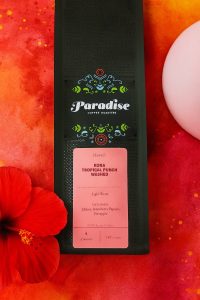
Paradise Coffee Roasters Kona Tropical Punch
$11.67 per ounce buys a Geisha-SL-34 Kona lot shaped by yeast fermentation, delivering pineapple and orange zest acidity with almost no bitterness to muddy it.
Affiliate link. We earn a commission at no extra cost to you.
Profile
Tasting Notes
- Acidity arrives first and dominates: pineapple-forward, vivid, and structured, with a brightness that holds from the first sip through the mid-palate without tipping into sharp.
- Orange zest threads through the center of the cup, dry and clean, lifted by a ginger brightness that sharpens on the swallow.
- Sweetness (4/5) reads as strawberry-papaya: ripe fruit, not caramel, fading without leaving residue on the finish.
- Body (3/5) sits in the middle. It carries the acidity without anchoring the cup the way a heavier roast would.
- Bitterness (2/5) is near-absent. The cup stays clear-fruited even as it cools, never contracting at the finish.
Who It’s For
This is for the pour over or aeropress drinker who tracks varietals and processes, not just roast levels. If you want to know what Kona Geisha delivers when the fermentation is dialed in, this is the specific answer to that question.
The price is the honest fault: at $11.67 per ounce, this sits far beyond everyday rotation territory, and the cup is sensitive enough that a coarse grind or water temperature above 200°F will flatten the tropical fruit character fast. Drinkers who are not specifically after South Kona provenance and Geisha acidity will find the premium hard to justify on cup character alone.
Full review
The acidity lands immediately. Pineapple-forward, high and defined, it sets the terms for every sip that follows. This is a 5/5 acidity cup and reads that way: not sharp enough to fatigue over a full pour, but persistent and clearly structured, with orange zest threading through the mid-palate and a ginger brightness that sharpens on the swallow. The sweetness (4/5) lands as papaya and strawberry, bright tropical fruit fading fast without accumulating. Body sits at 3/5, enough to carry the fruit. Bitterness (2/5) stays low throughout, so the cup stays clear-fruited even as it cools.
South Kona is the most coveted growing region in the United States for coffee. The elevation and volcanic soil in Hōlualoa, combined with morning sun and afternoon cloud cover, produce a coffee that already leans toward clarity and brightness. What the yeast fermentation processing adds is an amplification of the fruit compounds in the green coffee: the yeasts consume the mucilage at a controlled rate, producing organic acids that extend and sharpen the fruit notes without introducing the wilder funk of a full natural or the acetic bite of a dry-process anaerobic. Applied to Geisha and SL-34 varietals, both of which carry the genetic lean toward floral-fruit aromatics and defined acidity, the fermentation does not impose a foreign flavor. It extends what the varietals already carry.
The comparison to the Kona Geisha Rosé from the same roaster clarifies the flavor-profile difference between the two. Both are South Kona lots processed for fruit emphasis, but the Rosé leads with floral aromatics that peak in the first few minutes and fade as the cup cools. The Tropical Punch pushes pineapple and orange zest harder and holds them through the mid-palate. It is the more assertive, fruit-driven choice of the two. Against Starbucks Veranda Blend, the performance comparison runs differently. The Veranda is engineered for wide accessibility: lower acidity, no process intervention, a cup designed for the broadest possible audience. The Tropical Punch does not share those design goals. Maximum acidity, varietal specificity, and a process intervention that raises the ceiling while tightening the margin for error place it in a different category entirely. They share a pour-over audience in the broadest sense and little else.
Kona coffee carries a price floor set by Hawaiian land costs and farm labor, among the highest in the world for coffee production, and the South Kona appellation has strict growing standards on top of that. Geisha and SL-34 varietals add further cost at the sourcing stage. A washed light roast with comparable acidity sourced from Ethiopia or a co-fermented Colombian lot can be found at $1.50 to $3.00 per ounce. Whether this Tropical Punch justifies the gap at $11.67 per ounce depends on how much South Kona provenance and varietal documentation matter to the buyer. Inside the Kona Geisha segment, the price is a familiar number. Measured against the rest of the specialty market, it is steep, and that distinction is worth stating plainly before reaching for the bag.
The ginger brightness is the detail that separates this from most other fruit-forward light roasts at this acidity level. It shows up mid-swallow, dry and slightly herbal, giving the acidity an edge that keeps the cup from reading as simply sweet. At higher temperatures, it is the loudest note. As the cup cools past about 130°F, the papaya sweetness moves forward and the ginger recedes considerably. The cup shifts character between hot and cool in a way that is worth knowing: drink it while hot if the ginger definition is what drew you in.
In pour over, the cup rewards a medium-fine grind and careful temperature management. Aeropress gives a denser result: the same tropical fruit in a shorter, more concentrated version, with body that reads higher than the 3/5 number suggests in that format. Drip is the most forgiving approach, and a standard mid-range grind produces a serviceable cup, though the aromatic lift available from pour over is harder to capture without that control.
Keep pulling the thread: Light roast guide, South Kona, United States, Hōlualoa origin guide, and more from Paradise Coffee Roasters.
Price & History
The 30-day data shows one price point: $140.00, with no movement over the tracked period. The 30-day average, low, and high are identical, so there is no strategic window to buy or wait. This is the price. At $11.67 per ounce, you are either in the market for South Kona Geisha specialty coffee or you are not. If you are, buy it now. The data gives no reason to hold off.
Price history coming soon — check back after the next daily update.
Rating
FAQ
What does Paradise Coffee Roasters Kona Tropical Punch taste like?
Acidity arrives first and dominates: pineapple-forward, vivid, and structured, with a brightness that holds from the first sip through the mid-palate without tipping into sharp. Orange zest threads through the center of the cup, dry and clean, lifted by a ginger brightness that sharpens on the swallow. Sweetness (4/5) reads as strawberry-papaya: ripe fruit, not caramel, fading without leaving residue on the finish.
Who is Paradise Coffee Roasters Kona Tropical Punch best for?
This is for the pour over or aeropress drinker who tracks varietals and processes, not just roast levels. If you want to know what Kona Geisha delivers when the fermentation is dialed in, this is the specific answer to that question.
Who should skip Paradise Coffee Roasters Kona Tropical Punch?
The price is the honest fault: at $11.67 per ounce, this sits far beyond everyday rotation territory, and the cup is sensitive enough that a coarse grind or water temperature above 200°F will flatten the tropical fruit character fast. Drinkers who are not specifically after South Kona provenance and Geisha acidity will find the premium hard to justify on cup character alone.