Mikava Coffee Gesha Espresso Blend
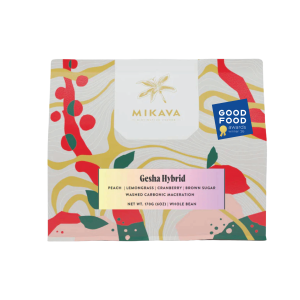
Espresso drinkers seeking floral complexity and citric brightness get a washed Red Gesha from Marsella, Risaralda pulling maximum acidity and sweetness into a cup that earns its specialty-tier positioning.
A 6-inch-wide espresso machine for under $230 that makes real espresso and steams milk without claiming the entire counter.
Purchase links coming soon.
Apartment dwellers and first-time espresso buyers who need a real espresso machine in the narrowest possible footprint under $230.
Anyone who wants to grow into pressure profiling, swap accessories, or pull back-to-back drinks without refilling a small water tank.
The Dedica Arte answers a specific question: what is the smallest, cheapest machine that still pulls real espresso? The answer is 6 inches wide and $229. It fits where nothing else fits, heats in 35 seconds, and ships with a pressurized basket for preground coffee and a path to real espresso once a burr grinder joins the setup. The trade-offs are proportional to the price.
At 6 inches wide the Dedica Arte occupies less counter than a standard bread toaster. That specification is the machine’s primary design constraint, and every other choice flows from it: the thermoblock heats fast because a large boiler would not fit; the 1.1-liter tank is small because a larger one would add width; the 51mm portafilter is narrower than the 54mm and 58mm standards. The size is real, and for a studio kitchen or a narrow counter, it is the reason to choose this machine over anything else reviewed on this site.
The pressurized baskets that ship in the box produce drinkable espresso from preground coffee. They are not the reason to buy this machine. The single-wall baskets (available cheaply in 51mm sizes) unlock real extraction. Paired with a burr grinder like the Baratza Encore ESP, the 15-bar pump and the low-pressure pre-infusion stage produce balanced shots with a thin crema layer and clean flavors. Aggregated public review data consistently notes the gap in shot quality between the two basket types, and the single-wall route is the correct one.
The thermoblock holds temperature steadily enough for back-to-back shots in a single-drink household. Temperature consistency is not at the level of a PID-equipped machine, and long shot sequences will show drift. For one or two drinks at a time, it performs well.
The Panarello tip on the steam wand uses an air-injection system to froth milk without manual technique. It produces a coarser, airy foam rather than the tight microfoam needed for latte art. Swapping to the bare tip that ships in the box requires practice on steam angle and timing, but the resulting texture is pourable. For beginners who want milk drinks without a learning curve, the Panarello default works. For anyone who wants proper microfoam, the bare tip is the path.
The 51mm portafilter is the hardware limit that matters most long-term. The aftermarket for 51mm is sparse compared to 54mm and 58mm. Precision baskets, bottomless portafilters, and quality tampers are available but harder to find. The plastic body transmits the portafilter lock as a flex rather than a click. The water tank side-loads from the left, which requires clearance on that side of the machine.
None of these are reasons to not buy the Dedica Arte if the budget and counter space define the choice. They are reasons to step up to the Breville Bambino Plus when budget allows. For beans that work well in the Dedica Arte’s shorter shot profile, start with the espresso beans page and look for medium roasts in the mid-acidity range.
At $229.95 the Dedica Arte is the lowest price point for a semi-automatic machine that pulls real espresso from freshly ground coffee. It frequently discounts to $179 during sales, and at that price it has no competition for the footprint. Avoid the pressurized baskets in the box: swap to a single-wall basket and a burr grinder to get the shot quality the machine is capable of. The machine itself is not the limit.
The Dedica Arte is the right machine for the smallest kitchens and the tightest budgets. It heats in 35 seconds, the 15 bar pump pulls real espresso (not pressurized-basket facsimile when paired with a burr grinder), and the steam wand froths milk without a manual steam skill. At 6 inches wide it fits where nothing else does. The limits are real: a 1.1-liter tank, thin plastic construction, and a steam wand that requires a Panarello tip swap for proper microfoam. None of that disqualifies it at this price.
6 inches wide, making it the narrowest semi-automatic espresso machine in general retail.
Both, depending on the basket. The included pressurized baskets work with preground coffee. Swap to a single-wall basket with freshly ground coffee for real extraction espresso.
The Panarello tip produces foam, not microfoam. Swap to the bare steam tip (included) and practice steam technique to produce pourable microfoam for latte art.
About 35 seconds from a cold start with the thermoblock system. Shorter than most machines at this price.
Beans suited to espresso.
Espresso drinkers seeking floral complexity and citric brightness get a washed Red Gesha from Marsella, Risaralda pulling maximum acidity and sweetness into a cup that earns its specialty-tier positioning.
Anaerobic fermentation is the decision that defines this cup: it prioritizes fermented fruit and florals at the expense of roast structure, and at light-medium on Sidama Arbegona, that trade produces a profile other process methods cannot replicate.
Natural anaerobic processing trades the origin-defined clarity of a washed Quindío Colombian for saturated tropical sweetness and exceptional body: this is fruit-maximalist espresso, built for drinkers who want the fermentation character to lead.
The caramel arrives first, the milk chocolate holds through the finish, and the bitterness stays low enough that you get sweetness where most espresso blends put heat.
A dual-boiler machine with independent PID control of both boilers that eliminates the shoot-and-steam wait of every machine below its price.
The pour-over dripper that defines the category: a 60-degree cone with a single large drain hole that rewards pour technique with unmatched clarity in the cup.
The most espresso you can buy for the counter space and the money, with auto-steam that lands microfoam on the first try.
The original cold brew system still makes the cleanest concentrate at home: a reusable felt filter, a rubber stopper, and a glass decanter that holds two weeks of cold brew.