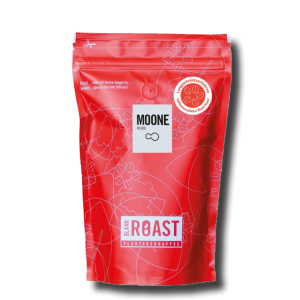
Blank Roast Moone Espresso
Cedar and cocoa pressed into a shot of maximum density: this cup leads with weight and asks you to meet it with milk.
Affiliate link. We earn a commission at no extra cost to you.
Profile
Tasting Notes
- The body defines the cup before the flavor does: maximum density from the first pour, thick enough to coat the tongue and slow to release
- Cocoa powder bitterness runs the full length of the shot, dry on the swallow and persistent at the back of the throat
- Cedar registers low and resinous, an earthy-woody note the monsoon processing draws out of the bean's cell structure
- Cherry cuts through briefly at mid-palate, then the cedar closes in and finishes the cup
- Tonka bean warmth (faintly vanilla, faintly almond) threads through the finish, keeping the cedar from reading as purely astringent
Who It’s For
After-dinner espresso and post-lunch moka pot pulls. The maximum body and cedar depth anchor milk drinks, and the roast intensity suits an afternoon or evening context rather than a first-morning cup.
Black espresso drinkers: the maximum bitterness, with no acidity to counterbalance, means the cup holds one register from start to finish. The robusta component sharpens the bitterness rather than adding sweetness, so drinking this long and black becomes an exercise in endurance rather than enjoyment.
Full review
Pull this as espresso and the body lands before the flavor resolves. It is dense, coating, and unmistakably the work of a process designed to amplify weight. That process is the key to understanding the Moone. The roast alone would produce a dark, bitter cup with suppressed origin character. The monsooning does something different: it strips the bean of its chlorogenic acids while it is still green, which is where brightness comes from, and adds earthy, woody depth in exchange. The result is low acidity by design, not by accident.
Monsoon Malabar processing works like this: green Indian coffee beans sit in open-sided warehouses on the western coast during the monsoon season. Over weeks of humidity exposure, the beans swell and lose their acidity. They also take on the woody, earthy character that defines the style, closer in profile to wet-hulled Sumatran lots than to other Indian coffees. Steel Cup Coffee Roasters' Sumatra FTO Takengon KKGO reaches comparable flavor territory through wet-hulling, a mechanical process that removes the parchment layer under pressure. The Moone gets there through sustained moisture and wind. The cedar and tonka bean notes in the cup are the direct outputs of that process, not producer additions.
The roast then intensifies what is already there. At maximum roast intensity, the dark has burned off whatever fruit character the arabica component originally carried, leaving cocoa powder bitterness as the dominant register and cedar as the second. The cherry note appears mid-palate, briefly, as a signal of what the origin brought before the roast took over. It is present in a clean extraction. It is gone in a long one.
For espresso, this performs predictably and within a clear ceiling. A short pull gives you density and cocoa depth without pushing the bitterness into harshness. Overshoot the extraction and the cedar turns resinous, the finish stretches past where the cup can support it, and the bitterness stops functioning as a backdrop. On the moka pot, the pressurized environment amplifies everything. Keep the flame moderate. A gentle heat produces cedar and cocoa at a bitterness level the body can absorb; too much heat and the cup sharpens past what any extraction adjustment can correct.
Kicking Horse's 454 Horse Power serves as a useful performance frame. Both coffees deliver maximum roast intensity with heavy body, but the Kicking Horse uses its blend architecture to modulate the bitterness for a broader drinker profile. The Moone commits fully to it. That commitment makes it narrower in utility but more distinctive in character: the monsooned processing produces a flavor profile that South American dark roasts cannot replicate, and the cedar earthiness and tonka warmth register in every properly extracted shot.
The arabica/robusta blend structure was built for espresso production. Robusta adds crema density and heat tolerance, which makes this a more forgiving pull on machines without precise pressure control. It also tightens the bitterness as a side effect. Combined with the monsooning and the maximum roast intensity, the bitterness is structural, not incidental. For milk-based drinks, a flat white or cortado absorbs that bitterness and showcases the body and cedar depth. For black espresso, the cup's one register is all you get from first sip to the last dry swallow.
At $0.742 per ounce, the price is straightforwardly competitive for a milk-drink espresso platform. The body carries through steamed milk, the cedar depth survives the dilution, and a cortado built on this lands with more character than a generic dark-roast base produces. For black espresso, the same price has less to show for itself. The cup does not compound in complexity as it cools, and a drinker who wants to sit with a long black will find the single register wears thin before the cup is empty.
Keep pulling the thread: Dark roast guide, India origin guide, and more from Blank Roast.
Price & History
Current price is $8.90 for 12 oz, $0.742 per ounce. Only one price observation exists in the dataset, so the 30-day average, high, and low are all the same number. There is no trend to read and no discount to wait for. The buy decision comes down to use case: for a milk-based espresso platform with genuine origin character, this is a competitive price and a straightforward buy. For a black espresso program, the price is not unreasonable, but the cup will not reward close attention the way a brighter, more origin-expressive coffee would at a similar per-ounce cost.
Price history coming soon — check back after the next daily update.
Rating
FAQ
What does Blank Roast Moone Espresso taste like?
The body defines the cup before the flavor does: maximum density from the first pour, thick enough to coat the tongue and slow to release Cocoa powder bitterness runs the full length of the shot, dry on the swallow and persistent at the back of the throat Cedar registers low and resinous, an earthy-woody note the monsoon processing draws out of the bean's cell structure
Who is Blank Roast Moone Espresso best for?
After-dinner espresso and post-lunch moka pot pulls. The maximum body and cedar depth anchor milk drinks, and the roast intensity suits an afternoon or evening context rather than a first-morning cup.
Who should skip Blank Roast Moone Espresso?
Black espresso drinkers: the maximum bitterness, with no acidity to counterbalance, means the cup holds one register from start to finish. The robusta component sharpens the bitterness rather than adding sweetness, so drinking this long and black becomes an exercise in endurance rather than enjoyment.