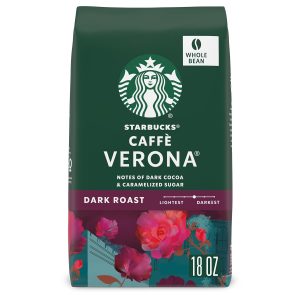
Starbucks Caffe Verona
The Starbucks name costs more than the cup earns back, but heavy body and controlled bitterness give this dark blend a real case for milk drinks and espresso.
Profile
Tasting Notes
- Acidity is gone. The cup opens flat: all roast weight from the first sip, no lift, no brightness.
- Dark cocoa powder dryness coats the mid-palate without tipping astringent, which is a quality outcome at maximum roast intensity.
- Caramelized sugar sweetness surfaces on the finish and holds consistently across brew methods, keeping the bitterness from settling in permanently.
- Body is heavy. It holds structure through a long pour and doesn't thin when milk is added.
Who It’s For
Drip and french press drinkers who want a dark cup that handles cream or milk without the bitterness reading as sour. The body density and controlled bitterness also make it a workable espresso option on a consumer machine without requiring extraction precision.
The Starbucks brand commands a premium over comparable dark blends that match the body and sweetness at a lower per-ounce cost. If the decision comes down to what's in the cup against what you're paying per ounce, this bag doesn't win that comparison against non-brand competitors at the same grocery tier.
Full review
The main case against Caffe Verona is straightforward: at maximum roast intensity, origin is gone. The Latin America and Asia-Pacific sourcing is functionally invisible at this roast level. What you taste is Starbucks' roast character, not anything particular about where the beans came from. The brand prices this at the premium end of the grocery shelf, and the cup doesn't substantiate that premium on flavor distinction. The one concrete quality working in Verona's favor is the body-to-bitterness ratio. Most dark blends at maximum roast intensity push bitterness proportionally. Verona doesn't: 4/5 body, 3/5 bitterness. That margin is what makes this blend workable across milk drinks and espresso without demanding the extraction precision you'd typically expect at this roast level.
The flavor profile is built on dark cocoa powder dryness in the mid-palate and caramelized sugar sweetness on the finish. The front of the cup is flat. At 1/5 acidity, there is no lift and no brightness, and the roast takes over from the first sip. The caramelized sugar sweetness is the flavor Verona relies on, and it holds across brew methods with more consistency than maximum-roast-intensity blends typically deliver. The bitterness fades off the swallow and doesn't stay, and that behavior marks the performance distance between Verona and Starbucks' French Roast, where higher bitterness settles and stays.
Peet's Major Dickason's Blend occupies the same profile territory: full body, dark roast, comparable sweetness. Major Dickason's has more going on in the mid-palate, and the two are often close in price at major retailers, close enough that the comparison becomes a real shelf decision. The Starbucks brand carries a portion of Verona's per-ounce cost that the cup's flavor doesn't cover. Consistency and availability have real value for some buyers; the premium for those attributes is the honest accounting of what you're paying for here.
The "Italian Roast" designation in the blend name is a profile call, not a sourcing statement. It signals that the coffee is calibrated to a roast character, not designed to showcase origin. A washed process at maximum roast intensity removes any traceable terroir from the cup. The Latin American sweetness and Asia-Pacific body are structural inputs to the blend formula, ingredients in a roaster's recipe rather than flavors you can place by provenance. Caffe Verona was built for scale and repeatability, and on that measure it succeeds: the bag-to-bag flavor variance is low, and the same cup profile shows up reliably whether you run it drip, french press, or through an espresso machine.
Espresso on a consumer machine is where Verona holds up better than its price tier suggests. Dense body produces crema without pressure profiling, and 3/5 bitterness doesn't tip into harshness on a slightly long extraction. That behavior is uncommon at this roast level; most dark blends at maximum roast intensity go acrid on an extraction that runs even slightly long. French press suits the heavy body best: full immersion lets the caramelized sweetness develop, and the body weight translates well in the cup. Drip works with a coarser grind than a dark-roast default, since extended contact time at a fine setting amplifies bitterness faster than the body can absorb it.
At 18 ounces, the bag format brings the per-ounce cost below what smaller Starbucks packs run. The bag-to-bag consistency is genuine: Caffe Verona has tighter flavor variance than many private-label dark blends at lower price points, and the brand's quality control is part of what you're buying. The gap is that comparable dark blends from non-brand roasters match the body and sweetness at a lower per-ounce cost, and what separates the prices is brand margin and logistics, not cup performance.
Keep pulling the thread: Dark roast guide, Latin America, Asia-Pacific blend (with Italian Roast) origin guide, and more from Starbucks.
Price & History
At 18 oz per bag, this is the largest standard Starbucks grocery format, and the per-ounce cost reflects the brand's premium over non-label competitors at the same roast tier.
Price history coming soon — check back after the next daily update.
Rating
FAQ
What does Starbucks Caffe Verona taste like?
Acidity is gone. The cup opens flat: all roast weight from the first sip, no lift, no brightness. Dark cocoa powder dryness coats the mid-palate without tipping astringent, which is a quality outcome at maximum roast intensity. Caramelized sugar sweetness surfaces on the finish and holds consistently across brew methods, keeping the bitterness from settling in permanently.
Who is Starbucks Caffe Verona best for?
Drip and french press drinkers who want a dark cup that handles cream or milk without the bitterness reading as sour. The body density and controlled bitterness also make it a workable espresso option on a consumer machine without requiring extraction precision.
Who should skip Starbucks Caffe Verona?
The Starbucks brand commands a premium over comparable dark blends that match the body and sweetness at a lower per-ounce cost. If the decision comes down to what's in the cup against what you're paying per ounce, this bag doesn't win that comparison against non-brand competitors at the same grocery tier.