Big Island Coffee Roasters Kona Moon
Dark chocolate and pink peppercorn spice up front, sweetness that holds where most maximum-roast darks go flat, but the Kona origin's terroir character has been roasted past the point of register.
Profile
Tasting Notes
- The finish runs dry and long, but the 4/5 sweetness holds it out of chalk territory; hazelnut warmth is the last note standing, long after the bitterness peaks
- Mid-palate is dense dark chocolate, coating and low, carried by a 5/5 body that gives the cup its weight
- Pink peppercorn spice arrives at first contact, warming and distinct, the most identifiable element in a profile that would otherwise trend generic at this roast level
- Vanilla and cookie sweetness thread through all three stages, which is what keeps a 5/5 bitterness cup from reading as one-dimensional
Who It’s For
Cold brew drinkers who want a dense, sweet concentrate that holds through dilution: the 1/5 acidity and 4/5 sweetness are the right specs for cold extraction, and the pink peppercorn note gives the cup something beyond generic dark-roast cold brew. French press drinkers looking for a 5/5 body cup after dinner will find it fills out where lighter roasts feel thin.
Anyone who chose Kona specifically for its terroir reputation. At 5/5 roast intensity, the volcanic soil character and the Typica variety's documented bright-sweet potential are compressed into the roast profile; the cup is a competent dark roast, but it does not read as distinctively Kona, and the price reflects the origin more than the cup reflects what the origin is supposed to deliver.
Full review
Dark roasting at maximum intensity is a commitment: body and density over brightness, persistence over distinction, sweetness over acidity. At 5/5 roast intensity, Kona Moon has pushed the washed Typica varietal's documented brightness and elevation-driven mineral quality past the point where they show up as separate notes. The roaster made that choice deliberately. What survives it is significant: a 4/5 sweetness that holds when comparable dark roasts at this intensity collapse into flat bitterness, and a pink peppercorn spice note that is unusual for the profile. Most coffees roasted this dark lose their top-note distinction entirely. This one keeps a warming spice register that sets it apart from the rest of the maximum-roast dark field.
French press brings the full weight of the 5/5 body to the surface. The extended steep amplifies density without extracting harsh bitterness beyond what's already structural in the roast; you get the hazelnut and dark chocolate core at full strength, with the sweetness holding the cup together through the finish. Drip is reliable and requires no intervention: 1/5 acidity means there is nothing in the coffee to turn sour or bright as water works through a standard cycle. Cold brew is the most interesting use case. Cold extraction concentrates the dark chocolate and hazelnut base while the absent acidity means the concentrate holds through dilution over ice. A 12-oz bag at cold brew ratios (one part grounds to eight parts water by weight) stretches further than drip use suggests, and the sweetness deepens at cold brew strength.
Kona's reputation sits on altitude and volcanic soil on the Big Island's western slope. The Typica varietal grown there has a natural sweetness that holds better through dark roasting than many other Arabica varietals do. The washed process adds something useful at this roast level: by stripping the fruit before drying, it removes the fermentation compounds that can compete with or muddy a maximum-roast profile. Kona Moon's cup is dark, dense, and structurally sweet, not dark and fermented. The honest read, though, is that the specific Kona terroir markers, the mineral brightness and elevation character, are past the point of register at 5/5 roast intensity. The sweetness that survives is the Typica variety doing its job under heat, not a window into what Kona tastes like when it's given room to perform.
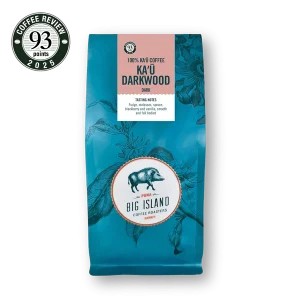
Big Island Coffee Roasters' Ka'u Darkwood is the direct flavor comparison. Ka'u grows on the same island in an adjacent region, and the Darkwood shares the dark-roast, low-acid blueprint. The distinction is in the top notes: Kona Moon carries the pink peppercorn spice more prominently where the Darkwood trends toward caramel. Both deliver comparable body and bitterness; the difference is what you get in the first third of the sip. On the performance side, Peet's Major Dickason's Blend is the relevant benchmark. Dickason's is built for maximum-roast density across all formats, assertive and low-acid, and it delivers comparable body and bitterness. Kona Moon matches it on those measures and outperforms on sweetness. The gap is the price per ounce, which is substantially higher for Kona Moon. The case for Kona Moon over the Peet's benchmark is the pink peppercorn distinction and the sweeter finish. Both are genuine. Whether the cost difference is justified is a separate question.
Kona is one of the highest-priced growing regions in American coffee, and that premium rests on terroir reputation. At this roast level, the premium is asking you to pay for origin character the roast has already spent. The cup is competent, the spice note is real, and the 4/5 sweetness at 5/5 bitterness is a calibration that takes work to hit. But the flavor evidence for what specifically makes Kona distinct from other dark roasts is thin. Buyers who want maximum dark roast performance at the best cost per ounce have lower-priced alternatives that close the body and bitterness gap. What Kona Moon holds over commodity dark roasts is the sweetness persistence and the pink peppercorn spice, and for buyers who care about those specifically, the premium is a choice with something behind it. The rest of the premium is the name on the bag.
The cold brew argument reshapes the cost calculation. At a one-to-eight grounds-to-water ratio, a 12-oz bag produces a week of concentrate for a regular cold brew drinker, which lowers the effective per-cup cost below what drip math would suggest. The dark chocolate and hazelnut base deepens under cold extraction. The 5/5 body holds through dilution without going thin. The pink peppercorn spice note survives the cold brew process better than floral or citrus notes typically do, which means the cup's one real distinction is preserved in the format that also happens to make the price math work best.
Keep pulling the thread: Dark roast guide, United States, Kona District, Hawai’i origin guide, and more from Big Island Coffee Roasters.
Price & History
Kona Moon ships in a 12-oz bag and carries one of the higher per-ounce prices in the Hawaiian dark roast category, reflecting the Kona origin premium over what the roasted cup alone would support.
Price history coming soon — check back after the next daily update.
Rating
FAQ
What does Big Island Coffee Roasters Kona Moon taste like?
The finish runs dry and long, but the 4/5 sweetness holds it out of chalk territory; hazelnut warmth is the last note standing, long after the bitterness peaks Mid-palate is dense dark chocolate, coating and low, carried by a 5/5 body that gives the cup its weight Pink peppercorn spice arrives at first contact, warming and distinct, the most identifiable element in a profile that would otherwise trend generic at this roast level
Who is Big Island Coffee Roasters Kona Moon best for?
Cold brew drinkers who want a dense, sweet concentrate that holds through dilution: the 1/5 acidity and 4/5 sweetness are the right specs for cold extraction, and the pink peppercorn note gives the cup something beyond generic dark-roast cold brew. French press drinkers looking for a 5/5 body cup after dinner will find it fills out where lighter roasts feel thin.
Who should skip Big Island Coffee Roasters Kona Moon?
Anyone who chose Kona specifically for its terroir reputation. At 5/5 roast intensity, the volcanic soil character and the Typica variety's documented bright-sweet potential are compressed into the roast profile; the cup is a competent dark roast, but it does not read as distinctively Kona, and the price reflects the origin more than the cup reflects what the origin is supposed to deliver.