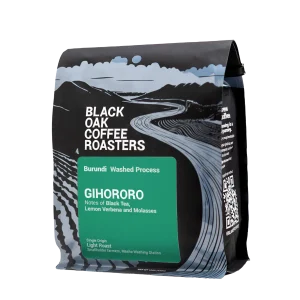
Black Oak Coffee Roasters Ethiopia Wush Wush Natural
Sangria and black cherry hit first, then the Wush Wush varietal's tropical fruit and florals emerge as the cup cools.
Profile
Tasting Notes
- Opens on wine-soaked cherry and sangria brightness; the wine yeast fermentation is the loudest voice in the cup at full temperature, with 5/5 acidity pushing it sharp and fast.
- As the temperature drops, pineapple and citrus pull forward beneath the fermentation layer, and you get the varietal doing what it does: tropical fruit with a clean, high-register sweetness.
- Apple blossom and honeysuckle arrive last, once the fermentation heat has cleared. These are the Wush Wush florals the varietal is known for, and they sit precisely on the finish.
- The bitterness stays low across the entire draw-down. The dark chocolate note in the community data reads more like chocolate-dipped cherry than roast character.
- The body holds at 2/5 from first pour to last sip. What carries this cup is acidity and sweetness, not density.
Who It’s For
The drinker with a gooseneck and a scale who wants to taste what wine yeast fermentation does to an Ethiopian natural. This rewards someone who tracks fermentation method the way others track origin or variety, and who brews deliberately.
The wine yeast addition dominates the early cup, and drinkers who want clean, terroir-forward Ethiopian character will find it pushes the Wush Wush's natural expression into the background. The thin body (2/5) also underdelivers for a specialty co-fermentation that carries a premium price, so anyone expecting the weight of a full-structured natural will be disappointed.
Full review
The cup opens on fermentation, not fruit. That is the honest description of what the 72-hour dry anaerobic process with wine yeast and cinnamon sticks produces: a front-loaded sangria and black cherry character that registers before any varietal identity can establish itself. At serving temperature, Black Oak's Wush Wush Natural reads closer to a young red wine than to most light roasts from Guji. The 5/5 acidity makes that quality assertive. What keeps it from tipping into excess is the 5/5 sweetness running underneath, which prevents the fermentation brightness from reading as sour.
Wush Wush is a rare Ethiopian heirloom varietal, grown in small quantities in southern Ethiopia and distinct from the broader Heirloom or mixed-varietal lots that fill most commodity channels. In a washed or honey process, it typically produces delicate florals, apple blossom, and tropical fruit with a long, clean finish. The genetics are the foundation here, but the co-fermentation process built on top of them is the loudest design decision in the cup. Adding wine yeast and cinnamon sticks to the fermentation tank before sun-drying introduces flavor compounds the varietal alone would not generate. That is not a criticism; it is an explanation. Buyers should know what they are tasting and why.
The processing itself is worth a closer look. "Sun-dried" means the full cherry is dried intact, which is standard Ethiopian natural processing. The dry anaerobic stage seals the cherries in a low-oxygen environment before drying begins, concentrating sugars and extending fermentation time. The wine yeast metabolizes those sugars in a controlled way, generating longer-chain organic compounds responsible for the sangria and berry intensity. The cinnamon addition is subtler in the final cup, but it contributes warmth to the fermentation character that softens what might otherwise be a sharper edge.
For brew method, pour over and aeropress are the correct choices. The 2/5 body means this coffee needs extraction discipline to feel complete. For pour over, let the water cool below boiling before contact; the 5/5 acidity amplifies at higher temperatures, and the fermentation compounds already push the cup into high-energy territory. Grind medium-fine and aim for a steady, moderately paced draw-down. Aeropress with a shorter steep and inverted method also works: the controlled pressure extraction can coax more of the floral and tropical-fruit character forward without running the fermentation notes into murkiness. Drip is viable on a well-calibrated machine but offers less control over the extraction curve.
Compared to a honey-process Ethiopian like Speckled Ax Ethiopia Suke Quto Honey, the flavor logic diverges sharply. The Suke Quto Honey derives its sweetness from retained mucilage during drying, which reads cleaner and closer to origin expression. The Black Oak Wush Wush's wine yeast addition places the fermentation profile in the foreground in a way that reframes the cup's identity entirely. As a performance benchmark, the Groundwork Ethiopia Heirloom Blend Light Roast targets accessible light-roast acidity for a broad audience. This Wush Wush runs harder and more specific, with a narrower extraction target and a flavor profile that makes no effort to be broadly appealing.
A 12-oz bag of documented single-varietal Wush Wush with co-fermentation inputs sits at the upper end of the specialty light-roast tier. The process additions are real costs, and the sourcing is specific. The honest question the thin body raises is whether the cup delivers what that tier implicitly promises. Maximum sweetness and acidity produce a distinctive flavor profile, but without more structural density to carry them, the experience stays high and narrow rather than full.
The florals resolve cleanest between 130°F and 140°F. At that temperature, apple blossom and honeysuckle sit on top of the pineapple and citrus, and the fermentation noise from the opening has quieted enough to let the varietal show. That is a real reward for a drinker willing to wait for it.
Keep pulling the thread: Light roast guide, Guji, Ethiopia, Oromia, Oromia (snnp) origin guide, and more from Black Oak Coffee Roasters.
Price & History
A single-varietal Wush Wush in a 12-oz format with documented co-fermentation inputs is a premium specialty offering, and the gap between that positioning and what the 2/5 body delivers in the cup is the one tension worth naming before buying.
► Show price history (26 days)
| Date | Price | Per oz |
|---|---|---|
| Jul 26, 2026 | $19.75 | $1.646 |
| Jul 25, 2026 | $19.75 | $1.646 |
| Jul 24, 2026 | $19.75 | $1.646 |
| Jul 23, 2026 | $19.75 | $1.646 |
| Jul 22, 2026 | $19.75 | $1.646 |
| Jul 21, 2026 | $19.75 | $1.646 |
| Jul 20, 2026 | $19.75 | $1.646 |
| Jul 19, 2026 | $19.75 | $1.646 |
| Jul 18, 2026 | $19.75 | $1.646 |
| Jul 17, 2026 | $19.75 | $1.646 |
| Jul 15, 2026 | $19.75 | $1.646 |
| Jul 14, 2026 | $19.75 | $1.646 |
| Jul 13, 2026 | $19.75 | $1.646 |
| Jul 12, 2026 | $19.75 | $1.646 |
| Jul 11, 2026 | $19.75 | $1.646 |
| Jul 10, 2026 | $19.75 | $1.646 |
| Jul 9, 2026 | $19.75 | $1.646 |
| Jul 7, 2026 | $19.75 | $1.646 |
| Jul 5, 2026 | $19.75 | $1.646 |
| Jul 4, 2026 | $19.75 | $1.646 |
| Jul 1, 2026 | $19.75 | $1.646 |
| Jun 27, 2026 | $19.75 | $1.646 |
| Jun 25, 2026 | $19.75 | $1.646 |
| Jun 24, 2026 | $19.75 | $1.646 |
| Jun 22, 2026 | $19.75 | $1.646 |
| Jun 21, 2026 | $19.75 | $1.646 |
Rating
FAQ
What does Black Oak Coffee Roasters Ethiopia Wush Wush Natural taste like?
Opens on wine-soaked cherry and sangria brightness; the wine yeast fermentation is the loudest voice in the cup at full temperature, with 5/5 acidity pushing it sharp and fast. As the temperature drops, pineapple and citrus pull forward beneath the fermentation layer, and you get the varietal doing what it does: tropical fruit with a clean, high-register sweetness. Apple blossom and honeysuckle arrive last, once the fermentation heat has cleared. These are the Wush Wush florals the varietal is known for, and they sit precisely on the finish.
Who is Black Oak Coffee Roasters Ethiopia Wush Wush Natural best for?
The drinker with a gooseneck and a scale who wants to taste what wine yeast fermentation does to an Ethiopian natural. This rewards someone who tracks fermentation method the way others track origin or variety, and who brews deliberately.
Who should skip Black Oak Coffee Roasters Ethiopia Wush Wush Natural?
The wine yeast addition dominates the early cup, and drinkers who want clean, terroir-forward Ethiopian character will find it pushes the Wush Wush's natural expression into the background. The thin body (2/5) also underdelivers for a specialty co-fermentation that carries a premium price, so anyone expecting the weight of a full-structured natural will be disappointed.