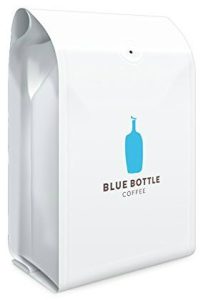
Blue Bottle Three Africas
Built for filter drinkers who want African fruit character without sacrificing body, this blend layers winey blueberry and lemon zest over a Ugandan chocolate base that keeps the cup from going weightless.
Profile
Tasting Notes
- Body sits at 3/5, heavier than most light roasts in this category: enough weight to carry the fruit through the full cup without thinning on the back end.
- Winey blueberry from the natural Ethiopian component comes through on the swallow, dark and slightly fermented, with none of the sharpness you get from an over-extracted Ethiopian.
- Lemon zest acidity (4/5) cuts clean at mid-cup, lifting each sip without turning sour.
- The Ugandan contribution reads as dry cocoa behind the fruit: low, grounding, structural.
- Sweetness lands at 4/5 as dried golden raisin. Bitterness is essentially absent at 1/5, so nothing dries the finish.
Who It’s For
Pour over drinkers who've grown tired of grocery-shelf mediums with no discernible character but also find most light roasts too thin to feel like a full cup. The medium body and the sweetness-acidity integration make this one of the more approachable light roasts in its tier.
The blend engineering softens the singular floral precision you get from a top-tier single-origin washed Ethiopian. The Uganda component adds body and grounds the cup, but the price of that integration is that the Yirgacheffe-style clarity a defined single-origin delivers gets diffused. Blue Bottle's pricing reflects its market position as much as the cup, and drinkers benchmarking on flavor per dollar will find closer comparisons at lower cost in the African specialty category.
Full review
Measured against Volcanica Ethiopian Yirgacheffe on origin, the contrast is instructive. Volcanica presents one source, one processing method, and the full singularity of the Yirgacheffe jasmine-and-bergamot profile. Three Africas takes a different path: blend two Ethiopian processing styles with Ugandan arabica, and the cup gains dimension and body while giving up the one-source precision. The floral edge is present but softened; the citrus is real but shares space with the winey blueberry the natural-process component brings. Whether that trade is worth making depends on what you are looking for from an African light roast.
Against Intelligentsia House Blend on performance, the picture is different. The House Blend is engineered for consistency: a forgiving grind tolerance and predictable extraction across every format. Three Africas is less universal. The high acidity (4/5) and the natural-process blueberry note are sensitive to extraction time. Push the brew past the ideal window and the fruit tips sour; pull it short and the Ugandan chocolate disappears. That performance characteristic is a real constraint, but it is not a flaw for a drinker willing to pay attention. On pour over with the right variables dialed, Three Africas gives you more than the House Blend's useful neutrality does.
The sensory profile stands out for what the 3/5 body does. Most light roasts land at 1-2 on body, which is why many drinkers find them unsatisfying regardless of how distinctive the flavor profile is. Three Africas avoids that problem. The Uganda component adds structural weight that the Ethiopian alone would not produce, and the result is a cup that registers as substantial. Sweetness and acidity both sit at 4/5, a combination that risks coming across as either cloying or sharp. Here the sweetness reads as dried fruit rather than added sugar, which gives the lemon-zest brightness room to operate without the two elements competing.
The flavor architecture follows the source materials directly. Washed Ethiopian contributes the cleaner lemon-citrus and the bright floral edge. Natural Ethiopian is what produces the winey blueberry, the note most likely to divide opinion. Drinkers whose experience runs mostly through washed coffees will find it slightly fermented and unusual, particularly on pour over at high extraction temperatures. Ugandan arabica contributes the dry cocoa finish and the body. It is the least prominent flavor in the blend, but without it the cup would go thin and the fruit notes would float with nothing behind them. Public feedback on this blend shows the winey note as the clearest point of divergence, with drinkers who appreciate natural-process character responding well and those expecting a conventional lemon-floral Ethiopian finding it off-profile.
Blue Bottle prices Three Africas at the upper end of the specialty light roast category, in line with the brand's standard positioning. The published tasting notes do align with what the cup delivers, which is not guaranteed in specialty marketing. The gap between the bag's promise and the cup's execution is small. What the price does not fully account for is that comparable African light roast blends from smaller specialty roasters can approach this flavor range at a meaningfully lower cost per ounce. Whether the Blue Bottle premium is justified depends on how much weight you give to sourcing transparency, consistency, and brand infrastructure. On cup character alone, the value case is partial rather than clear.
Aeropress suits this blend well for a more concentrated version of the same profile: the body and sweetness amplify, the acidity tightens, and the winey note sits in better proportion. Drip is the most forgiving format. Pour over gives you the clearest fruit separation, but it also exposes the extraction sensitivity most directly.
Keep pulling the thread: Light roast guide, Ethiopia (washed and natural), Uganda blend origin guide, and more from Blue Bottle Coffee.
Price & History
Blue Bottle prices Three Africas as a premium specialty offering in a 12 oz bag, consistent with the brand's positioning across its full lineup.
► Show price history (25 days)
| Date | Price | Per oz |
|---|---|---|
| Jul 26, 2026 | $23.00 | $1.917 |
| Jul 25, 2026 | $23.00 | $1.917 |
| Jul 24, 2026 | $23.00 | $1.917 |
| Jul 23, 2026 | $23.00 | $1.917 |
| Jul 22, 2026 | $23.00 | $1.917 |
| Jul 21, 2026 | $23.00 | $1.917 |
| Jul 20, 2026 | $23.00 | $1.917 |
| Jul 19, 2026 | $23.00 | $1.917 |
| Jul 18, 2026 | $23.00 | $1.917 |
| Jul 17, 2026 | $23.00 | $1.917 |
| Jul 15, 2026 | $23.00 | $1.917 |
| Jul 14, 2026 | $23.00 | $1.917 |
| Jul 13, 2026 | $23.00 | $1.917 |
| Jul 12, 2026 | $23.00 | $1.917 |
| Jul 11, 2026 | $23.00 | $1.917 |
| Jul 10, 2026 | $23.00 | $1.917 |
| Jul 9, 2026 | $23.00 | $1.917 |
| Jul 7, 2026 | $23.00 | $1.917 |
| Jul 5, 2026 | $23.00 | $1.917 |
| Jul 4, 2026 | $23.00 | $1.917 |
| Jul 1, 2026 | $23.00 | $1.917 |
| Jun 27, 2026 | $23.00 | $1.917 |
| Jun 25, 2026 | $23.00 | $1.917 |
| Jun 24, 2026 | $23.00 | $1.917 |
| Jun 22, 2026 | $23.00 | $1.917 |
Rating
FAQ
What does Blue Bottle Three Africas taste like?
Body sits at 3/5, heavier than most light roasts in this category: enough weight to carry the fruit through the full cup without thinning on the back end. Winey blueberry from the natural Ethiopian component comes through on the swallow, dark and slightly fermented, with none of the sharpness you get from an over-extracted Ethiopian. Lemon zest acidity (4/5) cuts clean at mid-cup, lifting each sip without turning sour.
Who is Blue Bottle Three Africas best for?
Pour over drinkers who've grown tired of grocery-shelf mediums with no discernible character but also find most light roasts too thin to feel like a full cup. The medium body and the sweetness-acidity integration make this one of the more approachable light roasts in its tier.
Who should skip Blue Bottle Three Africas?
The blend engineering softens the singular floral precision you get from a top-tier single-origin washed Ethiopian. The Uganda component adds body and grounds the cup, but the price of that integration is that the Yirgacheffe-style clarity a defined single-origin delivers gets diffused. Blue Bottle's pricing reflects its market position as much as the cup, and drinkers benchmarking on flavor per dollar will find closer comparisons at lower cost in the African specialty category.