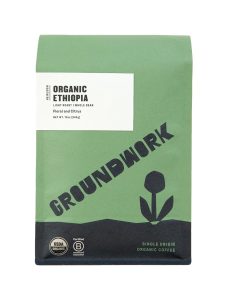
Groundwork Ethiopia Heirloom Blend Light Roast
The citrus lifts first, then dark fruit fills in where the roast held back.
Profile
Tasting Notes
- Bitterness is absent. The finish dries without any tannic pull.
- Body stays low throughout. Brightness arrives before any weight does.
- Citrus comes through early: lemon peel with a sharper, more defined edge than dried fruit.
- The natural-processed component pushes dark fruit (fig, dried cherry) through the mid-sip, then yields.
- The floral register is a lift on the nose more than a flavor that persists in the cup.
Who It’s For
Built for the drinker who already accepts thin body as the cost of brightness and wants more flavor range than a single-process Ethiopian provides. Pour over and aeropress give it the right extraction environment to show what it can do.
The body is a genuine 2/5. Milk drinks need structure to hold together, and this cup does not provide it. Anyone who measures a coffee by how it fills the mug will find this one disappears before it satisfies.
Full review
Groundwork stopped the development early, and the cup shows it in the ways that matter. Roast intensity sits at 2/5, which means origin character has room to come through. The trade is body. A measured light roast pulls acidity and sweetness up while keeping the mouthfeel thin. Here, that lands at 4/5 acidity, 4/5 sweetness, and 2/5 body: real numbers that describe a specific cup, not a range.
The processing approach is where this coffee does something most single-origin Ethiopians at this price point do not bother with. Groundwork blends washed and natural lots from the same heirloom genetic pool, so you get the citrus and floral clarity that comes from the washed portion and the dark fruit register that comes from the natural. Because those two components occupy different moments in the extraction, they do not cancel each other out. The washed component defines the early flavors. The natural fills the mid-sip with fig and dried cherry and then steps back. The result is a more varied flavor arc than a single-process lot gives at this roast level.
Pour over is where this coffee performs best. The even saturation and consistent flow keep the extraction from running long, which is where the citrus sharpens past the point you want it. Drip works for the same basic profile, though the water temperature in many drip machines runs below optimal for a light roast, which can leave the cup tasting flat and undernourished. Aeropress, brewed with a finer grind and a slow press, brings the dark fruit forward more than the other methods do and gives the cup a more concentrated character. The key variable across all three is not avoiding bitterness (there is almost none here to avoid), but keeping the citrus from going sharp.
The heirloom designation refers to the genetic heritage of the plant, not a specific farm variety. Ethiopian heirloom arabicas are wild-collected landraces that predate modern cultivar breeding programs. Because they were not selected for yield or disease resistance, they tend toward the layered, fruit-forward character that made Ethiopian coffee a reference point for the category. The organic certification tracks through the supply chain to the farming practices at origin. Blending washed and natural lots from this genetic base is a way to stabilize the cup profile across harvests while keeping the origin character readable from bag to bag.
The Coffee Bean & Tea Leaf Ethiopia Yirgacheffe is the natural origin comparison. That coffee runs purely washed, and the result is clean, citrus-forward, and floral without the dark fruit layer a natural component adds. The Groundwork trades some of that peak clarity for a broader flavor range. Whether that is the better cup depends on what the drinker came looking for. Blue Bottle's Three Africas runs a different ambition: it pulls from multiple African origins to build an integrated, consistent cup designed for reliability. Against that performance benchmark, the Groundwork Ethiopia shows more of the origin specificity you get from Ethiopian heirloom genetics, at the cost of some of the cup-to-cup predictability Three Africas is engineered to deliver.
A cheaper grocery-tier Ethiopian light roast skips the dual-process blend entirely. Single-process sourcing is simpler and more consistent from season to season, which is why most volume roasters default to it. What Groundwork is doing here, blending washed and natural lots, is a more considered approach that gives the cup its flavor range. The cost is traceability. The sourcing is certified organic and heirloom-designated, but lot-level specifics are absent. Against what a specialty roaster would charge for a named Ethiopian lot at the same roast level, the 12-ounce Amazon format is accessible. What you give up is the farm, the altitude, and the harvest detail.
The dark fruit component is real. It shows up in the mid-sip, distinct from the citrus, and it holds until the cup cools.
Keep pulling the thread: Light roast guide, Ethiopia (single origin, heirloom, organic) origin guide, and more from Groundwork.
Price & History
A 12-ounce bag through Amazon is where the sourcing story thins: you are paying for the blend and the organic certification, but without lot-specific data the per-ounce cost is harder to evaluate against what a traceable specialty Ethiopian commands.
► Show price history (26 days)
| Date | Price | Per oz |
|---|---|---|
| Jul 26, 2026 | $19.00 | $1.583 |
| Jul 25, 2026 | $19.00 | $1.583 |
| Jul 24, 2026 | $19.00 | $1.583 |
| Jul 23, 2026 | $19.00 | $1.583 |
| Jul 22, 2026 | $19.00 | $1.583 |
| Jul 21, 2026 | $19.00 | $1.583 |
| Jul 20, 2026 | $19.00 | $1.583 |
| Jul 19, 2026 | $19.00 | $1.583 |
| Jul 18, 2026 | $19.00 | $1.583 |
| Jul 17, 2026 | $19.00 | $1.583 |
| Jul 15, 2026 | $19.00 | $1.583 |
| Jul 14, 2026 | $19.00 | $1.583 |
| Jul 13, 2026 | $19.00 | $1.583 |
| Jul 12, 2026 | $19.00 | $1.583 |
| Jul 11, 2026 | $19.00 | $1.583 |
| Jul 10, 2026 | $19.00 | $1.583 |
| Jul 9, 2026 | $19.00 | $1.583 |
| Jul 7, 2026 | $19.00 | $1.583 |
| Jul 5, 2026 | $19.00 | $1.583 |
| Jul 4, 2026 | $19.00 | $1.583 |
| Jul 1, 2026 | $19.00 | $1.583 |
| Jun 27, 2026 | $19.00 | $1.583 |
| Jun 25, 2026 | $19.00 | $1.583 |
| Jun 24, 2026 | $19.00 | $1.583 |
| Jun 22, 2026 | $19.00 | $1.583 |
| Jun 21, 2026 | $19.00 | $1.583 |
Rating
FAQ
What does Groundwork Ethiopia Heirloom Blend Light Roast taste like?
Bitterness is absent. The finish dries without any tannic pull. Body stays low throughout. Brightness arrives before any weight does. Citrus comes through early: lemon peel with a sharper, more defined edge than dried fruit.
Who is Groundwork Ethiopia Heirloom Blend Light Roast best for?
Built for the drinker who already accepts thin body as the cost of brightness and wants more flavor range than a single-process Ethiopian provides. Pour over and aeropress give it the right extraction environment to show what it can do.
Who should skip Groundwork Ethiopia Heirloom Blend Light Roast?
The body is a genuine 2/5. Milk drinks need structure to hold together, and this cup does not provide it. Anyone who measures a coffee by how it fills the mug will find this one disappears before it satisfies.