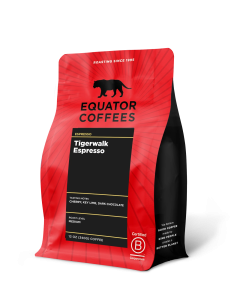
Equator Coffees Tigerwalk Espresso
Dark chocolate up front, a cherry note that outlasts the roast, and enough body to anchor milk drinks without bitterness dragging the cup down.
Profile
Tasting Notes
- Dense, settled body. The mouthfeel holds from first pull through the finish without thinning.
- The bitterness sits lower than the roast intensity warrants, which gives the sweetness room to come through.
- Dark chocolate on the swallow: dry and cocoa-forward.
- A cherry lift at mid-palate that separates this from a straight chocolate espresso profile.
- Caramel closes the finish. The sweetness lands on the caramelized side of the scale.
Who It’s For
Espresso drinkers building milk drinks who want body and sweetness in the shot without bitterness overrunning the cup. The Tigerwalk is a flat white and cappuccino coffee first; every decision in the roast profile points there.
Pull this black expecting fruit-forward clarity and the roast will have answered before the cherry gets a word in. The medium-dark depth has consumed most of the origin distinction the Latin America sources held, and the cherry reads as accent rather than character at this roast depth. At the premium price an Equator bag commands, a buyer optimizing for maximum cup quality per dollar will find cheaper blends in this profile narrowing the gap.
Full review
Medium-dark roasting on a washed Latin America base is a deliberate trade. The roaster suppresses acidity and drives caramelization to build body, eliminating the lighter volatile compounds that make origin-driven light roasts interesting. It is a bet that the drinker wants body and sweetness over clarity and terroir. What the Tigerwalk does within that trade is keep the bitterness from tracking the roast intensity upward. Most blends in this roast category let bitterness rise in step with roast depth; here, body and sweetness arrive at 4/5 while bitterness stays at 3/5. That ratio is the roaster's real achievement, and the cherry note surviving intact through a medium-dark washed process is the clearest sign the roasting was controlled.
The washed process contributes clarity to this cup. Washed coffees at medium-dark roast come out structurally cleaner than naturals at the same depth: no fruit pulp contact means no fermentation sweetness, so the caramelization from the roast reads clearly. The process also strips any residual fruit-forward quality; the cherry note in the tasting profile comes from the bean itself and the roaster's handling. What the process cannot do at this roast depth is protect terroir. Latin America as a sourcing category covers a wide geography, and a medium-dark roast flattens country-of-origin character into the background. The flavor is the roast. The Latin America blend is the raw material the roaster worked with, not a character the cup puts forward on its own.
Verve's The Sermon operates from a different set of priorities: lighter roast, higher acidity, brightness as the primary move. The Sermon pulls a more dynamic shot with clearer origin signal, the kind of espresso that holds up well without milk and shifts the palate with each pull. The Tigerwalk is the steadier option, built around consistency and body rather than distinction. For a dedicated espresso-only drinker, the Sermon offers more to work with. For someone building mostly milk drinks, the Tigerwalk's body and sweetness are a better match.
For milk drinks, the Tigerwalk earns its use case. The 4/5 body gives a flat white or cappuccino something to grip, and the 4/5 sweetness means the shot holds character against steamed milk without getting lost. Cafe Du Monde with chicory achieves similar milk-forward performance through a different mechanism: the chicory builds body and a woody bitterness that holds through milk without requiring precise extraction. The Tigerwalk reaches the same outcome through caramelization and roast depth. A flat white or cappuccino drinker who wants espresso character without chicory's herbal edge gets that here.
Black, the range narrows. The 3/5 acidity and 3/5 bitterness sit at the midpoint of both scales, and the cup settles into a predictable evenness. The cherry and caramel arrive on schedule, the finish wraps up in a few seconds, and the cup is over. For a single-origin light-roast drinker, this will read as flat. For someone who drinks straight espresso as a quick, functional ritual, it delivers that without complication. But the complexity the bag implies is calibrated for milk.
For a 12-oz bag of direct-roaster espresso in this sourcing tier, the price is premium. The cup quality justifies some of the separation from cheaper blends: the bitterness-to-body ratio is better than most medium-dark blends achieve at comparable roast intensity, and the cherry note at this roast depth is not a guaranteed outcome. What a cheaper grocery-tier blend in this category gives up is that controlled sweetness-to-bitterness balance; the Tigerwalk is more consistent shot to shot than most blends at a lower price. But Equator's B-Corp certifications and sourcing practices are priced into the bag alongside the cup. A buyer who values those factors finds fair value. A buyer working from pure cup quality per dollar will find the gap smaller than the price difference suggests.
Keep pulling the thread: Medium-Dark roast guide, Latin America blend origin guide, and more from Equator Coffees.
Price & History
At 12 oz, the Tigerwalk sits in the premium direct-roaster tier for a washed Latin America espresso blend.
► Show price history (38 days)
| Date | Price | Per oz |
|---|---|---|
| Jul 26, 2026 | $18.50 | $1.542 |
| Jul 25, 2026 | $18.50 | $1.542 |
| Jul 24, 2026 | $18.50 | $1.542 |
| Jul 23, 2026 | $18.50 | $1.542 |
| Jul 22, 2026 | $18.50 | $1.542 |
| Jul 21, 2026 | $18.50 | $1.542 |
| Jul 20, 2026 | $18.50 | $1.542 |
| Jul 19, 2026 | $18.50 | $1.542 |
| Jul 18, 2026 | $18.50 | $1.542 |
| Jul 17, 2026 | $18.50 | $1.542 |
| Jul 16, 2026 | $18.50 | $1.542 |
| Jul 15, 2026 | $18.50 | $1.542 |
| Jul 14, 2026 | $18.50 | $1.542 |
| Jul 13, 2026 | $18.50 | $1.542 |
| Jul 12, 2026 | $18.50 | $1.542 |
| Jul 11, 2026 | $18.50 | $1.542 |
| Jul 10, 2026 | $18.50 | $1.542 |
| Jul 9, 2026 | $18.50 | $1.542 |
| Jul 8, 2026 | $18.50 | $1.542 |
| Jul 7, 2026 | $18.50 | $1.542 |
| Jul 6, 2026 | $18.50 | $1.542 |
| Jul 5, 2026 | $18.50 | $1.542 |
| Jul 4, 2026 | $18.50 | $1.542 |
| Jul 3, 2026 | $18.50 | $1.542 |
| Jul 2, 2026 | $18.50 | $1.542 |
| Jul 1, 2026 | $18.50 | $1.542 |
| Jun 30, 2026 | $18.50 | $1.542 |
| Jun 29, 2026 | $18.50 | $1.542 |
| Jun 28, 2026 | $18.50 | $1.542 |
| Jun 27, 2026 | $18.50 | $1.542 |
| Jun 26, 2026 | $18.50 | $1.542 |
| Jun 25, 2026 | $18.50 | $1.542 |
| Jun 24, 2026 | $18.50 | $1.542 |
| Jun 23, 2026 | $18.50 | $1.542 |
| Jun 22, 2026 | $18.50 | $1.542 |
| Jun 21, 2026 | $18.50 | $1.542 |
| Jun 14, 2026 | $16.00 | $1.333 |
| Jun 13, 2026 | $16.00 | $1.333 |
Rating
FAQ
What does Equator Coffees Tigerwalk Espresso taste like?
Dense, settled body. The mouthfeel holds from first pull through the finish without thinning. The bitterness sits lower than the roast intensity warrants, which gives the sweetness room to come through. Dark chocolate on the swallow: dry and cocoa-forward.
Who is Equator Coffees Tigerwalk Espresso best for?
Espresso drinkers building milk drinks who want body and sweetness in the shot without bitterness overrunning the cup. The Tigerwalk is a flat white and cappuccino coffee first; every decision in the roast profile points there.
Who should skip Equator Coffees Tigerwalk Espresso?
Pull this black expecting fruit-forward clarity and the roast will have answered before the cherry gets a word in. The medium-dark depth has consumed most of the origin distinction the Latin America sources held, and the cherry reads as accent rather than character at this roast depth. At the premium price an Equator bag commands, a buyer optimizing for maximum cup quality per dollar will find cheaper blends in this profile narrowing the gap.