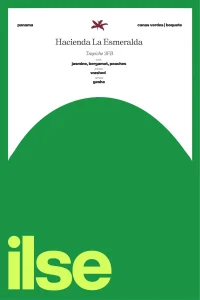
Ilse Coffee Ecuador Juan Pena Gesha
Citrus-sharp at first contact, jasmine through the mid-palate, and honey sweetness on a finish that exits without drag.
Affiliate link. We earn a commission at no extra cost to you.
Profile
Tasting Notes
- The body is thin, close to weightless, and that is the deliberate architecture: remove the textural mass and the acidity has nothing competing with it
- Citrus arrives first, lemon and raspberry brightness that peaks at the initial contact and holds its shape as the cup cools
- Jasmine surfaces through the mid-palate, the most temperature-sensitive element in this profile
- Honey sweetness closes the sip, specific enough to read as floral honey rather than the generic sweetness a light roast sometimes logs
- The finish exits fast, leaving a brief peach echo before the palate clears
Who It’s For
Pour over drinkers who have accepted that a thinner body often carries the most defined flavors. This cup is built for slow sipping and close attention, not volume brewing or divided mornings.
At $5.42 per ounce, the margin for extraction error is real: push the temperature slightly too high and the jasmine collapses into something papery and astringent, leaving only citrus acidity on a thin base. The cup delivers at its best, but its best requires precision. Casual brewers who dial in by feel and adjust rarely will spend a lot of money for inconsistent results.
Full review
The obvious flavor-profile reference for any washed Gesha is the Hacienda La Esmeralda lineage in Panama, and Seth Taylor's Lot 6NB from La Esmeralda anchors that benchmark. Both cups share the structural logic of maximum acidity on a near-absent body, with jasmine threading through the mid-palate and stone fruit closing the sip. What differs is terroir: Ecuador's Andean altitude introduces a more mineral-edged acidity alongside the florals, and the stone fruit here reads as peach where Chiriqui-grown Geshas often land closer to nectarine. The La Esmeralda is the better-established reference point; the La Papaya lot is a genuine and informative departure from it. Whether that distinction justifies the price depends on what the drinker is after.
Performance is a separate question from flavor profile, and that is where Intelligentsia's House Blend offers the useful contrast. The House Blend was engineered to deliver reliably across brew variables and grind tolerances. This Gesha was not. The thin body (2 out of 5) means there is no textural cushion absorbing extraction error. At the correct water temperature and grind, the acidity and sweetness resolve into equilibrium. Deviate from that, and the cup tips in one direction or the other. The House Blend forgives; this Gesha rewards.
The washed process at Hacienda La Papaya removes the fruit layer before drying, which is the right call for this variety. Gesha's florals and high-grown fruit acidity are what the cup is selling, and fermentation would bury them under sweetness that belongs to the processing, not the bean. Washed Geshas live or die on clarity. This one arrives with all five acidity points intact, and the low bitterness (2 out of 5) gives that acidity room to read as brightness rather than aggression.
The value case splits by use. At $65 for 12 ounces, this is a research-grade purchase for someone actively mapping how Gesha expresses across origins. Ecuador's Gesha production is recent and still limited relative to Panama's, which makes La Papaya lots informative for a drinker trying to understand what origin contributes versus variety. For that drinker, the price is appropriate and the cup delivers. For someone who wants a high-quality light roast for an efficient morning routine, this is a poor allocation: the extraction precision required is real, and some portion of the bags will underdeliver when brewed at the speed most mornings allow.
Ecuador's Gesha production is young enough that harvest-to-harvest consistency is still an open question. The 5/5 acidity and sweetness scores reflect what this specific lot achieves at its target extraction, not a guaranteed outcome across every bag or every setup. That is not a flaw in this coffee; it reflects where Ecuador sits as a Gesha origin right now. The mineral edge in the acidity, which reads as a distinct Andean terroir influence and separates this cup from its Panamanian equivalents, is also the element most sensitive to overextraction. Land the extraction and that mineral note adds definition. Miss it and the sharpness takes over.
The jasmine tells you whether the extraction landed. When it is present, the mid-palate opens and the cup has dimension beyond its weight. When it collapses, what remains is citrus acidity on a thin body with honey sweetness, which is pleasant but does not justify the price. The peach that closes the profile shows up reliably across a broader window. The jasmine is the signal.
Keep pulling the thread: Light roast guide, Ecuador, Hacienda La Papaya origin guide, and more from Ilse Coffee.
Price & History
The price has sat at exactly $65.00 for the entire 30-day tracking window, no movement and no discounts. One data point limits the confidence in that figure, but the flat line suggests a producer who is not using promotions to move volume. At $5.42 per ounce, this is among the highest price-per-ounce entries available outside of competition lots. Buy at the current price if you are specifically pursuing Ecuador Gesha as an origin study and your setup can reliably hit the extraction window. If neither of those conditions applies, the price is not justified by the cup alone.
► Show price history (26 days)
| Date | Price | Per oz |
|---|---|---|
| Jul 26, 2026 | $65.00 | $5.417 |
| Jul 25, 2026 | $65.00 | $5.417 |
| Jul 24, 2026 | $65.00 | $5.417 |
| Jul 23, 2026 | $65.00 | $5.417 |
| Jul 22, 2026 | $65.00 | $5.417 |
| Jul 21, 2026 | $65.00 | $9.214 |
| Jul 20, 2026 | $65.00 | $5.417 |
| Jul 19, 2026 | $65.00 | $5.417 |
| Jul 18, 2026 | $65.00 | $5.417 |
| Jul 17, 2026 | $65.00 | $5.417 |
| Jul 15, 2026 | $65.00 | $5.417 |
| Jul 14, 2026 | $65.00 | $5.417 |
| Jul 13, 2026 | $65.00 | $5.417 |
| Jul 12, 2026 | $65.00 | $5.417 |
| Jul 11, 2026 | $65.00 | $5.417 |
| Jul 10, 2026 | $65.00 | $5.417 |
| Jul 9, 2026 | $65.00 | $5.417 |
| Jul 7, 2026 | $65.00 | $5.417 |
| Jul 5, 2026 | $65.00 | $5.417 |
| Jul 4, 2026 | $65.00 | $5.417 |
| Jul 1, 2026 | $65.00 | $5.417 |
| Jun 27, 2026 | $65.00 | $5.417 |
| Jun 25, 2026 | $65.00 | $5.417 |
| Jun 24, 2026 | $65.00 | $5.417 |
| Jun 22, 2026 | $65.00 | $5.417 |
| Jun 21, 2026 | $65.00 | $5.417 |
Rating
FAQ
What does Ilse Coffee Ecuador Juan Pena Gesha taste like?
The body is thin, close to weightless, and that is the deliberate architecture: remove the textural mass and the acidity has nothing competing with it Citrus arrives first, lemon and raspberry brightness that peaks at the initial contact and holds its shape as the cup cools Jasmine surfaces through the mid-palate, the most temperature-sensitive element in this profile
Who is Ilse Coffee Ecuador Juan Pena Gesha best for?
Pour over drinkers who have accepted that a thinner body often carries the most defined flavors. This cup is built for slow sipping and close attention, not volume brewing or divided mornings.
Who should skip Ilse Coffee Ecuador Juan Pena Gesha?
At $5.42 per ounce, the margin for extraction error is real: push the temperature slightly too high and the jasmine collapses into something papery and astringent, leaving only citrus acidity on a thin base. The cup delivers at its best, but its best requires precision. Casual brewers who dial in by feel and adjust rarely will spend a lot of money for inconsistent results.