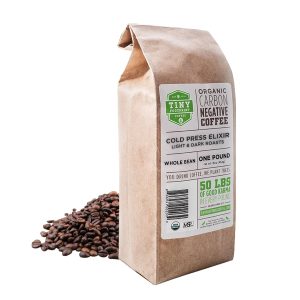
Tiny Footprint Organic Cold Press Elixir
Cocoa surfaces first, recedes before the finish, and leaves a fruit sweetness that holds long past the cup; this blend was engineered for cold extraction and it meets that specification.
Profile
Tasting Notes
- The finish is sweet and brief, the fruit sweetness from the Ethiopian component dissolving without any drying edge that the low bitterness (2/5) would otherwise allow to linger.
- Body sits at useful weight, substantial enough that cold brew concentrate holds cohesion under ice dilution without turning syrupy.
- Floral notes arrive mid-cup, present but restrained, more textural backdrop than focal point at this acidity level (2/5).
- Cocoa from the darker blend component opens each sip and softens before it has the chance to build toward bitterness, which sits near absent.
- The fruit sweetness (4/5) is the thread connecting the blend's two halves, and it holds its shape across brew temperatures and dilution ratios.
Who It’s For
Cold brew regulars who batch by the quart and want a sweet, low-maintenance cup: the blend's sweetness holds across dilution ratios and steep times where a single-origin light roast would lose its character long before you reached your second glass.
Buyers pricing strictly on cup quality per ounce. Tiny Footprint's carbon-negative program is real and third-party verified, but it accounts for a measurable portion of the price; comparable cold brew blends without the environmental certification arrive at similar flavor outcomes for less.
Full review
Stone Street Cold Brew Reserve Dark Roast is built for the same functional purpose using a simpler approach: a single dark roast profile that extracts predictably and delivers a consistent concentrate batch after batch. On pure cold brew performance, the Cold Press Elixir produces a more layered cup, but the trade-off is worth naming. The light component's fruit and floral notes are present in the blend, but the dark component absorbs the acidity and edge that gives single-origin light roasts their distinction. What you get is a middle ground that drinks more easily and identifies itself less specifically.
The Tiny Footprint Nicaragua Segovia Dark Roast, the brand's own full-dark offering, shows what the roaster commits to when it doesn't split the difference. Roast character leads in the Segovia, and body is the headline. The Cold Press Elixir is a different intent entirely: the Ethiopian component supplies the sweetness and softness that make this blend read as a cold brew product, and that design choice shapes every sip.
Where the blend earns its place is dilution resistance. Cold brew is typically served over ice or extended from concentrate, and the Cold Press Elixir's sweetness holds across the range. The fruit character doesn't collapse when you add water, which is the routine failure mode for lightly roasted cold brew options where high-grown acidity simply disappears under ice. The 4/5 sweetness score is the cup's actual working strength, and it is earned.
The Ethiopian coffees in the blend contribute the floral and soft fruit character the brand describes, but neither stands out with precision. Low acidity at 2/5 shapes how the fruit reads: it registers as sweetness, the crisp brightness you would get from a high-grown single origin simply outside the blend's range. For cold brew that is often preferable. Sharp acidity in cold concentrate can persist through ice dilution into an edge that wears on a long, cold drink. The absence of that acidity is a functional asset in the intended format, even if it costs origin identity.
Origin transparency is where the blend strategy shows its limit most clearly. "Blend with Ethiopian coffees" is a loose specification, and the cup does not resolve into anything you could describe with specificity. The cocoa from the darker component is the most identifiable element. The floral and fruit notes are present but brief, more texture than focal point. Drinkers who want cold brew that teaches them something specific about Ethiopian coffee will find the darker component absorbs too much of that signal to leave a legible impression.
A cheaper cold brew blend in this category gives up the organic certification and the carbon offset program. On cup quality, the gap is narrower. Comparable blends without the environmental infrastructure land at similar sweetness and bitterness levels for less per ounce. The premium here reflects the brand's mission as much as the roast, and that is a transparent trade-off for buyers who factor it in.
French press performance tracks the cold brew logic. Low bitterness and medium body prevent the heavy, stewed quality that full dark roasts produce in full immersion. A coarser grind and a shorter steep than a pure dark roast uses brings out the sweetness before the cocoa has time to overtake the cup. The result is consistent across batches, which matters for anyone brewing a full press without much attention to the variables.
The light and dark blend format is a commercial decision that addresses a specific problem: cold brew that reads approachable for the widest possible audience. The sweetness holds across dilution ratios, the bitterness stays low enough to skip the cream, and the french press doesn't turn heavy. For a standard home cold brew setup, those are real outcomes. The cup just won't tell you much about the Ethiopian coffees specifically.
Keep pulling the thread: Light and dark blend roast guide, Blend with Ethiopian coffees (carbon negative) origin guide, and more from Tiny Footprint.
Price & History
The 16-ounce format is standard for this category, but Tiny Footprint's carbon-negative certification carries a measurable premium over comparable specialty cold brew blends that reach similar flavor outcomes.
► Show price history (26 days)
| Date | Price | Per oz |
|---|---|---|
| Jul 26, 2026 | $17.50 | $1.094 |
| Jul 25, 2026 | $17.50 | $1.094 |
| Jul 24, 2026 | $17.50 | $1.094 |
| Jul 23, 2026 | $17.50 | $1.094 |
| Jul 22, 2026 | $17.50 | $1.094 |
| Jul 21, 2026 | $17.50 | $1.094 |
| Jul 20, 2026 | $17.50 | $1.094 |
| Jul 19, 2026 | $17.50 | $1.094 |
| Jul 18, 2026 | $17.50 | $1.094 |
| Jul 17, 2026 | $17.50 | $1.094 |
| Jul 15, 2026 | $17.50 | $1.094 |
| Jul 14, 2026 | $17.50 | $1.094 |
| Jul 13, 2026 | $17.50 | $1.094 |
| Jul 12, 2026 | $17.50 | $1.094 |
| Jul 11, 2026 | $17.50 | $1.094 |
| Jul 10, 2026 | $17.50 | $1.094 |
| Jul 9, 2026 | $17.50 | $1.094 |
| Jul 7, 2026 | $17.50 | $1.094 |
| Jul 5, 2026 | $17.50 | $1.094 |
| Jul 4, 2026 | $17.50 | $1.094 |
| Jul 1, 2026 | $17.50 | $1.094 |
| Jun 27, 2026 | $17.50 | $1.094 |
| Jun 25, 2026 | $17.50 | $1.094 |
| Jun 24, 2026 | $17.50 | $1.094 |
| Jun 22, 2026 | $17.50 | $1.094 |
| Jun 21, 2026 | $17.50 | $1.094 |
Rating
FAQ
What does Tiny Footprint Organic Cold Press Elixir taste like?
The finish is sweet and brief, the fruit sweetness from the Ethiopian component dissolving without any drying edge that the low bitterness (2/5) would otherwise allow to linger. Body sits at useful weight, substantial enough that cold brew concentrate holds cohesion under ice dilution without turning syrupy. Floral notes arrive mid-cup, present but restrained, more textural backdrop than focal point at this acidity level (2/5).
Who is Tiny Footprint Organic Cold Press Elixir best for?
Cold brew regulars who batch by the quart and want a sweet, low-maintenance cup: the blend's sweetness holds across dilution ratios and steep times where a single-origin light roast would lose its character long before you reached your second glass.
Who should skip Tiny Footprint Organic Cold Press Elixir?
Buyers pricing strictly on cup quality per ounce. Tiny Footprint's carbon-negative program is real and third-party verified, but it accounts for a measurable portion of the price; comparable cold brew blends without the environmental certification arrive at similar flavor outcomes for less.