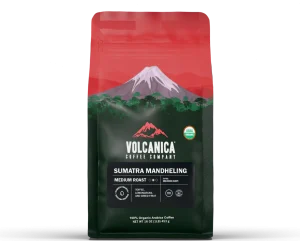
Volcanica Coffee Guatemala Antigua Coffee
Across drip, pour over, and french press, maximum acidity drives a jasmine-and-lemon cup with almost no bitterness behind it, and the brew margin is wider than the profile suggests.
Profile
Tasting Notes
- Jasmine leads. At maximum acidity, it registers from the first sip and stays prominent through the cup's middle.
- Lemon moves through the midpalate, held in the citric range by the high sweetness (4/5) before it tips into anything sourness-adjacent.
- Berry arrives at the finish, brief and low. A sweetness signal from the varietal, present but not forward.
- Bitterness is nearly absent (2/5). The finish exits fast, with the floral and citric notes ahead of it.
Who It’s For
The drinker who reaches for this wants jasmine and lemon at the top of a morning cup, with enough body to keep it from reading as thin, and a brew setup that doesn't demand constant attention. Pour over is the best venue; drip works across standard autodrip temperatures without adjustment.
French press drinkers who want weight at the end of a long steep will find this cup plateaus at 3/5 body and does not build past it. The jasmine, which is the cup's best quality, flattens after four minutes of immersion.
Full review
Against the Chelchele Ethiopia from Insanely Good Coffee, this Antigua reveals what washed processing decides at the same acidity level. Both cups run at maximum acidity (5/5). Both open with jasmine and lemon. The Chelchele's natural processing builds a fruit base beneath those florals: dense, berry-driven, with a weight that makes the acidity feel embedded in something larger. The Antigua strips that layer. Jasmine and lemon arrive without a fruit foundation pushing from below, and the result is a cup that is precise and uncomplicated in a way the Chelchele is not built to be. Neither is a mistake. They are two different uses of the same acidity score, and the Antigua wins on clarity where the Chelchele wins on depth.
Against Tim Hortons Original Blend Medium Roast, the performance lens opens a wider gap. The Tim Hortons is engineered for consistency across any setup, any grinder, any water temperature, which is a real value for a different kind of drinker. Acidity, sweetness, and body are all flattened toward predictability by design. This Antigua is also forgiving across drip, pour over, and french press, but the mechanism is different: the acidity and sweetness stay stable across a reasonable range of temperatures and grind settings without demanding precision. What the Tim Hortons cannot produce at the same brew effort is the floral register this Antigua delivers. That gap is real.
In drip, the extraction is straightforward. The jasmine and lemon reach the cup even when the autodrip runs warmer than ideal, because both notes sit at the top of the flavor register and do not require careful extraction to surface. Pour over offers more control: a medium grind and water in the 195-200F range let the jasmine open without volatilizing before the cup cools. French press is viable; the florals survive the steep. The body, however, does not grow with contact time. Four minutes returns what four minutes returns, and nothing added after that changes the cup's weight.
Antigua sits between 1,500 and 1,700 meters in the Guatemalan highlands, high enough to develop the acid structure that produces lemon and jasmine clarity, stable enough that the harvest is consistent. The washed process removes the fruit before fermentation, keeping origin character forward without the density that natural or honey processing builds into the base. The berry here is a varietal signal, not a processing artifact. It is low, brief, and specific to the plant. Washed processing at this elevation and roast intensity is what keeps the acidity prominent at 5/5 while the body holds at a moderate 3/5. Volcanica's medium roast decision stops before the body development phase deepens, which is why the florals are preserved and the bitterness stays low.
Twelve ounces at the specialty-tier price point buys the Antigua terroir at maximum acidity with high sweetness and near-absent bitterness. That profile does not require exotic sourcing to exist, but it does require sourcing discipline and a roast decision that prioritizes acidity over body. What the price buys that has no cheaper substitute is that specific roast calibration, consistently applied. The caveat: washed Guatemalan mediums exist from multiple roasters, some priced lower. Whether this one justifies a premium depends on the per-ounce comparison, which the current price data does not allow.
The consensus on washed Antigua at medium roast is well-established: bright, floral, forgiving, predictable. This cup confirms it. The variance is in how the 3/5 body lands against a drinker's baseline. For pour over regulars calibrated to washed African coffees, the body reads as adequate and well-matched to the acidity. For french press regulars who expect weight, the body reads as light. The cup functions as a clarity vehicle rather than a mouthfeel-forward experience, and that is the result of a deliberate roast decision. The body is what the roast had to give up to keep the acidity where it is.
Keep pulling the thread: Medium roast guide, Guatemala, Antigua origin guide, and more from Volcanica Coffee.
Price & History
Twelve ounces puts this in the standard specialty-tier pack size for washed Latin American coffees, where what separates the bottom from the top is roast discipline and sourcing consistency, both of which this cup demonstrates.
Price history coming soon — check back after the next daily update.
Rating
FAQ
What does Volcanica Coffee Guatemala Antigua Coffee taste like?
Jasmine leads. At maximum acidity, it registers from the first sip and stays prominent through the cup's middle. Lemon moves through the midpalate, held in the citric range by the high sweetness (4/5) before it tips into anything sourness-adjacent. Berry arrives at the finish, brief and low. A sweetness signal from the varietal, present but not forward.
Who is Volcanica Coffee Guatemala Antigua Coffee best for?
The drinker who reaches for this wants jasmine and lemon at the top of a morning cup, with enough body to keep it from reading as thin, and a brew setup that doesn't demand constant attention. Pour over is the best venue; drip works across standard autodrip temperatures without adjustment.
Who should skip Volcanica Coffee Guatemala Antigua Coffee?
French press drinkers who want weight at the end of a long steep will find this cup plateaus at 3/5 body and does not build past it. The jasmine, which is the cup's best quality, flattens after four minutes of immersion.