onyx-coffee-lab
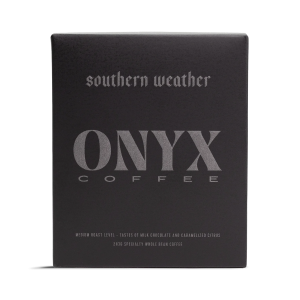
Onyx Coffee Lab Southern Weather Blend
At $1.70/oz, you're paying for specificity: strawberry and cream soda in a washed light roast that registers almost no bitterness.
The Chemex paper filter is 20–30% thicker than standard pour over filters. It removes more oils, more fine particles, and more of the heavy compounds that give coffee body. The result: the cleanest, most transparent cup you can brew at home. Every note in the coffee comes through without interference.
This is the method that makes you taste the coffee rather than the coffee plus texture. Onyx Southern Weather's strawberry and cream soda notes read clearly in a Chemex. The same beans in a French press taste like something murkier.
Light to medium roast exclusively. The Chemex strips texture — if you're dark-roasting for body, you lose it through the filter. What remains is bitterness. Dark roast in a Chemex tastes like watered-down darkness. Light roast in a Chemex tastes like clarity.
Single-origin, high-acidity coffees. The method is designed to reveal. Ethiopian, Kenyan, and bright Colombian single origins reward the Chemex's precision. Blends are fine; they just don't show the Chemex's advantage as clearly.
At $1.70/oz, you're paying for specificity: strawberry and cream soda in a washed light roast that registers almost no bitterness.