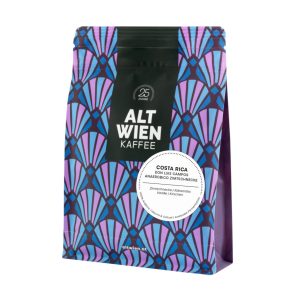
alt-wien-kaffee
Alt Wien Kaffee Kenia Gicherori AA
Thin body is the primary trade-off; the SL-28 and SL-34 acidity from Embu is the payoff.
Pour over (Chemex, Hario V60, Kalita Wave) forces hot water through a paper filter and a bed of medium-fine ground coffee by gravity. The paper filter catches oils and fine particles — the cup is clean, bright, and specific. What you taste is the coffee without interference.
This is why pour over is the method for light roast and single-origin coffees. The clarity it produces makes origin character legible. Ethiopian pour over tastes like bergamot and jasmine because the pour over doesn't obscure those notes. French press would flatten them.
Light to medium roast. Pour over is the worst method for very dark roasts — the paper filter removes the oils that give dark roasts their texture, and what's left is bitterness without body. If you love dark roast, use French press.
High acidity and bright aromatics. Pour over is where bright, fruit-forward coffees shine. Atlas Ethiopia Limu and Onyx Southern Weather are built for pour over. The method lets the bergamot and stone fruit read clearly.
Single origins over blends for the full benefit. Blends are engineered for consistency; pour over reveals individuality. Use single origins to get what the method offers.
Grind: medium-fine. Ratio: 1:16 (1g coffee per 16g water) as a starting point. Water temperature: 195–205°F. Bloom with 2× the weight of water in coffee — 30 seconds. Pour in slow circles, keeping water level consistent.
Total brew time: 3–4 minutes. Under 3 minutes suggests grind too coarse or pour too fast (under-extracted). Over 4 minutes suggests grind too fine (over-extracted, bitter).
Thin body is the primary trade-off; the SL-28 and SL-34 acidity from Embu is the payoff.
The anaerobic natural process is the whole argument here: ferment-forward intensity that divides drinkers, but when brewed right, it produces a lemon-grapefruit-cherry clarity you won't find in a conventionally processed Colombian.
The decision to process Liberica through anaerobic natural fermentation trades the varietal's woody backbone for dense tropical sweetness, making this light roast unlike anything else in the filter-coffee category.
Grapefruit at entry, jasmine through the middle, and a maple sweetness that closes the sip with almost no weight behind it from first to last.
The specialty-tier premium for Pink Bourbon anaerobic lots is real, and this cup earns it: pineapple-forward brightness at maximum acidity, with chamomile and rose arriving as distinct, individually registerable notes.
Performs best through pour over and aeropress where its tamarind-grapefruit acidity and dried florals land clean, but the near-absent body means there is no buffer when extraction goes wrong.
Tropical fruit forward from the first sip and caramelized through the finish, with the 5/5 acidity driving every moment of the arc.
Performs cleanly across pour over, drip, and French press, with the citrus-bright fruit carrying through each method and the wine-like peppery finish arriving last, distinctive enough to make this Danbi Uddo lot stand on its own.
Across pour over and aeropress the fruit lands fast and vivid, and the payoff is a sweet finish where peach, dried fruit, and chocolate each hold their shape.
The thin body is the honest entry fee; the anaerobic washed process draws genuine jasmine, peach, and yellow pear from Arbegona in a way that outstrips what a standard Ethiopian washed light roast can deliver.
The raspberry-and-honey payoff is consistent across pour over, aeropress, and drip; pour over resolves the layers with the most definition.
Cherry and orange arrive at the first sip, and the sweetness holds through the finish without anything added to coax it.
Boysenberry at full intensity, with almost no body to soften it.
What the thermic anaerobic process costs to run flows through to the bag price; what comes back is a Los Santos Catuai with sour cherry, blackberry, and maximum sweetness, bitterness close to zero.
Jasmine opens the entry, blueberry sweetness builds through the mid-palate, and the finish clears fast for how much the first two-thirds of the cup promise.
Holds its sweetness across drip, pour over, and French press without the roast getting involved, and the payoff is stone fruit clarity grounded in Pacamara's structural weight.
At $2.17/oz, you're paying for natural-process specificity, and the Las Lajas Black Diamond and Perla Negra processing delivers berry-wine fruit intensity that puts this well above standard Costa Rica production.
Demanding in the brew, but the anaerobic fermentation pulls a peach-toffee sweetness that most light-medium Costa Ricans cannot match.