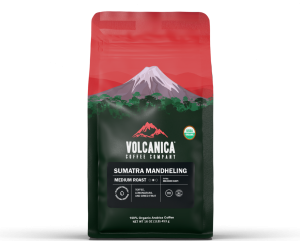
Volcanica Sumatra Mandheling
Cedar follows the chocolate, the earth doesn't lift, and the body carrying both is the reason to buy it.
Affiliate link. We earn a commission at no extra cost to you.
Profile
Tasting Notes
- Dark chocolate at first contact: cocoa-powder dryness, the bitterness holding at a steady level across the whole cup.
- Cedar arrives on the swallow and deepens as the cup cools. Resinous and dry, it's the Giling Basah process leaving a specific mark.
- Earth sits underneath everything, low-frequency and persistent, anchoring the cup from start to finish.
- Body is the standout quality. At 5/5 it coats the palate and holds texture even through the final third.
- Acidity is absent. No brightness, no lift anywhere in the cup.
Who It’s For
French press drinkers who want the heaviest body available in a dark roast, and who value earthy, origin-specific character over clarity. This is a black coffee choice: the low acidity and forward bitterness work without milk, but they don't leave room for anything subtle.
The roast intensity has consumed most of what separates Mandheling from a generic dark blend. If you're paying single-origin prices to access origin complexity, this cup doesn't deliver it. A medium-dark Sumatran at a comparable price would give you more of the Giling Basah terroir character the Mandheling designation represents.
Full review
Dark roast does two things to Sumatra Mandheling. It amplifies the body, pushing the syrupy weight that wet-hulled Sumatran green is already predisposed toward. And it flattens the upper register, suppressing whatever brightness and sweetness might have emerged from the same beans at a lower temperature. What remains is a cup built in the low frequencies: earth, cedar, cocoa-powder bitterness, and a body that sits at the heaviest end of what dark roast coffee can produce.
The Giling Basah process is the reason this cup doesn't read as an anonymous dark roast. Wet-hulling removes the parchment layer while the bean still holds significant moisture, and the bean then goes through a second drying phase, absorbing environmental character as it dries. That step deposits the resinous, earthy notes that survive even a 5/5 roast intensity. It also explains why Sumatran coffee tends to carry more textural density and a lower-register flavor signature than coffees from East Africa or Latin America processed the same way. A washed origin treated to the same roast level would taste almost entirely of roast. Here, the origin still registers through it.
In a french press, the full body comes into its own. A medium-coarse grind, water cooled for 90 seconds to two minutes after boiling, 4 minutes of steep: that combination produces a cup that is thick, textured, and consistent through the pour. The dark chocolate holds across the full cup, and the cedar sits in the background and deepens as it cools. Grind finer and the cedar runs forward and turns harsh before the steep ends. The body is forgiving in the sense that it delivers across a reasonable range of grind sizes, but both the bitterness and the cedar character will sharpen toward the extremes.
Drip works, with one caveat. Water temperature above 200°F drives up the bitterness and pushes the cedar to the front, with the chocolate retreating behind it. A machine running closer to 195°F extracts this cleanly. The difference shows in both the bitterness level and the cedar intensity.
The Camano Island Coffee Roasters Sumatra targets the same origin and the same process. That comparison shows what the roast level decides: a lighter expression of this raw material reveals more of what Giling Basah processing contributes, including sweetness underneath the earthiness and better-separated flavors. Volcanica's version prioritizes body and dark intensity, trading terroir transparency for sheer weight. The Death Wish Valhalla Java covers similar flavor territory: high bitterness, earth, dark chocolate, maximum roast. The Java origin gives it a slightly different base, with less of the specific cedar character and more blunt earthiness in its place, but the cup shape is close enough that the same drinker reaches for both, and the Volcanica version gives up nothing in body or intensity.
What's absent at $1.44/oz is the flavor separation that the Mandheling single-origin label can represent. At lighter roasts, this origin produces a cup with more range: the Giling Basah earthiness in a more nuanced form, some sweetness sitting behind it, flavor distinction that extends beyond earth and chocolate. The 5/5 roast intensity has collapsed that range. What you get is exceptional body and a cedar character that is genuine and specific to this origin. The price has held at $22.99 through the tracking period without variation, so the value proposition rests on those two qualities alone.
Cedar arrives on the swallow and deepens as the cup cools. That's where the Giling Basah process left its clearest signature, working underneath the chocolate and the bitterness, outlasting both on the finish. That's the Giling Basah process at its most visible.
Keep pulling the thread: Dark roast guide, Sumatra, Indonesia (single origin) origin guide, and more from Volcanica Coffee.
Price & History
The price has held at $22.99 through the 30-day tracking window with no variation across the single recorded data point. That stability means there's no historical low to time a purchase against. At $1.44/oz for a 16 oz bag from a specialty single-origin roaster, this sits in a reasonable range for the category. Buy when you need it.
► Show price history (36 days)
| Date | Price | Per oz |
|---|---|---|
| Jul 26, 2026 | $22.99 | $1.437 |
| Jul 25, 2026 | $22.99 | $1.437 |
| Jul 24, 2026 | $22.99 | $1.437 |
| Jul 23, 2026 | $22.99 | $1.437 |
| Jul 22, 2026 | $22.99 | $1.437 |
| Jul 21, 2026 | $22.99 | $1.437 |
| Jul 20, 2026 | $22.99 | $1.437 |
| Jul 19, 2026 | $22.99 | $1.437 |
| Jul 18, 2026 | $22.99 | $1.437 |
| Jul 17, 2026 | $22.99 | $1.437 |
| Jul 16, 2026 | $22.99 | $1.437 |
| Jul 15, 2026 | $22.99 | $1.437 |
| Jul 14, 2026 | $22.99 | $1.437 |
| Jul 13, 2026 | $22.99 | $1.437 |
| Jul 12, 2026 | $22.99 | $1.437 |
| Jul 11, 2026 | $22.99 | $1.437 |
| Jul 10, 2026 | $22.99 | $1.437 |
| Jul 9, 2026 | $22.99 | $1.437 |
| Jul 8, 2026 | $22.99 | $1.437 |
| Jul 7, 2026 | $22.99 | $1.437 |
| Jul 6, 2026 | $22.99 | $1.437 |
| Jul 5, 2026 | $22.99 | $1.437 |
| Jul 4, 2026 | $22.99 | $1.437 |
| Jul 3, 2026 | $22.99 | $1.437 |
| Jul 2, 2026 | $22.99 | $1.437 |
| Jul 1, 2026 | $22.99 | $1.437 |
| Jun 30, 2026 | $22.99 | $1.437 |
| Jun 29, 2026 | $22.99 | $1.437 |
| Jun 28, 2026 | $22.99 | $1.437 |
| Jun 27, 2026 | $22.99 | $1.437 |
| Jun 26, 2026 | $22.99 | $1.437 |
| Jun 25, 2026 | $22.99 | $1.437 |
| Jun 24, 2026 | $22.99 | $1.437 |
| Jun 23, 2026 | $22.99 | $1.437 |
| Jun 22, 2026 | $22.99 | $1.437 |
| Jun 21, 2026 | $22.99 | $1.437 |
Rating
FAQ
What does Volcanica Sumatra Mandheling taste like?
Dark chocolate at first contact: cocoa-powder dryness, the bitterness holding at a steady level across the whole cup. Cedar arrives on the swallow and deepens as the cup cools. Resinous and dry, it's the Giling Basah process leaving a specific mark. Earth sits underneath everything, low-frequency and persistent, anchoring the cup from start to finish.
Who is Volcanica Sumatra Mandheling best for?
French press drinkers who want the heaviest body available in a dark roast, and who value earthy, origin-specific character over clarity. This is a black coffee choice: the low acidity and forward bitterness work without milk, but they don't leave room for anything subtle.
Who should skip Volcanica Sumatra Mandheling?
The roast intensity has consumed most of what separates Mandheling from a generic dark blend. If you're paying single-origin prices to access origin complexity, this cup doesn't deliver it. A medium-dark Sumatran at a comparable price would give you more of the Giling Basah terroir character the Mandheling designation represents.