roestbar
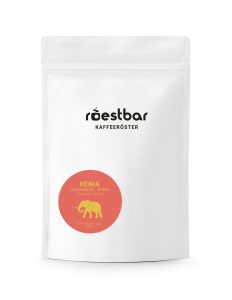
Roestbar Kenia Gatomboya
Grapefruit up front, rosehip on the back of the tongue, and a sweetness that holds through the finish without building weight.
Every bean we’ve reviewed, sorted by how we score them. Price-tracked daily. Filter by flavor, origin, or roast below.
Grapefruit up front, rosehip on the back of the tongue, and a sweetness that holds through the finish without building weight.
Pomegranate and lemon verbena build through the cup to a bone-dry black tea finish, with parma violet florals surfacing mid-cup and vanishing before the swallow.
For the pour-over drinker who wants more fruit weight from an Ethiopian light roast than a washed lot delivers, the Okoluu Guji puts peach and honey ahead of the citrus, with maximum acidity behind it and nothing in the way of bitterness.
The black tea dryness that closes the cup is the defining characteristic: Chalatenango Pacamara, anaerobically processed, resolves into something the El Salvador category rarely delivers.
At $2.17/oz, you're paying for natural-process specificity, and the Las Lajas Black Diamond and Perla Negra processing delivers berry-wine fruit intensity that puts this well above standard Costa Rica production.
Thin body limits what brew formats this cup can handle, but the lime-peach acidity and honey sweetness from SL-28 and SL-34 in Nyeri are the real thing.
Produces grape-and-citrus intensity across pour over, drip, and French press, the anaerobic natural process amplifying Boquete Geisha into something fruitier and denser than the varietal's standard profile.
The medium-dark roast on this natural-process Colombian buys consistency and full body at the cost of the rawer fermentation character a lighter pass would have kept.
The roast decision here was to push sweetness as far as it goes while the washed process holds acidity in place, and the blend delivers a caramel-forward cup that earns the name.
The price sits above most washed Ethiopian light roasts on the market, and the cup mostly justifies it: bergamot and stone fruit at maximum acidity, precise and distinct in a way most regional competitors don't achieve.
The washed process and medium roast here make one deliberate trade: origin transparency for sweetness delivery, and Ruby executes that trade well.
Philz asks a specialty price for a cup that delivers low-bitterness sweetness and real body, but a Latin America blend label offers no foothold for origin curiosity.
The body does the heavy lifting here, and with bitterness and acidity both sitting low, the cup asks nothing of you in return.
Pour over and drip pull citrus brightness and caramelized berry sweetness from this honey-processed Guji; the payoff is maximum sweetness at near-zero bitterness.
Dark chocolate on entry, full body through the cup, and a finish that drops off before bitterness builds: this blend delivers roast depth without the harshness that typically comes at this roast intensity.
Sweetness comes up first and the bitterness never follows; the light roast did its job, and the cup is defined by what it chose not to become.
Starbucks pushed this roast to maximum intensity and traded every trace of Latin American or Asia-Pacific origin character for a cup defined by char and smoke.
Cocoa powder on entry, a fast dry finish, and a price that reflects the Starbucks name more than what's in the cup.