black-oak-coffee-roasters
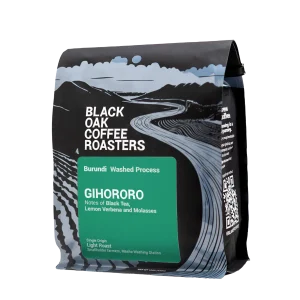
Black Oak Coffee Roasters Ethiopia Wush Wush Natural
Sangria and black cherry hit first, then the Wush Wush varietal's tropical fruit and florals emerge as the cup cools.
Pour a black coffee, expect it to taste like coffee, and instead get strawberry. That jolt is the whole appeal of fruit-forward coffee, and it throws people the first time. There is no strawberry in the bag. No flavoring, no syrup, nothing added. What you taste is chemistry: the same family of aromatic compounds a strawberry makes, formed inside a coffee seed.
Fruit notes are esters, aldehydes, and ketones built across three stages of a coffee's life. The slow ripening of the cherry on the branch. The fermentation that follows picking. The heat of the roast. A strawberry note is a genuine molecular cousin of the compounds in strawberry, which is why it reads as fruit and not as a line of marketing on the label.
Get the conditions right and the fruit is unmistakable. Get them wrong and it disappears. Fruit is the most fragile thing a coffee carries, which is why so few beans deliver it cleanly and why the ones that do earn a premium.
Two different mechanisms put fruit in the cup, and they do not taste the same.
Origin character. Coffee grown high on the mountain ripens slowly. Cold nights and thin air stretch cherry development over months, and the seed loads up on sugars and fruit esters it would never form on a warm lowland farm. Ethiopian heirloom varieties, grown above 1,800 meters and never bred for industrial yield, carry this in their genetics. Run them through the washed process, which strips the fruit flesh before drying, and the fruit arrives in sharp focus: the bergamot and stone fruit of a washed Ethiopian read clean and precise, like fruit photographed in good light.
Natural process. Leave the whole cherry to dry in the sun with the seed still inside it, and the fruit flesh ferments straight into the bean. Weeks on a raised bed, turned by hand, the sugars of the pulp soaking inward. This is where coffee gets its loudest fruit: jammy blueberry, deep cherry, wine-dark berry. Fruit with the volume turned up, sweeter and heavier than the washed version, and a shade wilder, because fermentation is never perfectly tidy.
Fruit runs a range from delicate and high-toned to deep and concentrated. Where a coffee lands depends on its origin, its processing, and how far it was roasted.
Stone fruit (peach, apricot, plum). The brightest, cleanest end. High-altitude Ethiopian washed coffee at light to medium roast. Atlas Coffee Club Ethiopia Limu carries peach and apricot beside bergamot and jasmine, all of it lifted on a high, clean acidity that finishes dry. This is fruit as brightness, not as sweetness.
Berry and strawberry. Onyx Coffee Lab Southern Weather is the clearest berry note in the catalog: a near candy-like strawberry sweetness riding on crisp acidity, closer to cream soda than to anything bitter. Light roast, washed, the fruit kept intact by a roast that never pushes toward char.
Dark cherry. Natural process taken dark. Death Wish Coffee proves fruit survives even a heavy dark roast. Under the intensity sits a deep, sweet dark-cherry note, infused by drying the bean inside its own fruit. Brooding rather than bright.
Dried fruit (raisin, prune). Push a fruit-bearing bean to medium-dark espresso roast and fresh fruit concentrates into something darker and chewier, the way a grape becomes a raisin. Blue Bottle Hayes Valley carries this: dried fruit folded into bittersweet chocolate and caramel, the fruit reading as depth instead of brightness.
Mild fruit and mild citrus. Not every fruit note is a headline. In medium-roast Latin American coffees, fruit shows up as a faint background brightness that keeps the cup from going flat. Lifeboost, Don Francisco's, and Counter Culture all carry this quiet lift behind their chocolate and caramel.
Fruit notes are volatile. They sit at the top of the cup and they leave first, so how you roast and brew decides whether you taste them at all.
Roast light. Heat burns off the delicate aromatics that carry fruit. Light and light-medium roasts protect them. Once a bean is roasted dark, most of its fresh fruit is gone. Dark cherry and dried fruit are the exceptions, and they survive only because the process loaded them in so heavily to begin with.
Brew through paper. Pour over shows fruit best. The slow, even extraction and the clean paper filter pull the aromatics forward without muddying them. Use water around 195 to 200 degrees Fahrenheit, lower than you would for a dark roast, and grind a touch finer than feels natural.
Smell before you sip. Fruit is aroma before it is flavor. Lean over the cup and breathe before the liquid reaches your palate. Most of the berry and stone fruit is caught on the nose.
Skip the French press for fruit-forward beans. Full immersion mutes the high notes and flattens the exact brightness you paid for.
Anyone who has decided they do not like black coffee should try a washed Ethiopian or a natural-process light roast before settling the matter. Fruit-forward coffee does not taste like the scorched, bitter cup most people picture. It tastes bright, sweet, and clean, and it rarely needs milk or sugar to be drinkable.
It is the wrong cup for someone who wants heavy body and low acid first thing in the morning. Fruit comes with acidity, and acidity reads as sharp to a palate built on dark roast. That drinker is better served at the earthy or chocolate end of the spectrum.
Sangria and black cherry hit first, then the Wush Wush varietal's tropical fruit and florals emerge as the cup cools.
Tropical fruit forward from the first sip and caramelized through the finish, with the 5/5 acidity driving every moment of the arc.
The specialty-tier premium for Pink Bourbon anaerobic lots is real, and this cup earns it: pineapple-forward brightness at maximum acidity, with chamomile and rose arriving as distinct, individually registerable notes.
The thin body is the honest entry fee; the anaerobic washed process draws genuine jasmine, peach, and yellow pear from Arbegona in a way that outstrips what a standard Ethiopian washed light roast can deliver.
Boysenberry at full intensity, with almost no body to soften it.
Anaerobic fermentation is the decision that defines this cup: it prioritizes fermented fruit and florals at the expense of roast structure, and at light-medium on Sidama Arbegona, that trade produces a profile other process methods cannot replicate.
Performs cleanly across pour over, drip, and French press, with the citrus-bright fruit carrying through each method and the wine-like peppery finish arriving last, distinctive enough to make this Danbi Uddo lot stand on its own.
The raspberry-and-honey payoff is consistent across pour over, aeropress, and drip; pour over resolves the layers with the most definition.
Across pour over and aeropress the fruit lands fast and vivid, and the payoff is a sweet finish where peach, dried fruit, and chocolate each hold their shape.
Cherry and orange arrive at the first sip, and the sweetness holds through the finish without anything added to coax it.
Built for the pour-over enthusiast who wants to taste what a rare Colombian varietal does in the cup, this Ombligón natural from El Diviso runs dark cherry and prune depth backed by maximum sweetness and a medium body that holds together across extraction styles.
Demanding in the brew, but the anaerobic fermentation pulls a peach-toffee sweetness that most light-medium Costa Ricans cannot match.
Holds its sweetness across drip, pour over, and French press without the roast getting involved, and the payoff is stone fruit clarity grounded in Pacamara's structural weight.
At $2.17/oz, you're paying for natural-process specificity, and the Las Lajas Black Diamond and Perla Negra processing delivers berry-wine fruit intensity that puts this well above standard Costa Rica production.
The washed light roast makes one clear bet: maximum acidity, maximum sweetness, and a body so light the cup stands or falls entirely on what the origin delivers.
Jasmine opens the entry, blueberry sweetness builds through the mid-palate, and the finish clears fast for how much the first two-thirds of the cup promise.
What the thermic anaerobic process costs to run flows through to the bag price; what comes back is a Los Santos Catuai with sour cherry, blackberry, and maximum sweetness, bitterness close to zero.
The florals demand precision: brew it attentively and the Borbon Sidra delivers oolong and rose clarity that standard Fraijanes profiles never reach, but let the temperature drift or the cup sit and that distinction evaporates.