peets-coffee
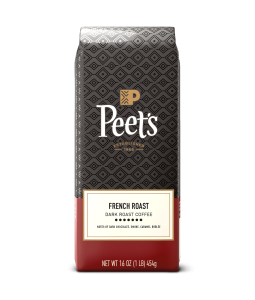
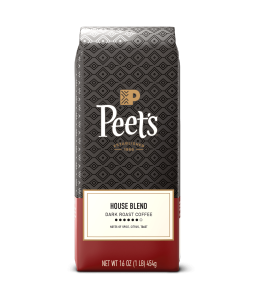
Peet’s Coffee House Blend
Pulls the same cup across drip, french press, and pour over; the dry pepper spice is where the cup earns its keep, and the rest is reliable dark roast.
Dark roast reaches 455–475°F, well into second crack. Sugars carbonize — the sweetness tips from caramel toward charred and bitter. Acids break down almost entirely. Body is maximum. Bitterness is prominent. Origin character disappears; what you taste is primarily the roast itself.
This is not a criticism of dark roast. It's a description of what dark roast does and why drinkers who want it want it: they want weight, intensity, and an unchanging profile regardless of origin. The roast is the flavor.
Acidity: near zero. The acid compounds that cause reflux and brightness are destroyed at dark roast temperatures.
Body: full to very full. Maximum oil extraction, maximum textural weight.
Sweetness: low. Carbonized sugars read as bitterness, not sweetness. Dark roast that reads as sweet is actually medium-dark.
Bitterness: high. This is part of the value proposition for dark roast drinkers. The bitterness is the character.
Drinkers who want intensity above all else. Anyone who drinks coffee with milk and wants the roast to punch through. French press drinkers who want weight and body. Anyone who experiences acid reflux from medium roast — dark roast is the medical recommendation for acid-sensitive drinkers.
Not an early morning coffee if you want to actually taste it. An aggressive dark roast at 6am before the palate is awake is bitterness without nuance. Save it for midday.
Pour over drinkers — paper filtration strips the oils and you're left with bitterness without body. Anyone who wants to taste origin character. Anyone who finds coffee too bitter already — go lighter, not darker.
Pulls the same cup across drip, french press, and pour over; the dry pepper spice is where the cup earns its keep, and the rest is reliable dark roast.
Maximum roast intensity has taken the Latin America blend's origin character entirely off the table, but the body left behind is substantial enough to make this work in a french press.
The roast is the entire story here: maximum intensity, heavy body, and a cocoa-powder bitterness that sits forward from the first sip, with origin character almost entirely behind it.
Night Owl commits to maximum roast intensity and trades whatever the Latin American origin had to say for dark chocolate and smoke, landing a heavy-bodied cup that holds in drip but asks nothing of the terroir underneath.
Dark chocolate and smoke from first contact through a heavy, flat finish: this cup executes the French Roast contract precisely and stops there.
Smoke and char from first contact, a heavy body that holds through the cup, and a finish that sits dry rather than fading.
The body holds through every brew method on the list, but maximum roast intensity has flattened the East Africa component entirely, and the low sweetness leaves little to work with once the bitterness arrives.
This is the budget tier's answer to New Orleans-style coffee at home, and the chicory is not a gimmick but the structural spine of the cup.
Built for the moka pot and the short espresso pulled into milk, this delivers maximum body at a grocery price with nothing in the roast held back.
Maximum roast intensity has stripped origin character from all three source countries, leaving a cup heavy in body and bitterness that earns its keep under milk but has little to offer black.
Starbucks pushed this roast to maximum intensity and traded every trace of Latin American or Asia-Pacific origin character for a cup defined by char and smoke.
Body at maximum and bitterness to match. This cup is built for force, and it delivers exactly that.
French press extracts the most from it, where the heavy body does the lifting; drip works, but runs the bitterness harder than the cup can balance on its own.