achilles-coffee-roasters
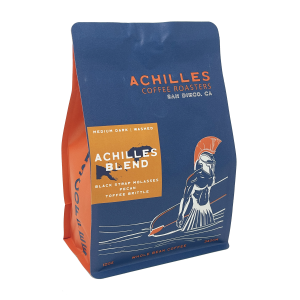
Achilles Coffee Roasters Costa Rica Finca El Centro
The price demands proof; pineapple-lime brightness anchored by a dark chocolate finish delivers it.
Drip / auto brewing runs hot water through a paper filter and a bed of medium-ground coffee. The result: a clean, full-volume cup without the technique demands of pour over. At its best, a quality automatic brewer (Technivorm, Breville Precision Brewer) produces results close to manual pour over. At its worst — a cheap machine that brews at 175°F instead of 200°F — it produces under-extracted, weak coffee no matter how good the beans are.
Water temperature is the variable most auto brewers get wrong. 195–205°F is the extraction range. Machines under $50 often brew at 175°F. You can't fix under-temperature with better beans.
Medium roast is the sweet spot. The paper filter handles acidity well, so medium roast brightness comes through without becoming sharp. Dark roast loses texture through paper filtration but retains enough bitterness to taste intentional.
Consistent grind quality matters more than origin. A burr grinder producing even medium-ground coffee extracts correctly at any temperature. A blade grinder produces uneven grounds — some particles over-extract, others under-extract. The result is a cup that tastes both bitter and weak simultaneously.
Colombian, Nicaraguan, and Latin American blends are the most forgiving for drip. High-acid light roasts punish a machine brewing slightly below temperature.
Weak or flat drip coffee: machine temperature too low, grind too coarse, or ratio too low. Use 1:15 ratio (1g per 15g water) and check your machine's brew temperature with a thermometer if available. Most cheap auto brewers fall short.
Bitter drip coffee: grind too fine, brew time too long, or roast too dark for the machine's temperature. Go coarser first.
The price demands proof; pineapple-lime brightness anchored by a dark chocolate finish delivers it.
Peach and rose at maximum acidity, with almost no roast in the way: the Aricha character arrives clean, and the finish exits before the cup cools.
Citrus brightness and honey sweetness at maximum on both registers, delivered through a frame thin enough that the extraction window matters.
Bright citrus opens it, caramel sweetness fills the mid-palate, and the finish closes without bitterness clouding the end of the cup.
Drip, pour over, and French press all carry the haskap and pomegranate through each format intact, because maximum sweetness at 5/5 keeps the fruit character from dissolving under roast weight.
Pour-over precision and citric brightness first, layered fruit second: lemon and jasmine in the first half of the cup, peach and blueberry in the second, with dry fermentation delivering a flavor range broader than the roast level alone would give.
Dried apricot opens heavy, the body stays through to the end, and nothing bitter chases it.
Saturated red-fruit intensity at maximum sweetness and acidity, with almost no body to anchor it.
Where Ka'u Darkwood digs into volcanic mineral depth, this Peaberry stays lifted: blackberry and orange up front, brown-sugar sweetness through the finish, and almost no bitterness to negotiate.
Buy this knowing you're paying specialty-import pricing for a Guatemalan natural that delivers on the promise: maximum sweetness, a tamarind-berry arc across the cup, and almost no bitterness to push back against.
Cherry and cocoa in a pour-over-first light roast running maximum acidity and sweetness: the cup rewards temperature control.
Tropical fruit brightness from the first sip and near-zero bitterness all the way down, building sweetness that exits clean rather than cloying.
Specialty pricing for a cofermented Colombian that delivers vivid apricot and floral brightness; the body barely registers, but the sweetness and acidity hit maximum intensity.
At a premium Grade 1 price, "Bold" is a label the roasting never earned: the Goma Woreda lot itself delivers the lemon-tart brightness and wild berry sweetness, and the natural process does the rest.
The washed process commits this Guji Uraga to maximum acidity and floral precision, trading every ounce of body for a cup that is almost entirely flavor and edge.
Blueberry and dried banana hit clean on a thin, high-acid frame; pour over is where this cup does its best work.
Performs best in pour over and drip, where the sharp plum and ginger acidity has room to open; French press will expose a body that barely registers.
Pear brightness at the front, brown sugar through the finish, and a medium body that stops the 5/5 acidity and sweetness from reading as paper-thin.