peets-coffee
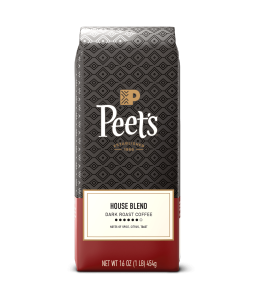
Peet’s Coffee Major Dickason’s Blend
Maximum roast intensity has erased whatever the Latin America and Indonesia origins contributed, leaving a cup whose sole real asset is an uncommonly heavy body.
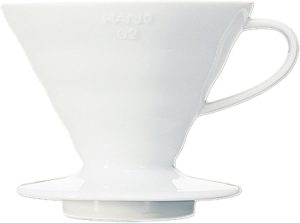
Pour over (Chemex, Hario V60, Kalita Wave) forces hot water through a paper filter and a bed of medium-fine ground coffee by gravity. The paper filter catches oils and fine particles — the cup is clean, bright, and specific. What you taste is the coffee without interference.
This is why pour over is the method for light roast and single-origin coffees. The clarity it produces makes origin character legible. Ethiopian pour over tastes like bergamot and jasmine because the pour over doesn't obscure those notes. French press would flatten them.
Light to medium roast. Pour over is the worst method for very dark roasts — the paper filter removes the oils that give dark roasts their texture, and what's left is bitterness without body. If you love dark roast, use French press.
High acidity and bright aromatics. Pour over is where bright, fruit-forward coffees shine. Atlas Ethiopia Limu and Onyx Southern Weather are built for pour over. The method lets the bergamot and stone fruit read clearly.
Single origins over blends for the full benefit. Blends are engineered for consistency; pour over reveals individuality. Use single origins to get what the method offers.
Grind: medium-fine. Ratio: 1:16 (1g coffee per 16g water) as a starting point. Water temperature: 195–205°F. Bloom with 2× the weight of water in coffee — 30 seconds. Pour in slow circles, keeping water level consistent.
Total brew time: 3–4 minutes. Under 3 minutes suggests grind too coarse or pour too fast (under-extracted). Over 4 minutes suggests grind too fine (over-extracted, bitter).
Maximum roast intensity has erased whatever the Latin America and Indonesia origins contributed, leaving a cup whose sole real asset is an uncommonly heavy body.
Dense body from the first pull and the dark roast fades without a bitter edge; this is a forgiving cup in a category that usually charges you for that.
Maximum roast intensity trades every trace of origin character for a heavy, chocolate-forward cup that stays controlled on bitterness despite running the roast dial all the way up.
The medium roast holds the blend together, but at 30% JBM and 70% unspecified mountain-grown, this cup trades on a name it can only partially back up.
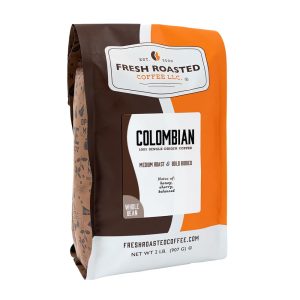
Compared to medium-darks that demand careful temperature management and grind calibration, this 32 oz washed Colombian delivers soft chocolate and caramel in a more forgiving profile that holds across drip and French press without requiring precision.
Medium roast and washed processing give up origin distinction for a cup built around low bitterness and accessible sweetness, designed to be predictable before anything else.
You pay a national-brand price for a sweet, low-bitterness medium that works across any brewer in your kitchen, but the cup character does not close the gap over less expensive alternatives.
Honey sweetness at the front, a brief cherry lift through the mid-cup, and the finish exits before bitterness gets a foothold.
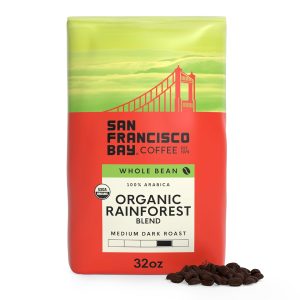
Thirty-two ounces of washed, medium-dark blend: the per-ounce math works, and a 4/5 body with muted acidity backs the case.
The blend gives up everything that might make it distinctive, but the low bitterness delivers a forgiving cup that holds across every method on its list.
The medium roast and washed process are calibrated for approachability, trading any particular flavor identity for a cup that stays out of your way each morning.
For the auto-drip that runs before anyone's awake, this Latin America-East Africa blend puts a composed, approachable cup in the mug without asking anything back from the brewer.
The caramel is mild and brief; the thin body ensures the cup exits before it builds anything worth returning for.
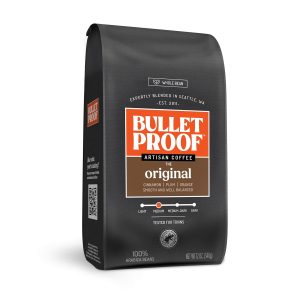
You pay for the Bulletproof name before you pay for the coffee; what's in the bag is a low-bitterness washed medium with cinnamon warmth and a cocoa-hazelnut finish that brews forgivingly across drip, pour-over, and espresso.
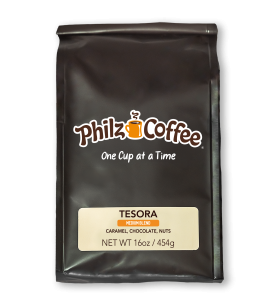
Philz asks a specialty price for a cup that delivers low-bitterness sweetness and real body, but a Latin America blend label offers no foothold for origin curiosity.
The organic sourcing adds cost, and what the cup returns for it is a low-bitterness washed medium with enough citrus brightness to stay honest and a forgiving profile that holds across drip, pour over, and french press.
Pulls the same cup across drip, french press, and pour over; the dry pepper spice is where the cup earns its keep, and the rest is reliable dark roast.
Heavy body for its roast class, but the brand premium outpaces what this Latin America blend puts in the cup.