lily-willys-coffee-co
Lily & Willy’s Coffee Co Kenya Kirinyaga
Citrus and ginger brightness backed by maximum sweetness, all suspended above a cup with almost no body to anchor it.
Pour over (Chemex, Hario V60, Kalita Wave) forces hot water through a paper filter and a bed of medium-fine ground coffee by gravity. The paper filter catches oils and fine particles — the cup is clean, bright, and specific. What you taste is the coffee without interference.
This is why pour over is the method for light roast and single-origin coffees. The clarity it produces makes origin character legible. Ethiopian pour over tastes like bergamot and jasmine because the pour over doesn't obscure those notes. French press would flatten them.
Light to medium roast. Pour over is the worst method for very dark roasts — the paper filter removes the oils that give dark roasts their texture, and what's left is bitterness without body. If you love dark roast, use French press.
High acidity and bright aromatics. Pour over is where bright, fruit-forward coffees shine. Atlas Ethiopia Limu and Onyx Southern Weather are built for pour over. The method lets the bergamot and stone fruit read clearly.
Single origins over blends for the full benefit. Blends are engineered for consistency; pour over reveals individuality. Use single origins to get what the method offers.
Grind: medium-fine. Ratio: 1:16 (1g coffee per 16g water) as a starting point. Water temperature: 195–205°F. Bloom with 2× the weight of water in coffee — 30 seconds. Pour in slow circles, keeping water level consistent.
Total brew time: 3–4 minutes. Under 3 minutes suggests grind too coarse or pour too fast (under-extracted). Over 4 minutes suggests grind too fine (over-extracted, bitter).
Citrus and ginger brightness backed by maximum sweetness, all suspended above a cup with almost no body to anchor it.
The washed process commits this Guji Uraga to maximum acidity and floral precision, trading every ounce of body for a cup that is almost entirely flavor and edge.
The medium roast restrains the jasmine and citrus the anaerobic fermentation creates; what carries through is exceptional sweetness and enough acidity to keep the cup from going flat.
Peach and rose at maximum acidity, with almost no roast in the way: the Aricha character arrives clean, and the finish exits before the cup cools.
Bright citrus opens it, caramel sweetness fills the mid-palate, and the finish closes without bitterness clouding the end of the cup.
Built for the pour-over drinker who wants maximum acidity and exotic fruit definition, the El Paraiso Lychee delivers soursop and mandarin clarity specific enough to identify in the cup.
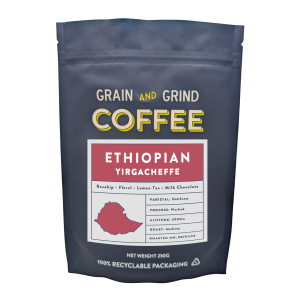
Performs best in a slow pour over where the jasmine-to-apricot arc has room to develop in sequence, delivering Yirgacheffe's defining brightness without a gram of body to slow it down.
The price demands proof; pineapple-lime brightness anchored by a dark chocolate finish delivers it.
At a premium Grade 1 price, "Bold" is a label the roasting never earned: the Goma Woreda lot itself delivers the lemon-tart brightness and wild berry sweetness, and the natural process does the rest.
The cup opens on citric brightness and delicate florals, then shifts into something quieter and more tea-like as it drops below serving temperature.
At $0.84 per ounce for a washed Bensa lot, the Mirado delivers maximum acidity and stone-fruit clarity in a cup with almost no body.
Performs best in pour over and drip, where the sharp plum and ginger acidity has room to open; French press will expose a body that barely registers.
Where Ka'u Darkwood digs into volcanic mineral depth, this Peaberry stays lifted: blackberry and orange up front, brown-sugar sweetness through the finish, and almost no bitterness to negotiate.
Positioned at specialty prices, and the cup earns the placement: maximum acidity and sweetness locked into a full-bodied, low-bitterness medium that performs reliably across drip and pour over without asking much of the brewer.
Saturated red-fruit intensity at maximum sweetness and acidity, with almost no body to anchor it.
The washed process stripped this Bench Maji down to its sharpest frequency: maximum acidity, negligible body, and a sweetness that keeps the cup from collapsing into austerity.
Buy this knowing you're paying specialty-import pricing for a Guatemalan natural that delivers on the promise: maximum sweetness, a tamarind-berry arc across the cup, and almost no bitterness to push back against.
Built for filter drinkers who want African fruit character without sacrificing body, this blend layers winey blueberry and lemon zest over a Ugandan chocolate base that keeps the cup from going weightless.